



கம்பராமாயணம் 2263 · அயோத்தியா 9.86
பாடல் · The poem
Tap a word to see its gloss in the commentary and where else it occurs.
பொருள் · Meaning in Tamil
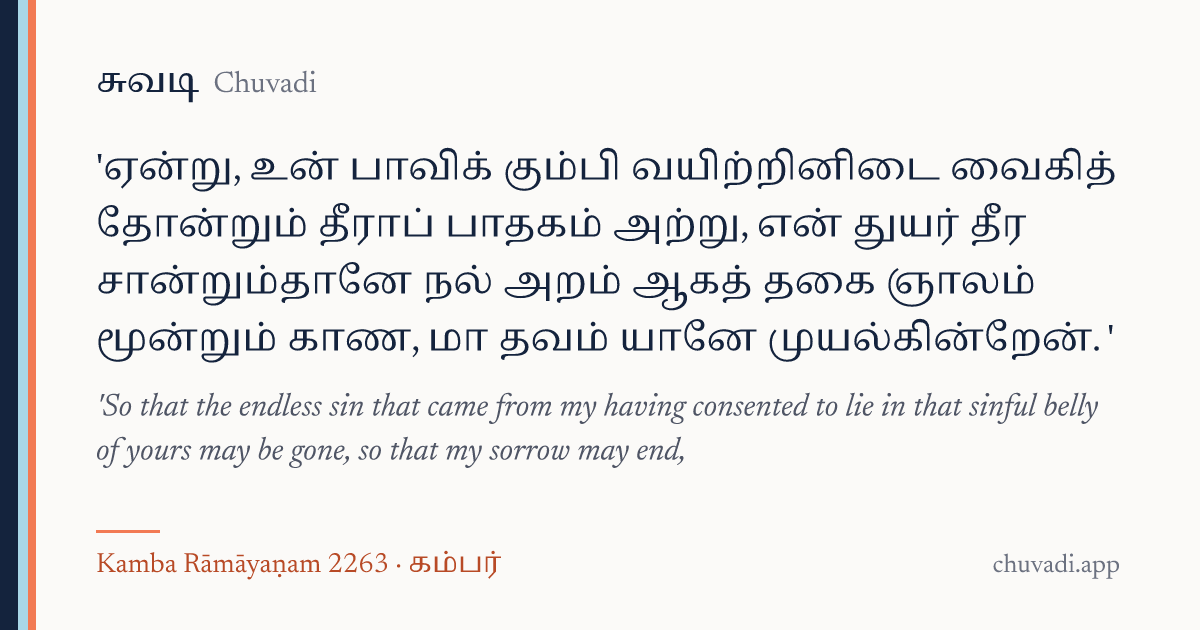
“பாவி உன் கும்பி வயிற்றினிடை - பாவியாகிய உன்னுடைய வயிற்றிடத்தில்; ஏன்று வைகித் தோன்றும் - உடன்பட்டுத் தங்கிப் பிறந்ததனால் உண்டாகிய; தீராப் பாதகம் - நீங்காத அரிய பாவம்; அற்று - அடியோடு இல்லையாகி; என் துயர் தீர - (தந்தை இறந்தது, இராமன் காடு சென்றது ஆகிய நிகழ்ச்சிகளால் ஆய) என் துயரமெல்லாம் தீரும்படி; நல் அறம் தானே சான்றும் ஆக - நன்றாகிய அறக்கடவுளே சாட்சி ஆகப் பொருந்த; தகை ஞாலம் மூன்றும் - மேம்பாடுடைய மேல், கீழ், நடு என்னும் மூவுலகமும்; காண - (என் நிலை) காணும்படி; யானே மாதவம் முயல்கின்றேன் - நானே பெருந்தவம் செய்ய இருக்கின்றேன்.”
பரதனுக்கு அரசுரிமை கைகேயி வயிற்றில் இருந்து பிறந்ததனால் உண்டாயது; ஆகவே, அதனைப் பாதகம் என்றான். ‘சான்றும்’ ‘உம்’ இசைநிறை. ‘பழிதீர்தற்குரிய என் செய்வினை’ என்று மேற்பாட்டிற் கூறினான். அது இன்னது என்பது ‘மாதவம்’ என இப்பாட்டிற் கூறினான் ஆயிற்று. கும்பி வயிறு - இரு பெயரொட்டு; கும்பி - சேறு என்றும் பொருள்படும். அப்பொருள் கொண்டால் சேறு போன்ற பாவம் நிறைந்த வயிறு என்றாகும்.
ஆங்கிலம் · English translationAI
Translation
- 'So that the endless sin that came from my having consented to lie
- in that sinful belly of yours may be gone, so that my sorrow may end,
- with good Dharma itself as witness, and the three noble worlds
- looking on, I myself shall undertake great penance.'
What the poem says
Paratan now states what he will do. His claim to the throne came only from being born of Kaikēyi's womb, and he treats that birth itself as a sin that clings to him.
To wash it away and to end his grief, he vows to undertake great austerities himself, with Dharma as his witness and the three worlds, above, below and between, watching. This is the deed he hinted at in the previous verse.