



கம்பராமாயணம் 2267 · அயோத்தியா 9.90
பாடல் · The poem
Tap a word to see its gloss in the commentary and where else it occurs.
பாட வேறுபாடு · Project Madurai reads
பொருள் · Meaning in Tamil
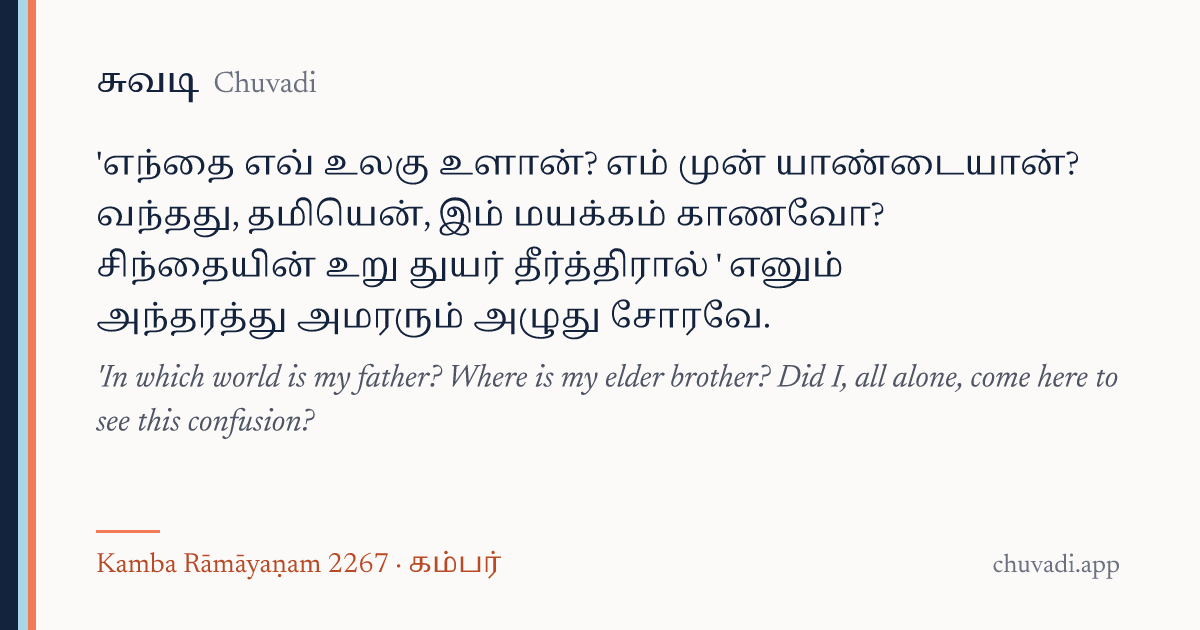
அந்தரத்து அமரரும் - வானுலகில் உள்ள தேவர்களும்; அழுது சோரவே - (இவன் புலம்பைக் கேட்டும் இவனைக் கண்டும் தம்மாலும் ஆற்றமுடியாமல் தாமும்) அழுது சோரும்படி; “எந்தை எவ் உலகு உளான்? - என் தந்தையாகிய தயரதன் இப்போது எந்த உலகத்தில் இருக்கிறான்?; எம்முன் யாண்டையான் - என் தமையனாகிய இராமன் எவ்விடத்தில் இருக்கிறான்?; தமியென் - ஆதரவற்ற தனியனாகிய யான்; வந்தது - அயோத்திக்கு வந்தது; இம் மறுக்கம் காணவோ? - இந்தத் துன்ப நிலையைக் காண்பதற்காகவோ?; சிந்தையின் - (என்) மனத்தில்; உறு துயர் - பொருந்திய துன்பத்தை; தீர்த்திர் - போக்குங்கள்;” எனும் - என்பான்.
இறந்தபின் வேறு உலகம் செல்வர் ஆதலான் ‘எந்தை எவ் உலகு உளான்’ என்றான். இராமன் காடு சென்றபடியால் ‘யாண்டையான்’ அதாவது காட்டில் எவ்விடத்தில் உள்ளான் என்றான். தந்தையோடும் தமையனோடும் இருக்கின்ற பேறு பெறாமையால் தன்னைத் ‘தமியென்’ என்று குறிப்பிட்டான். ஆல், ‘ஏ’ அசைகள்.
ஆங்கிலம் · English translationAI
Translation
- 'In which world is my father? Where is my elder brother?
- Did I, all alone, come here to see this confusion?
- Take away the sorrow that fills my heart,' he cries,
- so that even the gods in the sky weep and faint.
What the poem says
Lying at Kōcalai's feet, Paratan cries out: in what world is his father now, and where in the forest is his brother? Has he come home, utterly alone, only to witness this turmoil?
He begs her to relieve his grief. His lament is so moving that even the gods in heaven weep and grow faint. He calls himself 'alone' because he has lost the company of both his father and his elder brother.