



கம்பராமாயணம் 2268 · அயோத்தியா 9.91
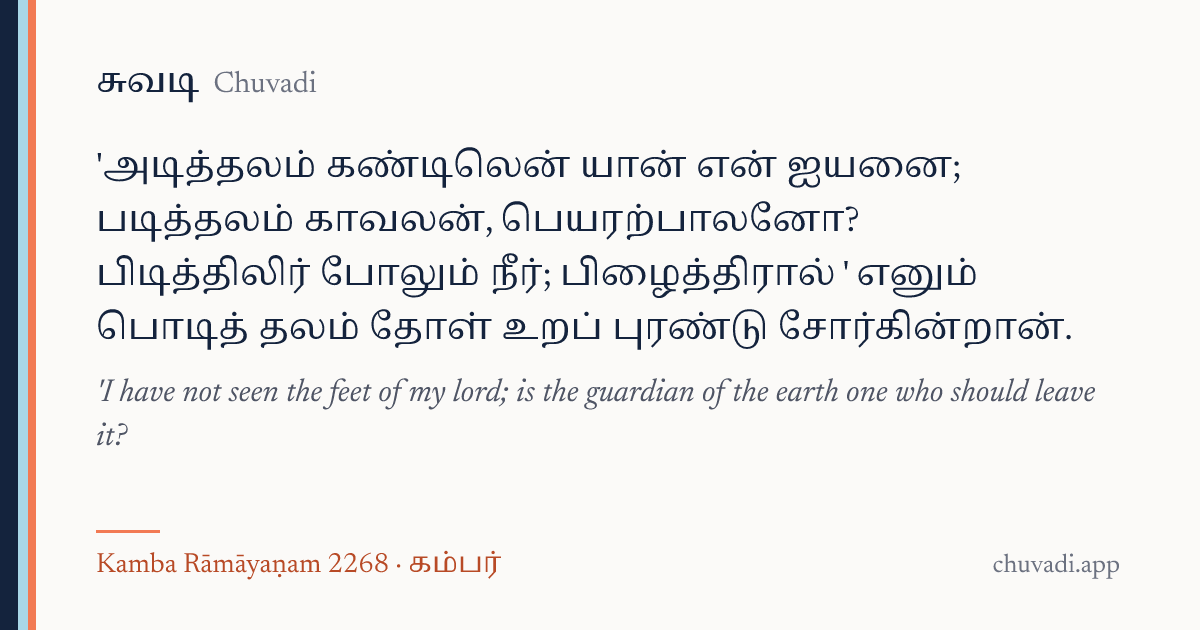
பாடல் · The poem
Tap a word to see its gloss in the commentary and where else it occurs.
பொருள் · Meaning in Tamil
தலம் பொடி தோள் உறப் புரண்டு சோர்கின்றான் - மண்ணில் உள்ள புழுதி தன் தோளிற் படும்படி நிலத்திற் புரண்டு மனம் சோர்ந்தவனாகி; “யான் -; என் ஐயனை - என் தலைவனாகிய இராமனது; அடித்தலம் - திருவடியை; கண்டிலென் - காணப்பெறவில்லை; படித்தலம் காவலன் - இப்பூமியாகிய இடத்துக்கு அரசனாகிய இராமன்; பெயரற்பாலனோ? - இக்கோசல நாட்டைவிட்டுப் பெயர்ந்து செல்லும் தன்மை உடையனோ?; நீர் - (அன்னையாகிய) நீர் (ஆற்றாமையால்); பிடித்திலிர் போலும் - (அவன் கானகம் செல்லும்போது) தடுத்தல் செய்து பிடித்து வைத்துக் கொள்கிலிர்; பிழைத்திர் - பிழை செய்துவிட்டீர்;” எனும் - என்று சொல்வானாயினன்.
இராமனே அரசன் என்பதைக் கோசலைக்கு உறுதிப்படுத்தும் முகமாக, ‘படித்தலம் காவலன்’ என்று இராமனைக் குறிப்பிட்டான். ‘பிழைத்திர்’ என்பதற்கு ‘உம்மால் இனி உயிர் வாழ இயலுமோ’ என்று கோசலையைக் கேட்டதாகவும் கொள்ளலாம். ‘ஆல்’ அசை.
ஆங்கிலம் · English translationAI
Translation
- 'I have not seen the feet of my lord;
- is the guardian of the earth one who should leave it?
- It seems you did not hold him back; you have erred,' he says,
- rolling on the ground till the dust touched his shoulders, and fainting.
What the poem says
Paratan rolls on the floor until the dust clings to his shoulders. He has not even seen Irāmaṉ's feet. The rightful protector of the earth should never have left his land, he says, and Kōcalai was wrong not to hold him back when he went.
By calling Irāmaṉ 'guardian of the earth' he assures Kōcalai that he regards her son as the true king. 'You have erred' may also be read as 'how will you survive now?'.