



கம்பராமாயணம் 2271 · அயோத்தியா 9.94
பாடல் · The poem
Tap a word to see its gloss in the commentary and where else it occurs.
பொருள் · Meaning in Tamil
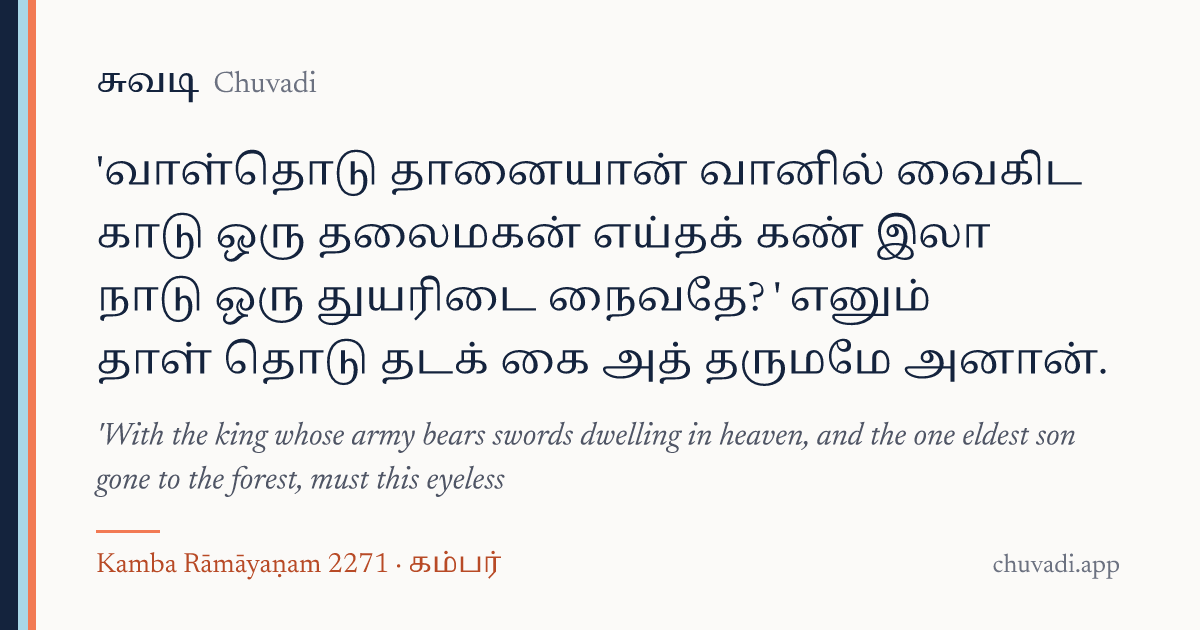
தாள்தொடு தடக்கை அத்தருமமே அனான் - முழந்தாளைத் தொடுமாறு நீண்ட கைகளை உடைய முழுமுதலாகிய அறத்தினைப் போன்ற பரதன்; “வாள் தொடு தானையான் - வாள் ஏந்திய சேனைகளை உடைய தயரதன்; வானில் வைகிட - வானுலகத்தில் தங்கியிருக்க; ஒரு தலைமகன் - அவனது (அரசுக்குரிய) ஒப்பற்ற மூத்த மகன்; காடு எய்த - காட்டை அடைய, (அரசு புரிவார் இன்மையால்); கண் இலா நாடு - துன்பம் நீக்குதற்குரிய களைகண் ஆனவரைப் பெறாத நாடு; துயரிடை - துன்பத்தில்பட்டு; நைவதே - வருந்துவதே; எனும் - என்று சொல்லிப் புலம்பும்.
தயரதனும் இராமனும் நாட்டிற்குக் கண் போல்வார் ஆதலின் அவரை இழந்த நாடு ‘கண் இலா நாடு’ ஆம். முழந்தாள் அளவு நீண்ட கை அரசர்க்குரிய உத்தம இலக்கணம். ‘தாழ்தடக் கைகளே’ (2104) என்றதை இங்கு ஒப்புநோக்குக.
ஆங்கிலம் · English translationAI
Translation
- 'With the king whose army bears swords dwelling in heaven,
- and the one eldest son gone to the forest, must this eyeless
- land waste away in sorrow?' laments
- he whose long arms reach his knees, who is Dharma itself.
What the poem says
Paratan, who is like Dharma in person and whose arms reach to his knees, grieves for the kingdom. Its king, lord of a sword-bearing army, is now in heaven; its peerless eldest prince has gone to the forest.
Tacarataṉ and Irāmaṉ were the eyes of the land, so the country left without them is 'eyeless', with no one to protect it. Arms reaching the knees were a traditional mark of a great king.