



கம்பராமாயணம் 2273 · அயோத்தியா 9.96
பாடல் · The poem
Tap a word to see its gloss in the commentary and where else it occurs.
பாட வேறுபாடு · Project Madurai reads
பொருள் · Meaning in Tamil
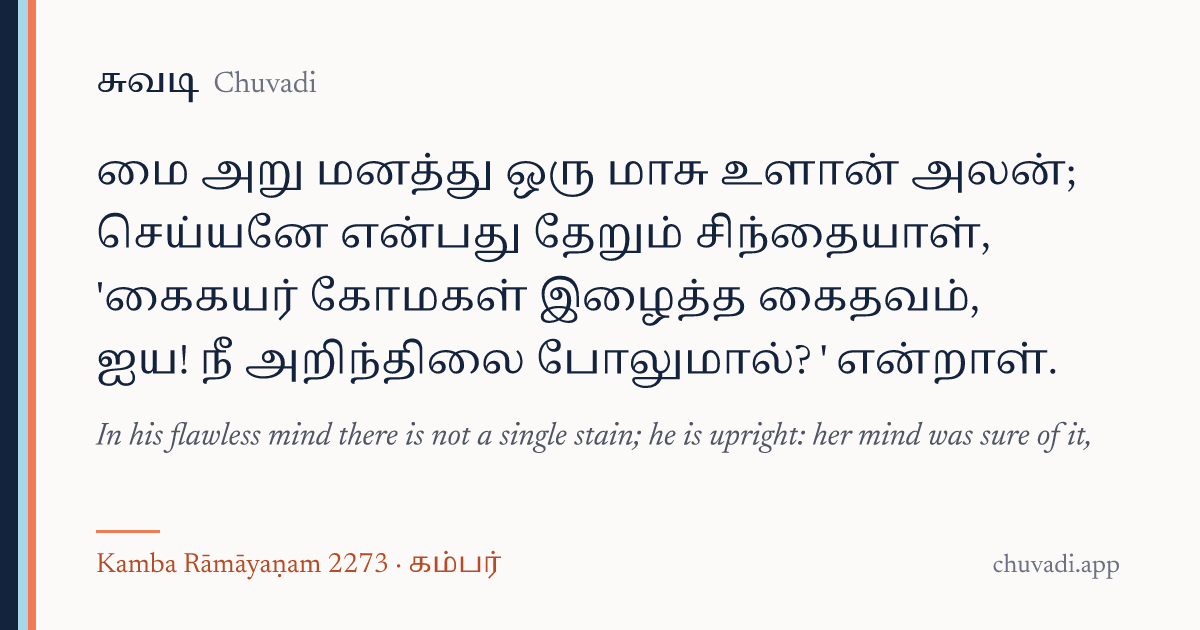
(இவன்) மை அறு - இயல்பாகவே குற்றம் அற்ற மனத்தின்கண்; ஒரு மாசு உளான் அலன் - (கைகேயியால் ஏற்பட்ட) ஒரு குற்றமும் உடையவன் அல்லன்; செய்யன் - நேர்மையானவன்; என்பது தேறும் சிந்தையாள் - என்பது தெளிந்த மனத்தினள் ஆனாள், (பின்னர்ப் பரதனைப் பார்த்து); “ஐய! - ஐயனே; நீ கைகயர் கோமகள் - கேகய நாட்டு அரசன் மகளாகிய கைகேயி; இழைத்த கைதவம் - செய்த வஞ்சனை; அறிந்திலை போலும்” - (முன்னமே) அறியாய் போலும்; என்றாள்.
முன்பு மாசு உள்ளானோ என்று கோசலை ஐயுற்றாள் என்பதை மேற்பாட்டில் (2190) ‘சலம்’ என்று குறித்துள்ளார். இங்கே ‘செய்யனே’ என்பது தெளிந்தாளாம். ‘ஐய’ என்பது உள்ளன்பினால் ‘தலைவ’ என அழைத்தாளாம். கைகேயி அல்லது உன் தாய் என்னாமல் கைகயர் கோமகள் என்றழைத்தது அவள் அரசின்கண் ஆசைப்பட்டதற்குக் காரணம் சொன்னது போலத் தோற்றி நயம் செய்கிறது. ஆல் அசை. ‘செய்யனே’ ‘ஏ’ காரம் தேற்றம்.
ஆங்கிலம் · English translationAI
Translation
- In his flawless mind there is not a single stain;
- he is upright: her mind was sure of it,
- and she said, 'The deceit wrought by the daughter of the Kaikaya kings,
- my lord, it seems you knew nothing of it?'
What the poem says
Kōcalai is now certain that Paratan's spotless mind holds no trace of guilt. She addresses him affectionately as 'my lord' and asks, half in relief, whether he really knew nothing of the deception worked by Kaikēyi.
She does not say 'your mother' or even 'Kaikēyi' but 'the daughter of the Kaikaya kings', a phrasing that hints at why Kaikēyi craved the throne: she was born a king's daughter.