



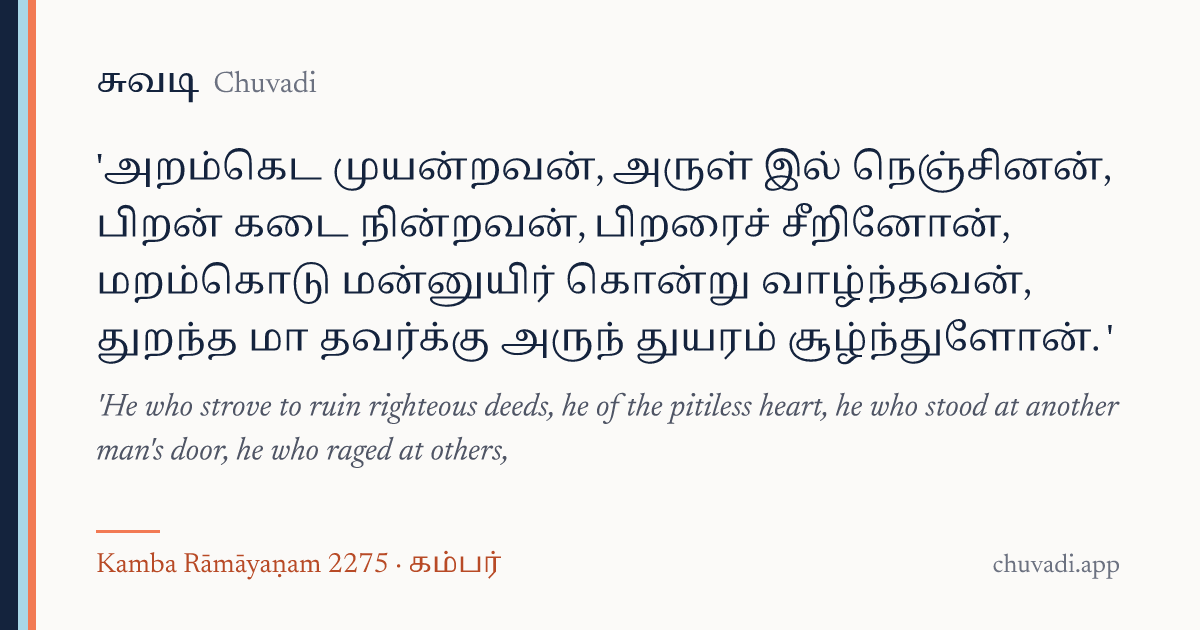
கம்பராமாயணம் 2275 · அயோத்தியா 9.98
பாடல் · The poem
Tap a word to see its gloss in the commentary and where else it occurs.
பொருள் · Meaning in Tamil
“அறம் கெட முயன்றவன் - (பிறர் செய்த) அறச் செயல் கெடும் படி முயற்சி செய்தவன்; அருள் இல் நெஞ்சினன் - இரக்கம் அற்ற மனம் உடையவன்; பிறன் கடை நின்றவன் - தொழில் செய்து பொருள்தேடாது அயலார் வீட்டு வாயிற்படியில் எளிவரவாய் நின்றவன்; பிறரைச் சீறினோன் - (ஒரு காரணமும் இல்லாமல்) பிறரைக் கோபித்துக் கெடுதி செய்தவன்; மறம் கொடு மன்னுயிர் கொன்று வாழ்ந்தவன் - இரக்கமற்ற மறக்கொடுமை கொண்டு நிலைத்த உயிர்களைக் கொன்று அதனால் தன் வாழ்க்கை நடத்தியவன்; துறந்த மாதவர்க்கு அருந்துயரம் சூழ்ந்துளோன் - துறவிகளாய பெரிய முனிவர்களுக்குப் பொறுத்தற்கரிய துயரத்தை வேண்டுமென்றே செய்தவன்...
ஆகிய இவர்கள் ‘நண்ணும் அத் தீ எரி நரகத்துக் கடிது செல்க யான்’ எனப் பரதன் உரைப்பதாக இது முதல் நான்கு செய்யுள்கள் ஒரு தொடராக இருந்து இப்படலத்து 101 ஆம் பாடலின் இறுதி அடியில் (2202) முடிகின்றன. “எனக்குத் தெரிந்து கைகேயி செய்த வஞ்சனை நடந்திருக்குமாயின் யான் இத்தகையோர் செல்லும் நரகு செல்வேனாக” என்று மனத்தின் அடித்தளத்தில் இருந்து இச்சபதங்கள் குமுறி எழுகின்றன. பிறன்கடை நின்றவன் - பிறன் மனைவியை நயந்து அந்த வீட்டு வாயிலின் அருகே சென்று நின்றவன் எனவும் உரைக்கலாம். “அறன் கடை நின்றாருள் எல்லாம் பிறன்கடை, நின்றாரிற் பேதையார் இல்” (குறள். 142) என்னும் குறளையும் கருதுக. “நட்பிடைக் குய்யம் வைத்தான் பிறர்மனை நலத்தைச் சார்ந்தான்....... அட்டுகுடலம் தின்றான்.... குட்டநேராய் நரகம் தன்னுட் குளிப்பவர் இவர்கள் கண்டாய்” என்னும் சிந்தாமணிப் பாடலை இங்கு ஒப்பு நோக்குக. முற்றும் துறந்த முனிவர்க்குச் சீற்றமும் இல்லையாதலின் சாபத்தில் தப்புவர் ஆயினும் நரகத்தில் தப்பார் என்க.
ஆங்கிலம் · English translationAI
Translation
- 'He who strove to ruin righteous deeds, he of the pitiless heart,
- he who stood at another man's door, he who raged at others,
- he who lived by cruelly killing living beings,
- he who brought grievous suffering on great ascetics who have renounced all.'
What the poem says
Paratan begins his oath. This verse and the next three form a single sentence: he lists the worst kinds of sinners and swears that, if he had any part in Kaikēyi's plot, he will go swiftly to the burning hell that awaits them.
Here he names those who wreck others' good works, the merciless, those who loiter at another's door (either begging instead of working, or lusting after another man's wife), the needlessly wrathful, those who live by killing, and those who torment ascetics. Ascetics will not curse them, being free of anger, but hell will not let them escape.