



கம்பராமாயணம் 2276 · அயோத்தியா 9.99
பாடல் · The poem
Tap a word to see its gloss in the commentary and where else it occurs.
பாட வேறுபாடு · Project Madurai reads
பொருள் · Meaning in Tamil
குரவரை - ஐம்பெருங் குரவரை; மகளிரை - பெண்களை; வாளின் கொன்றுளோன் - வாளால் கொலைசெய்தவன்; புரவலன் தன்னொடும் - அரசனோடும்; அமரில் புக்கு - போர்க்களத்துக்குச் சென்று; உடன் - உடனே; விரவலர் வெரிநிடை விழிக்க - பகைவர்கள் தன் முதுகிடத்தைக் காண; மீண்டுளோன் - திரும்பி ஓடிவந்தவன்; இரவலர் - ஏற்றுண்பாரது; அருநிதி - அரிதாகச் சேமித்த செல்வத்தை; எறிந்து வௌவினோன் - அவர்களை அடித்துக் கைப்பற்றிக் கொண்டவன்...
ஐம்பெருங்குரவர் ஆவார் - தந்தை, தாய், தம்முன், அரசன், ஆசிரியன் என்போர். (ஆசாரக். 16) குரவர் - ஆசிரியர் என்று ‘குரு’வை மட்டும் கூறுதலும் உண்டு. போர்க்கு அரசனுடன் சென்று புறமுதுகிட்டு ஓடிவந்து அரசனைக் கைவிட்டவன். இவனை வள்ளுவர் ‘அமரகத்து ஆற்றறுக்கும் கல்லாமா அன்னார்’ என்று சொல்வர் (குறள். 814.).
ஆங்கிலம் · English translationAI
Translation
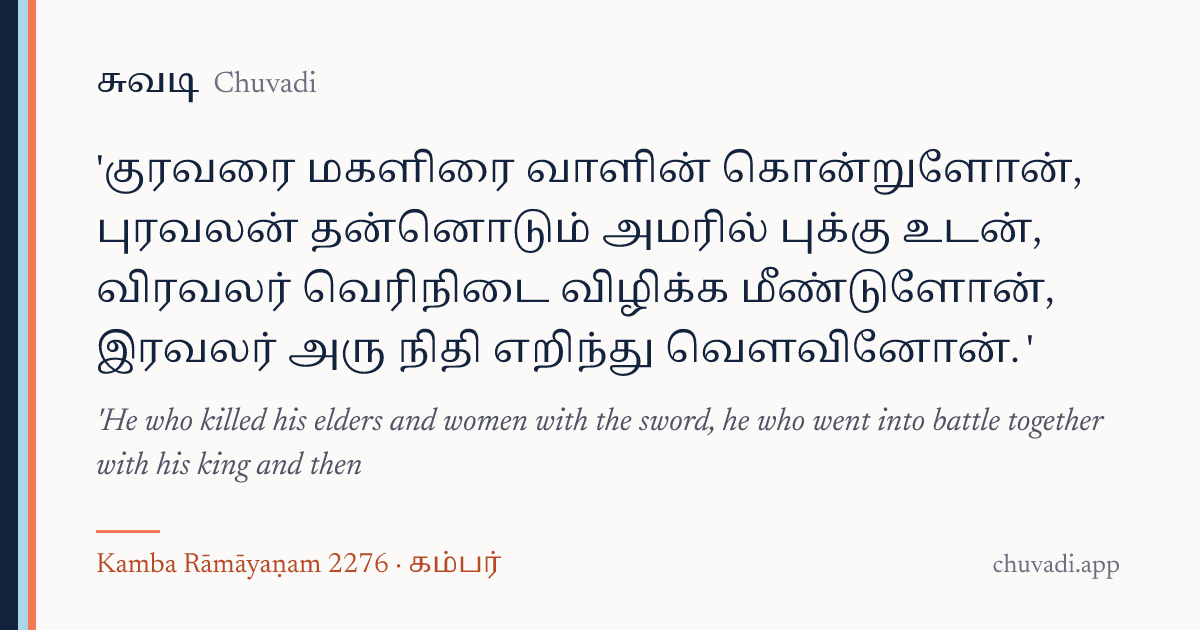
- 'He who killed his elders and women with the sword,
- he who went into battle together with his king and then
- turned back so that the enemy saw his back,
- he who struck down beggars and seized their hard-won wealth.'
What the poem says
The oath continues with more sinners: one who kills his elders or women with a sword, one who goes to war beside his king and then flees, showing his back to the enemy, and one who beats beggars and robs them of the little they have saved.
The 'elders' are traditionally five: father, mother, elder brother, king and teacher. The soldier who deserts his king is compared in the Tirukkuṟaḷ to an untrained horse that throws its rider in battle.