



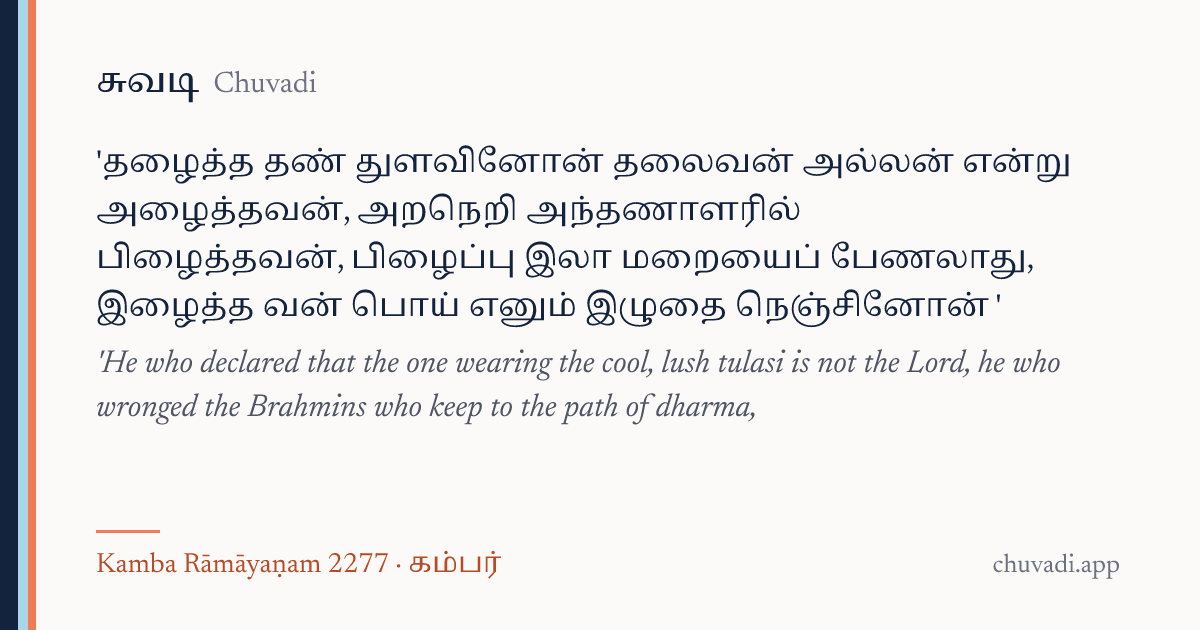
கம்பராமாயணம் 2277 · அயோத்தியா 9.100
பாடல் · The poem
Tap a word to see its gloss in the commentary and where else it occurs.
பொருள் · Meaning in Tamil
“தழைத்த - செழித்துள்ள; தண் துளவினோன் - குளிர்ச்சி பொருந்திய திருத்துழாய் மாலையைச் சூடியுள்ள திருமால்; தலைவன் அல்லன்” - பரம்பொருள் அல்லன்; என்று அழைத்தவன் - என்று சொல்லியவன்; அறநெறி - தரும வழியில் நடக்கின்ற; அந்தணாளரில் பிழைத்தவன் - அந்தணாளர் திறத்தில் பிழைசெய்தவன்; பிழைப்பு இலா மறையைப் பேணலாது - ஒரு சிறிதும் குற்றம் இல்லாத இறைவன் அருளிய வேதத்தை நன்கு வழிபட்டுப் பாதுகாவாது; “இழைத்த வன் பொய்” - ஒருவர் செய்துவைத்த பொய்யுரை; எனும் இழுதை நெஞ்சினோன் - என்று சொல்லும் பேய்மனம் படைத்தவன்...
‘திருமாலே பரம்பொருள்’ என்னும் கருத்தை நிலைநிறுத்தப் பரதன் சபதத்தில் அதனையும் ஒன்றாக்கினார் போலும். வேதம் ஒருவனால் உண்டாக்கப்பட்டதன்று; ‘அபௌருஷேயம்’ என்பர் வடநூலார்; இறைவனே அருளியது. அதைப் பொய் என்பவன் பேய் என்றார். “உலகத்தார் உண்டென்பது இல்லென்பான் வையத்து அலகையா வைக்கப்படும்” (குறள் 850) என்பதும் இக்கருத்தினதாதல் அறிக.
ஆங்கிலம் · English translationAI
Translation
- 'He who declared that the one wearing the cool, lush tulasi is not the Lord,
- he who wronged the Brahmins who keep to the path of dharma,
- he of the demon heart who, not cherishing the flawless Veda,
- calls it a gross lie someone made up.'
What the poem says
Paratan adds to his list those who deny that Tirumāl, Viṣṇu wearing his garland of cool tulasi leaves, is the supreme Lord; those who wrong Brahmins who follow dharma; and those who, instead of revering the faultless Veda, dismiss it as a lie someone invented.
The poet seems to use Paratan's oath to affirm Viṣṇu's supremacy. The Veda is held to be authorless, revealed by God, so to call it a fabrication is the mark of a demonic mind. The Tirukkuṟaḷ likewise calls one who denies what the world affirms a demon on earth.