



கம்பராமாயணம் 2279 · அயோத்தியா 9.102
பாடல் · The poem
Tap a word to see its gloss in the commentary and where else it occurs.
பொருள் · Meaning in Tamil
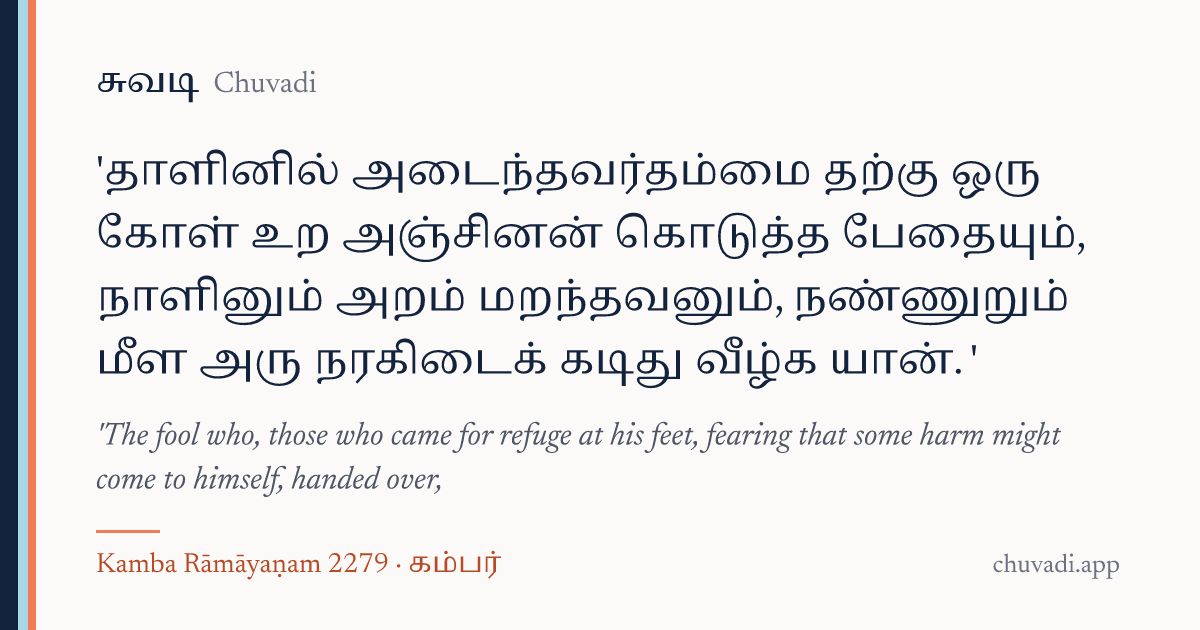
“தாளினில் அடைந்தவர் தம்மை - (என்னைப் பாதுகாக்க வேண்டும் என்று சொல்லித்) தன்னடியில் அடைக்கலமாக வந்து சேர்ந்தவர்களை; தற்கு ஒரு கோள் உற - (அவர்களுக்கு அடைக்கலம் அளித்ததனால்) தனக்கு ஒரு தீங்கு உறலாயிருக்க அதற்கு அஞ்சியவனாய் எதிரி கையில் காட்டிக்கொடுத்துத் தான் உயிர் தப்பிய அறிவிலியும்; நாளினும் அறம் மறந்தவனும் - சிறந்த நாளினும் கூடத் தருமவழியில் செல்லாது மறந்தவனும்; நண்ணுறும் - சென்று அடைகின்ற; மீள அரு நரகிடை - திரும்ப வரமுடியாத அரிய நரகத்திடத்து; யான் கடிது வீழ்க - யான் விரைந்து வீழ்வேனாக.”
அடைக்கலம் கொடுத்தோரைக் காத்தல் பேர் அறம் ஆகும். “உய்ய, ‘நிற்கு அபயம்’ என்றான் உயிரைத் தன் உயிரின் ஓம்பாக் கையன்..... மீள்கிலா நரகின் வீழ்வார்” (6478.) என்பதை ஈண்டு ஒப்பு நோக்குக. “தஞ்சென அடைந்தவர் தமக்கு இடர் நினைக்கும், நஞ்சனைய பாதகர் நடக்கும் நெறி சேர்வேன்” (வில்லி. 4/ - /83.) என்ற பாரதமும் இதனைப் பின்பற்றியதே ஆகும். ‘நாளினும்’ எந்நாளினும் எனவும் உரைக்கலாம்.
ஆங்கிலம் · English translationAI
Translation
- 'The fool who, those who came for refuge at his feet,
- fearing that some harm might come to himself, handed over,
- and he who forgot dharma even on holy days: to the place they reach,
- the hell from which none returns, may I swiftly fall.'
What the poem says
Paratan swears again. He names the coward who, afraid of harm to himself, hands over to their enemies those who came to him for refuge, and the man who neglects righteousness even on sacred days. May he fall swiftly into the hell from which there is no return.
Protecting those who seek refuge is one of the highest duties in the epic; the same theme returns much later when Irāmaṉ grants shelter to Vīṭaṇaṉ. 'On holy days' can also be read as 'on any day'.