



கம்பராமாயணம் 2280 · அயோத்தியா 9.103
பாடல் · The poem
Tap a word to see its gloss in the commentary and where else it occurs.
பொருள் · Meaning in Tamil
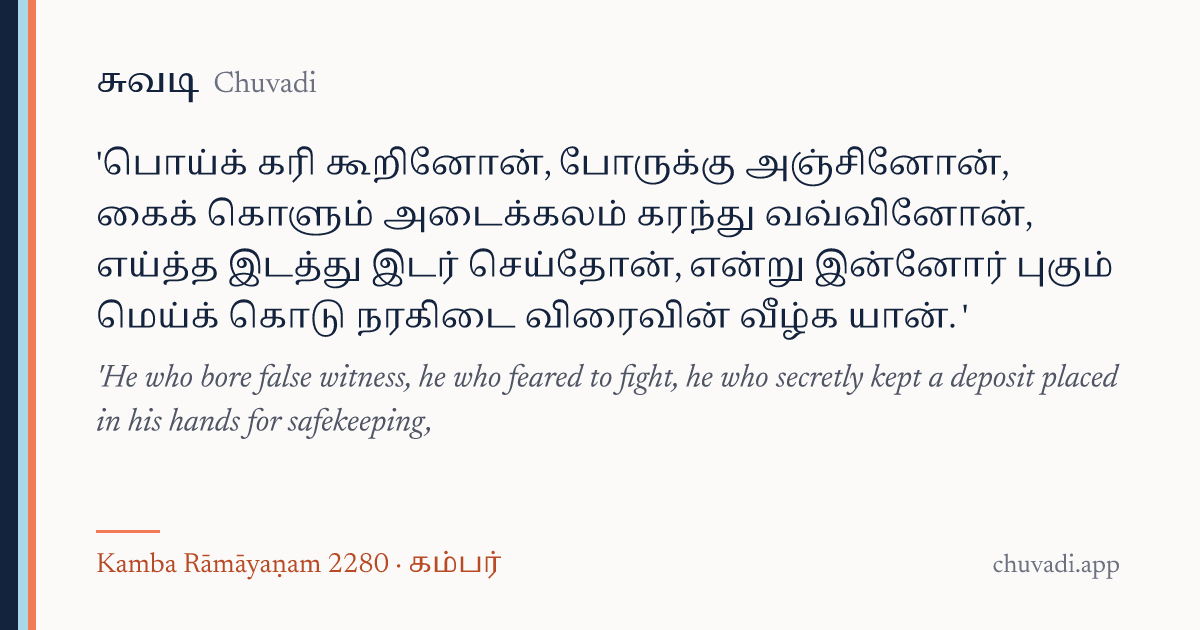
“பொய்க் கரி கூறினோன் - (நீதி மன்றத்தில்) பொய்ச்சான்று கூறியவன்; போருக்கு அஞ்சினோன் - போருக்கு வீரமாகப் புறப்பட்டுச் சென்று பயந்து திரும்பியவன்; கைக்கொளும் அடைக்கலம் கரந்து வவ்வினோன் - பாதுகாப்பதாகப் பற்றிய அடைக்கலப் பொருளை (உடையவனை ஏமாற்றி) மறைத்துத் (தான்) எடுத்துக்கொண்டவன்; எய்த்த இடத்து இடர் செய்தோன் - (ஒருவரை) அவர் இளைத்த இடத்திலே மேலும் துன்பம் செய்தோன்; என்று இன்னோர் புகும் - என்றிவ்வாறு சொல்லப்பெறும் இந்நால்வரும் சென்றுபடும்; மெய்க் கொடு நரகிடை - உண்மையான கொடிய நரகத்திடத்து; யான் விரைவின் வீழ்க - யான் விரைந்து வீழ்வேனாக.”
‘போருக்கு அஞ்சினோன்’ - முன் பாடல்களில் உள்ள ‘புரவலன் தன்னொடும் அமரில் புக்கு உடன் விரவலர் வெரிநிடை விழிக்க மீண்டுளோன்’ என்பதும் (2200) ‘நாயகன் பட நடந்தவனும்’ (2202) என்ற இரண்டும் இதனின் வேறுபட்டவை. அரசனோடு புகுந்து அவனைவிட்டு ஓடிவருதல், அரசன் இறக்கக் கவலை இன்றித் தான் உயிர்பிழைத்து வருதல் என்பன அவை, இது போருக்கு வீரம் பேசிச்சென்று களங்கண்டவழி அஞ்சுகிற பேடித் தன்மையாலும். இந்நால்வரும் செல்லும் நரகத்தில் நான் புகுக என்றான் பரதன்.
ஆங்கிலம் · English translationAI
Translation
- 'He who bore false witness, he who feared to fight,
- he who secretly kept a deposit placed in his hands for safekeeping,
- he who harmed another when that one was weak: into the place such men enter,
- that truly cruel hell, may I fall in haste.'
What the poem says
Four more sinners: the false witness, the man who sets out boasting of his courage and then shrinks from battle, the trustee who hides and keeps property left in his care, and the man who strikes another when he is already worn down.
The coward here differs from the deserters named earlier. Those abandoned their king in the field; this one loses his nerve the moment he sees the battlefield he bragged about. Paratan swears that, if he is guilty, he will share their hell.