



கம்பராமாயணம் 2281 · அயோத்தியா 9.104
பாடல் · The poem
Tap a word to see its gloss in the commentary and where else it occurs.
பொருள் · Meaning in Tamil
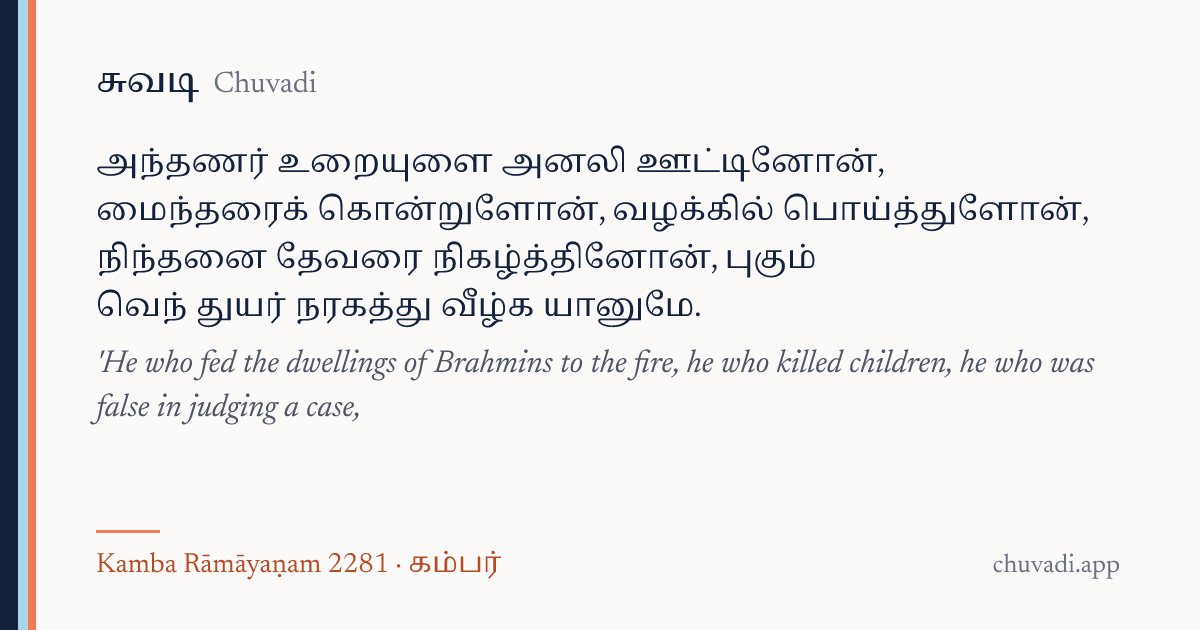
“அந்தணர் உறையுளை அனலி ஊட்டினோன் - வேதம் வல்ல மறையோர் வசிக்கின்ற இடத்தை நெருப்பை உண்ணும்படி செய்தவன் (தீ வைத்தவன்); மைந்தரைக் கொன்றுளோன் - சிறுவரைக் கொன்றவன்; வழக்கில் பொய்த்துளோன் - (இருவர் வழக்குத் தம்மிடம் நியாயத்துக்கு வந்தவழி) வழக்கில் பொய்த்தீர்ப்புச் செய்தவன்; தேவரை நிந்தனை நிகழ்த்தினோன் - தெய்வங்களை வைது உரைத்தவன் (ஆகிய இவர்); புகும் வெந்துயர் நரகத்து யான் வீழ்க - செல்லும் அக் கொடிய துன்பத்தைத் தரும் நரகத்தில் யான் வீழ்வேனாக.”
வாழும் இடத்துக்குத் தீ வைத்தலே பாதகம். அதன் மேலும் அந்தணர் வசிக்கும் இடத்துக்கும் தீ வைத்தல் மாபாதகம். சிறுவரைக் கொல்லுதல்; பெற்ற பிள்ளைகளைக் கொல்லுதலும் ஆம். பொய்க்கரி கூறினோன் என்று முன்னர் வந்தது சாட்சியாளர்க்கு; இது நடுவர்க்கு; இனி வாதி, பிரதிவாதி இருவருள் ஒருவர் பொய்த்தலும் இங்கே
ஆங்கிலம் · English translationAI
Translation
- 'He who fed the dwellings of Brahmins to the fire,
- he who killed children, he who was false in judging a case,
- he who spoke abuse of the gods: into the hell of burning torment
- that they enter, may I too fall.'
What the poem says
Paratan's oath goes on. He names the man who sets fire to the homes of Brahmins, the killer of children, the one who gives a false judgment in a dispute, and the one who reviles the gods. May he too fall into their hell of searing pain.
Setting fire to any dwelling is a sin; burning the homes of Vedic scholars is a great sin. 'Killing children' may also mean killing one's own offspring. The earlier 'false witness' referred to a witness; here the falsehood is a judge's, or possibly that of one of the parties to the case.