



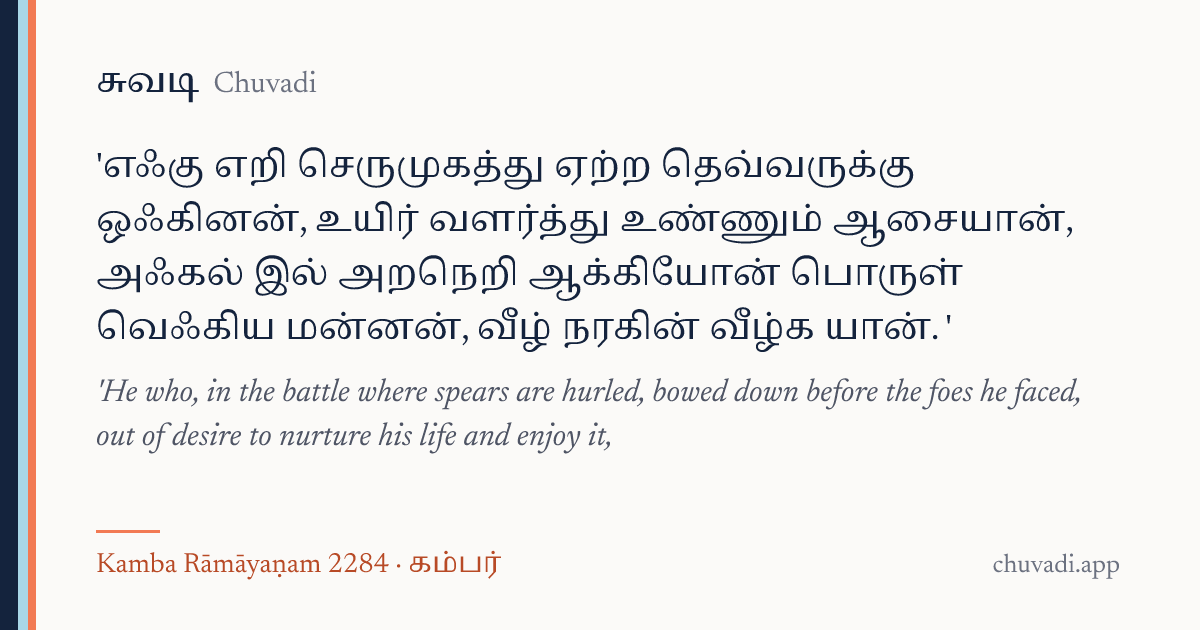
கம்பராமாயணம் 2284 · அயோத்தியா 9.107
பாடல் · The poem
Tap a word to see its gloss in the commentary and where else it occurs.
பொருள் · Meaning in Tamil
“எஃகு எறி செருமுகத்து - ஆயுதங்களை வீசிப் போர்செய்யும் போர்க்களத்து; ஏற்ற தெவ்வருக்கு ஒஃகினன் - எதிர்த்துப் போர் புரியும் பகைவர்களுக்கு எதிரே (தானும் போர் செய்யாமல் உயிராசையால்) வணங்கியவன்; உயிர் வளர்த்து உண்ணும் ஆசையால் - உயிரை உடலில் நிலைபெறச்செய்து நெடுநாள் வாழ்ந்து அனுபவிக்க வேண்டும் என்கின்ற ஆசையாலே; அஃகல் இல் அறநெறி ஆக்கியோன் பொருள் வெஃகிய மன்னன் - சுருங்குதல் இல்லாத பெரிய அறவழியில் பொருள் சேர்த்தவனது பொருளைப் (பேராசைப்பட்டு) கைப்பற்றிக் கொண்ட அரசன்; வீழ் நரகின் யான் வீழ்க - விழுகின்ற நரகத்தில் யானும் வீழ்வேனாக.”
‘உயிர் வளர்த்து உண்ணும் ஆசையால்’ என்பதனை இடைநிலைத் தீவகமாகக் கொண்டு, ‘எஃகு எறி செருமுகத்து’ என்பதன் முன்னும் கூட்டிப் பொருள் செய்யலாம். இது இடைநிலை விளக்கணி என்றும், தாப்பிசைப் பொருள்கோள் என்றும் கூறப்பெறும். ‘கொள்பொருள் வெஃகிக் குடி அலைக்கும் வேந்தன்’ (திரிகடுகம் 50) எனக் கூறுவர் இம்மன்னனை.
ஆங்கிலம் · English translationAI
Translation
- 'He who, in the battle where spears are hurled, bowed down before the foes he faced,
- out of desire to nurture his life and enjoy it,
- and the king who coveted the wealth of one who earned it by the unfailing path of dharma:
- into the hell where they fall, may I fall.'
What the poem says
Two more: the warrior who, out of love of his own life, bows in surrender to the enemy in the thick of battle, and the king who greedily seizes wealth that a subject earned honestly.
The phrase 'out of desire to cherish his life and enjoy it' sits in the middle of the verse and can be read with both the coward before it and the greedy king after it, a figure Tamil poetics calls the 'middle lamp'.