



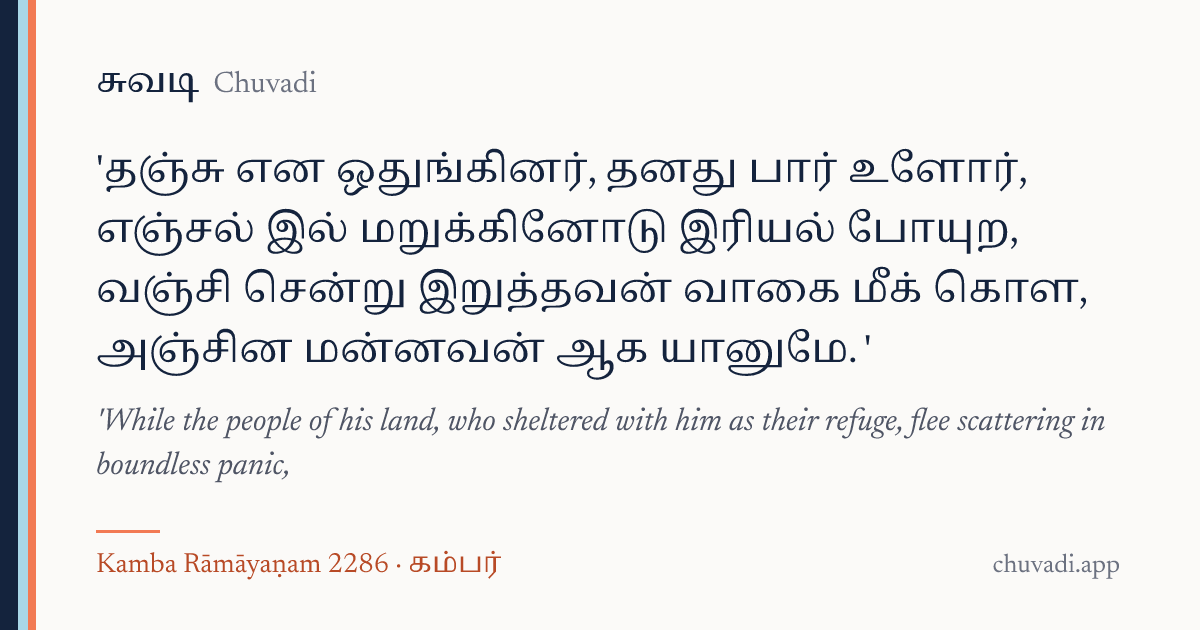
கம்பராமாயணம் 2286 · அயோத்தியா 9.109
பாடல் · The poem
Tap a word to see its gloss in the commentary and where else it occurs.
பொருள் · Meaning in Tamil
யான் -; தஞ்சு என ஒதுங்கினர் தனது பார் உளோர் - (நீயே எமது) அடைக்கலம் எம்மைப் பாதுகாக்க என்று தன்னிடத்தில் வந்து அடைந்த தன் குடிமக்கள்; எஞ்சல் இல் மறுக்கினோடு - குறைதல் இல்லாத (அதிக) மனக் கலக்கத்தோடு; இரியல் போய் உற - கெட்டு ஓடும்படியாக; வஞ்சி சென்று இறுத்தவன் - வஞ்சி மாலை புனைந்து மண்ணாசை காரணமாகப் படை எடுத்துத் (தன் எல்லையில்) தங்கிய பகை அரசன்; வாகை மீக் கொள - வெற்றி மேற்கொண்டு ஆரவாரம் செய்ய; அஞ்சின மன்னவன் - அப்பகைவனோடு தன் உயிர் உள்ளதுணையும் தன் மக்களைக் காப்பாற்றப் போர் செய்யாமல் பயந்த அரசன்; ஆக - (செல்லுகின்ற தீய கதியில்) செல்வேனாக.
வஞ்சி - மண்ணாசை காரணமாகப் படை எடுத்துச் சென்று பகைவர் நாட்டு எல்லையில் தங்கிச் செய்யும் போர்ப் பகுதி. வஞ்சி என்பது மேற்சேறல் எனப்பெறும். அதற்கு வஞ்சிப்பூச் சூடுதல் உரித்து. வாகை - வெற்றி; வெற்றி பெற்றோர் வாகைப்பூச் சூடுவர். ‘வாகைப்பூவை மேல்சூடிக்கொள்ள’ எனலும் ஆம். யானும், ‘உம்’ எச்சவும்மை. சிறப்பும்மை ஆகலும் ஆம்.
ஆங்கிலம் · English translationAI
Translation
- 'While the people of his land, who sheltered with him as their refuge,
- flee scattering in boundless panic,
- and the invader who came wearing the vañci and camped there takes the vākai of victory,
- the king who was afraid: may I too become him.'
What the poem says
Paratan swears to share the fate of a cowardly king: when an invader marches in wearing the vañci flower of conquest and camps at the border, this king, instead of fighting for his people as long as he lives, cowers in fear. His subjects, who looked to him for protection, scatter in terror while the enemy celebrates with the vākai flower of victory.
In classical Tamil war poetry, warriors wore particular flowers for each phase of battle: vañci for an expedition to seize land, vākai for victory.