



கம்பராமாயணம் 2287 · அயோத்தியா 9.110
பாடல் · The poem
Tap a word to see its gloss in the commentary and where else it occurs.
பொருள் · Meaning in Tamil
“கன்னியை - திருமணம் ஆகாத கன்னிப்பெண்ணை; அழிசெயக் கருதினோன் - கற்பழித்துக் கெடுத்தல் செய்ய நினைத்தவன்; குருபன்னியை நோக்கினோன் - ஆசான் மனைவியைத் தீய கருத்துடன் பார்த்தவன்; நறை பருகினோன் - கள் உண்டவன்; இகழ் களவினில் - (எல்லாராலும்) இகழப்படுகின்ற களவினால்; பொன் பொருந்தினோன் - பொன்னைச் சேர்த்தவன்; எனும் இன்னவர் - என்கின்ற (நால்வராய) இவர்கள்; உறு - அடைகின்ற; கதி - (நரக) கதி; என்னது ஆக - எனக்குரியது ஆகுக.”
‘கன்னி’ என்பதற்குப் பூப்பு எய்தாத பெண் எனலும் ஆம். பெண்களைப் பூப்பு எய்தும் முன்னரே திருமணம் செய்வித்தல் அக்கால வழக்கம். ‘ஏ’ ஈற்றசை.
ஆங்கிலம் · English translationAI
Translation
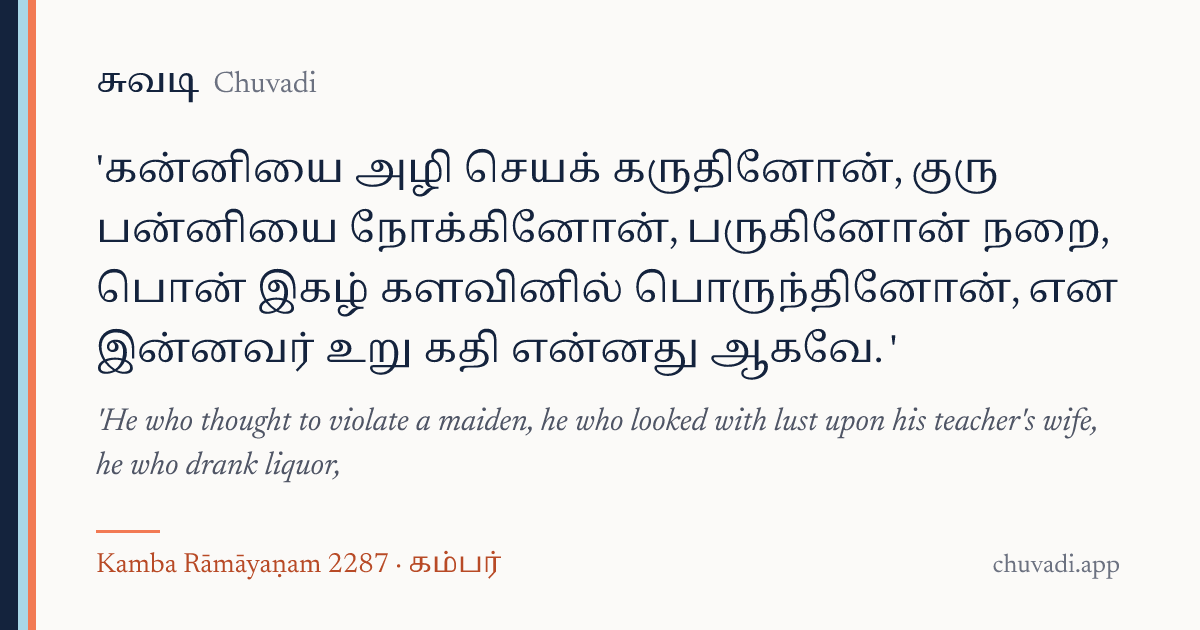
- 'He who thought to violate a maiden, he who looked
- with lust upon his teacher's wife, he who drank liquor,
- he who acquired gold by despised theft: such men
- and the fate they come to, may it be mine.'
What the poem says
This verse lists four grave sins: plotting to violate an unmarried girl, looking with desire at one's teacher's wife, drinking liquor, and gaining gold by theft.
These correspond closely to the 'great sins' of the dharma texts. Paratan asks that the hellish destiny of such men be his if he had any hand in Irāmaṉ's exile.