



கம்பராமாயணம் 2288 · அயோத்தியா 9.111
பாடல் · The poem
Tap a word to see its gloss in the commentary and where else it occurs.
பாட வேறுபாடு · Project Madurai reads
பொருள் · Meaning in Tamil
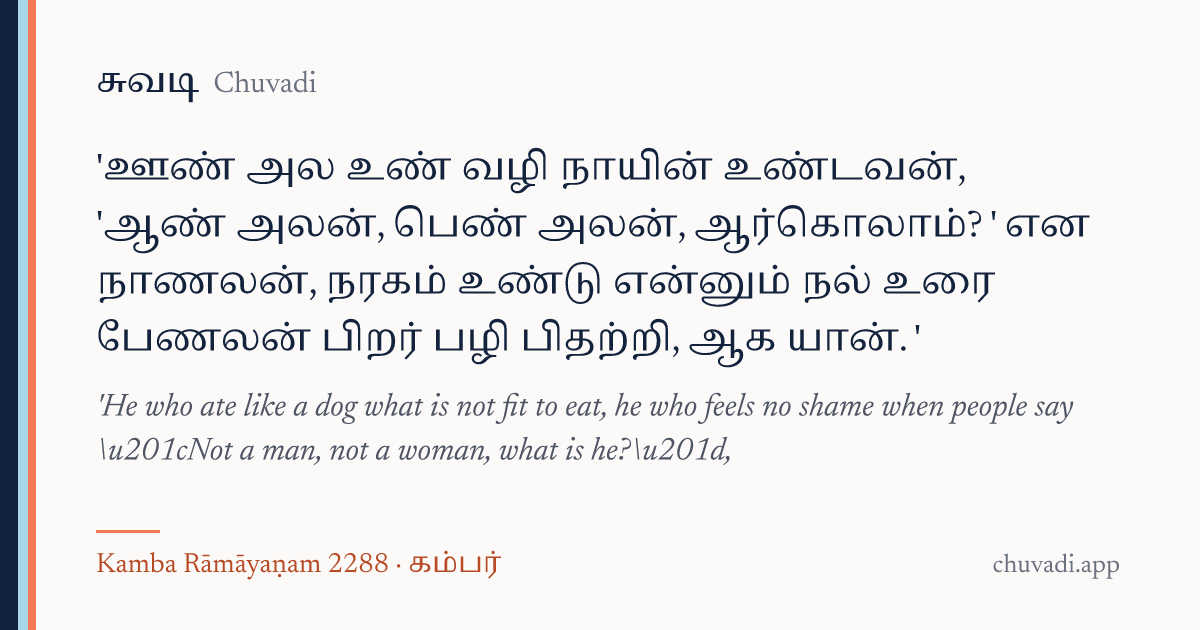
“யான் -; உண்வழி ஊண் அல நாயின் உண்டவன் - உண்ணுகின்ற பொழுது உண்ணுதற்கு உரியது அல்லாதனவற்றை நாய்போல உண்டவன்; ஆண் அலன் - ஆண்மைத் தன்மை உடையனல்லன்; பெண் அலன் - (பிறப்பினால் ஆண் உருவத்தில் உள்ளபடியால்) பெண்ணும் அல்லன்; என - என்று (உலகம் கேவலமாகப்) பேசும்படி; நாண் அலன் - அதற்குச் சிறிதும் வெட்கப்படாதவனா யுள்ளவன்; நரகம் உண்டு என்னும் நல் உரை பேணலன் - “(தீயன செய்தால்) நல்ல அறிவுரைகளைச் சிறிதும் மதியாதவன்; பிறர்பழி பிதற்றி - (எப்பொழுதும்) பிறரது பழிகளையே (பலரும் அறியப்) பிதற்றிக் கொண்டு திரிபவன்; ஆக - (இந் நால்வரும் செல்லும் நரக கதியில் சேர்வேன்) ஆக.”
‘நாய் போல’ என்பது, உண்ணத் தகாதன உண்ணுதல், தானே பிறரை அடித்து விரட்டி உண்ணுதல் ஆகியவற்றுக்கு உவமையாகக் கொள்க. பிறர் நகைப்புக்கிடமாக வீரம், அஞ்சாமை, ஆண்மை சிறிதும் அற்றவன் ‘நாணலன்’ எனப்பெற்றான். ‘அலன்’ என ‘ன’ கர ஈற்றுச் சொல்லின் முடிதலின் ஆணாயிருந்து ஆண்தன்மை அற்றவன் எனப் பொருள்கொள்க.
ஆங்கிலம் · English translationAI
Translation
- 'He who ate like a dog what is not fit to eat,
- he who feels no shame when people say \u201cNot a man, not a woman, what is he?\u201d,
- he who does not heed the good counsel that there is a hell,
- and he who babbles of others' faults: may I be as they are.'
What the poem says
Four more: the man who eats like a dog, gulping what is unfit and snatching food from others; the man so lacking in courage that people mock him as neither man nor woman, and who feels no shame at it; the man who ignores the warning that evildoers go to hell; and the gossip who goes about broadcasting other people's faults.
Paratan swears to share their fate if he is guilty.