



கம்பராமாயணம் 2289 · அயோத்தியா 9.112
பாடல் · The poem
Tap a word to see its gloss in the commentary and where else it occurs.
பாட வேறுபாடு · Project Madurai reads
பொருள் · Meaning in Tamil
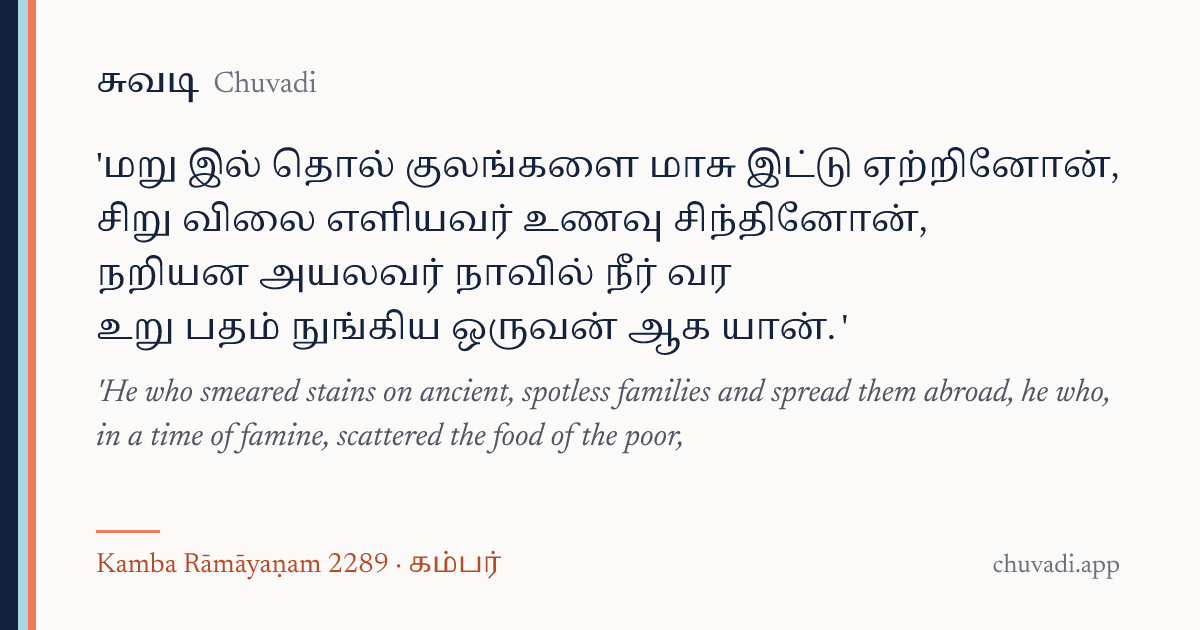
யான் -; மறு இல் தொல் குலங்களை - குற்றம் சிறிதும் அற்ற பழமையான குலங்களை; மாசு இட்டு ஏற்றினோன் - குற்றம் உள்ளவை என்று குற்றம் கற்பித்து (அதனை உலகம் நம்புமாறு செய்து) குலக் கேடு சூழ்ந்தவன்; சிறுவிலை - பஞ்ச காலத்தில்; எளியவர் - ஏழை எளிய மக்களது; உணவு - அற்ப உணவை; சிந்தினோன் - சிதறப் பண்ணியவன்; அயலவர் நாவில் நீர்வர - பார்த்துக் கொண்டிருக்கின்ற பக்கல் உள்ளவர் நாக்கில் நீர் ஊறும்படி; (அவர்களுக்குக் கொடாமல்) நறியன உறுபதம் - நறுமணம் உள்ள நல்ல சிறந்த உணவை; நுங்கிய - தானே விழுங்கிய; ஒருவன் -; ஆக - (இம் மூவரும் செல்லும் தீய கதியில்) செல்வேனாக.
விலை மிகுந்து பொருள் குறைவது பஞ்சகாலத்தில். அதனால், சிறு விலைக் காலம் என்று பஞ்சகாலத்தைச் சொல்வர். உணவைச் சிந்துவதே பாவம்; அதனினும் எளியவர் உணவைச் சிதறுதல் பெரும்பாவம் ஆகும்.
ஆங்கிலம் · English translationAI
Translation
- 'He who smeared stains on ancient, spotless families and spread them abroad,
- he who, in a time of famine, scattered the food of the poor,
- and the man who gulped fragrant, choice food
- while his neighbours' mouths watered: may I become such a one.'
What the poem says
Three more: the slanderer who invents faults in blameless old families and gets the world to believe them, the man who in famine spoils or scatters the meagre food of the poor, and the glutton who devours fine, fragrant dishes in front of hungry neighbours without sharing.
A famine is called the time of 'small price' in the old idiom. Wasting food is always a sin, and wasting the food of the poor is a far greater one.