



கம்பராமாயணம் 229 · பால 5.61
பாடல் · The poem
Tap a word to see its gloss in the commentary and where else it occurs.
பாட வேறுபாடு · Project Madurai reads
பொருள் · Meaning in Tamil
வான் செய்த சுடர் வேலோய் - வானுலகத்தை நிலைபெறச் செய்த ஒளி மிகுந்த வேலை உடைய அரசே!; இங்ஙன் அடைந்தது - இங்குத் தாங்கள் எழுந்தருளக் காரணம்; யான் செய்த மாதவமோ - நான் செய்த பெருந்தவமோ!; இவ்வுலகம் செய்தவமோ - இந்த நாடு செய்த நல்ல தவமோ! யாதோ - மற்றும் வேறு ஏதேனும் நற்செயல்களோ! (எனக் கூறி); மனம் மகிழா மணித் தேர் ஏற்றி - மனம் மகிழ்ந்து தயரதனைத் தேரில் ஏற்றி; தெவ்வர் ஊன் செய்த சுடர் வடிவேல் - பகைவருடலை உயிரற்ற ஊனுடலாகயை ஒளிமிக்க, கூரிய வேலை உடைய; உரோமபதன் எனவுரைக்கும் உரவுத் தோளான் - உரோமபதன் எனக் கூறப்படும் வலிய தோள்களை உடைய அவ்வரசன்; தேன் செய்த தார் மெளலி - தேன்பிலிற்றும் பூமாலையணிந்த மணிமுடி சூடியிருப்பவனாகிய; தேர் வேந்தை - தேர்ப்படையை உடைய தயரத வேந்தனை; செழு நகரில் கொணர்ந்தான் - செழிப்புடைய தனது நகருக்கு அழைத்து வந்தான்.
வான் செய்த: வானுலகை நிலைபெறச் செய்து சம்பரனைக் கொன்று இந்திரனுக்கு வானுலகை மீட்டுத் தந்த தயரதன் செயலைக் குறிப்பிடும். இது கருத்துடை அடைமொழியாம். செய் தவம்: வினைத் தொகை. நான் செய்த தவத்தினாலோ அல்லது நாடு செய்த தவத்தினாலோ, அல்லது வேறு ஏதேனுமோ? நீங்கள் இங்கு எய்தக் காரணம் அறியேன் என வியந்துரைத்தான். தார்: மாலை. “தெவ்வர் ஊன் செய்த சுடர் வேல்” பகைவர் உடலைப் புண் செய்த வேல் என்றும் உயிரற்ற உடலாகச் செய்த வேல் என்றும் பொருள் கூறலாம். “என உரைக்கும்” என்பதற்கு, என்று உலக மக்களால் புகழ்ந்து பேசப்படும் எனவும் பொருள் கூறுதல் பொருந்தும். மெளலி: மகுடம். செழுநகர்: பண்புத் தொகை. மாதவமோ, செய்தவமோ, யாதோ: “ஓ” வினாப் பொருள் உணர்த்தி நின்றது.
ஆங்கிலம் · English translationAI
Translation
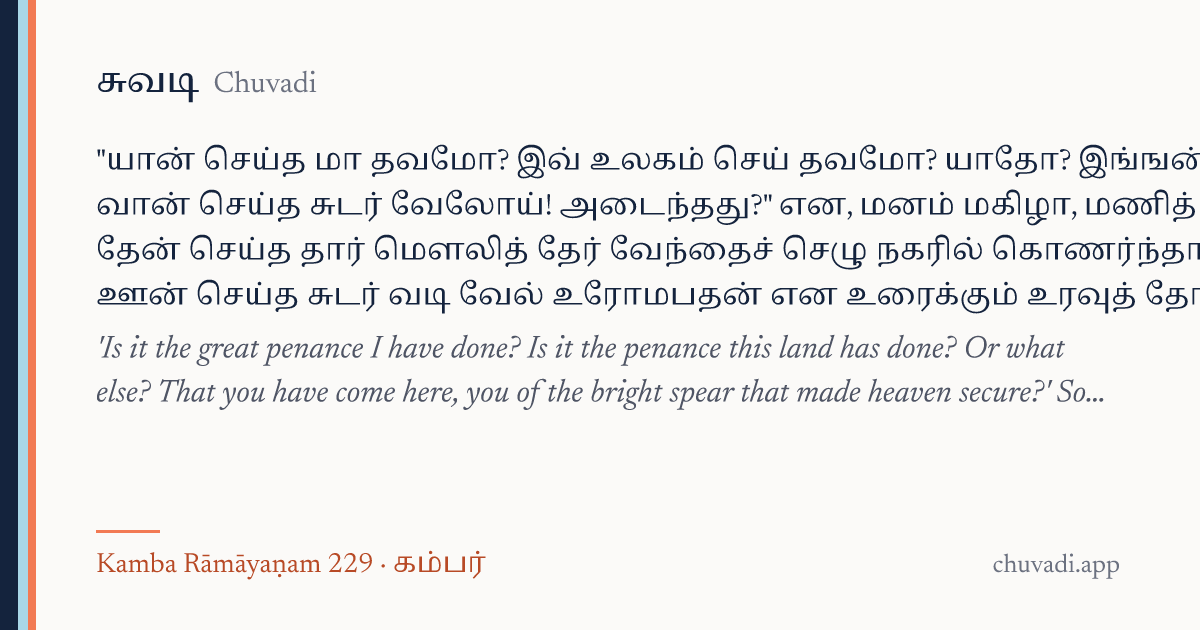
- 'Is it the great penance I have done? Is it the penance this land has done? Or what else? That you
- have come here, you of the bright spear that made heaven secure?' So saying, with a glad heart, he seated him in his jewelled chariot,
- and brought the chariot-king, whose crown wears a garland dripping honey, into his rich city:
- he of the mighty shoulders, called Urōmapataṉ, whose bright, sharp spear turns enemies to mere flesh.
What the poem says
Urōmapataṉ wonders aloud what merit of his own or of his people could have brought so great a king to his door, then drives Tacarataṉ into his city.
'The spear that made heaven secure' recalls how Tacarataṉ once killed the demon Campara and restored the heavens to Intiraṉ. The 'spear that makes enemies flesh' can mean either that it wounds them or that it leaves them lifeless bodies.