



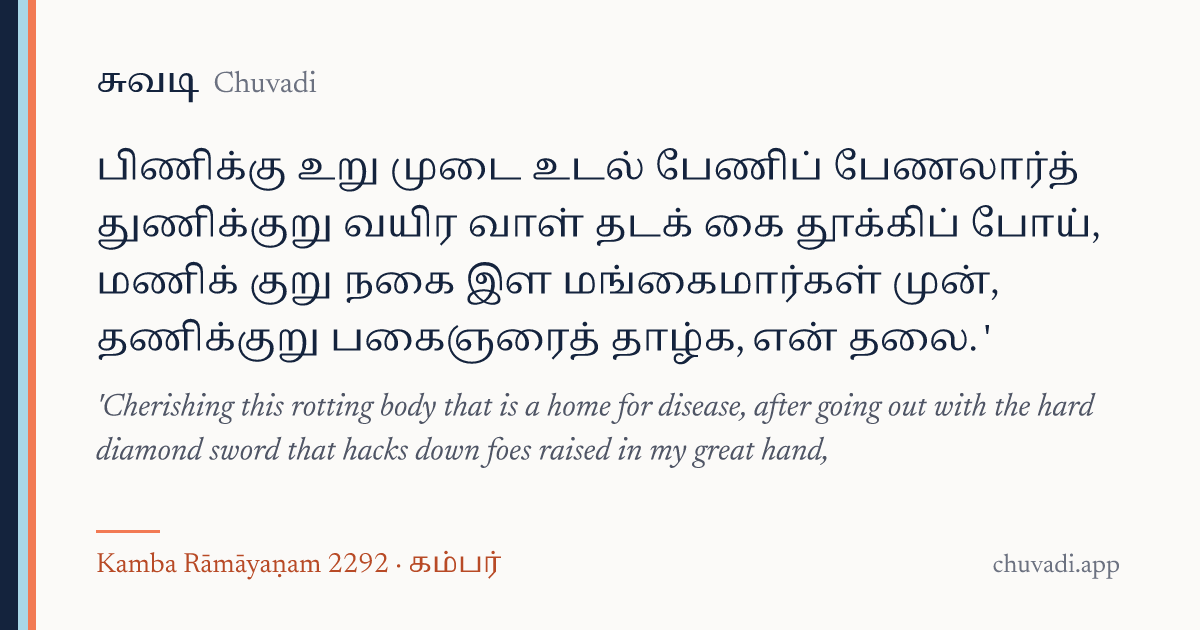
கம்பராமாயணம் 2292 · அயோத்தியா 9.115
பாடல் · The poem
Tap a word to see its gloss in the commentary and where else it occurs.
பாட வேறுபாடு · Project Madurai reads
பொருள் · Meaning in Tamil
“பேணலார்த் துணி - பகைவர்களைத் துண்டு படுத்துகின்ற; குறுவயிரவாள் - சிறிய வலிமையான வாளை; தடக்கை தூக்கிப்போய் - நீண்ட கைகளில் (வீரபராக்கிரமத்தோடு) தூக்கிச்சென்ற; (பின் மாட்டாமையால்) பிணிக்கு உறு முடை உடல் பேணி - நோய்களுக்கு இடமாக (நின்று சாவதாக) உள்ள நாற்றம் பிடித்த உடலைப் பாதுகாத்து (உயிர் வாழ விரும்பி); மணிகுறு இள நகை மங்கைமார்கள் முன் - முத்துமணி போன்ற இளைய புன் சிரிப்பினையுடைய மகளிர் முன்னால்; தணிக்குறு பகைஞரை - நம்மால் தாழச் செய்யப்பட வேண்டிய பகைவர்களை; என் தலை தாழ்க - என் தலை வணங்குவதாகுக.
போரில் இறவாமல் பாதுகாத்தாலும் இந்த உடல் நிலையற்றது; நோயால் இறந்து படக்கூடியதே, அதனைப் பாதுகாத்து மானம் கெட்டு உயிர்வாழ்வதை விட, உயிரைப் போரில் விட்டு வீரனாக இறப்பதே மேல் என்றான். தாழ்க்க வேண்டிய பகைவர் முன் தாழ்தலே கேவலம்; அதுவும் மகளிர் முன் ஆடவன் இவ்வாறு மானக்குறை அடைதல் மிகக் கேவலமாகும் என்பதாம்.
ஆங்கிலம் · English translationAI
Translation
- 'Cherishing this rotting body that is a home for disease, after going out
- with the hard diamond sword that hacks down foes raised in my great hand,
- before young women whose smiles are like small pearls,
- may my head bow down to the enemies I should have humbled.'
What the poem says
Paratan swears that if he is guilty, may he be the warrior who marches out with sword raised and then, to save a body that disease will claim anyway, bows his head before the enemies he should have brought low, and does so in front of smiling young women.
The body will perish whether or not one dies in battle, so it is better to die bravely than to live without honour. Submitting to a foe is disgrace enough; doing it before women is the deepest humiliation for a man.