



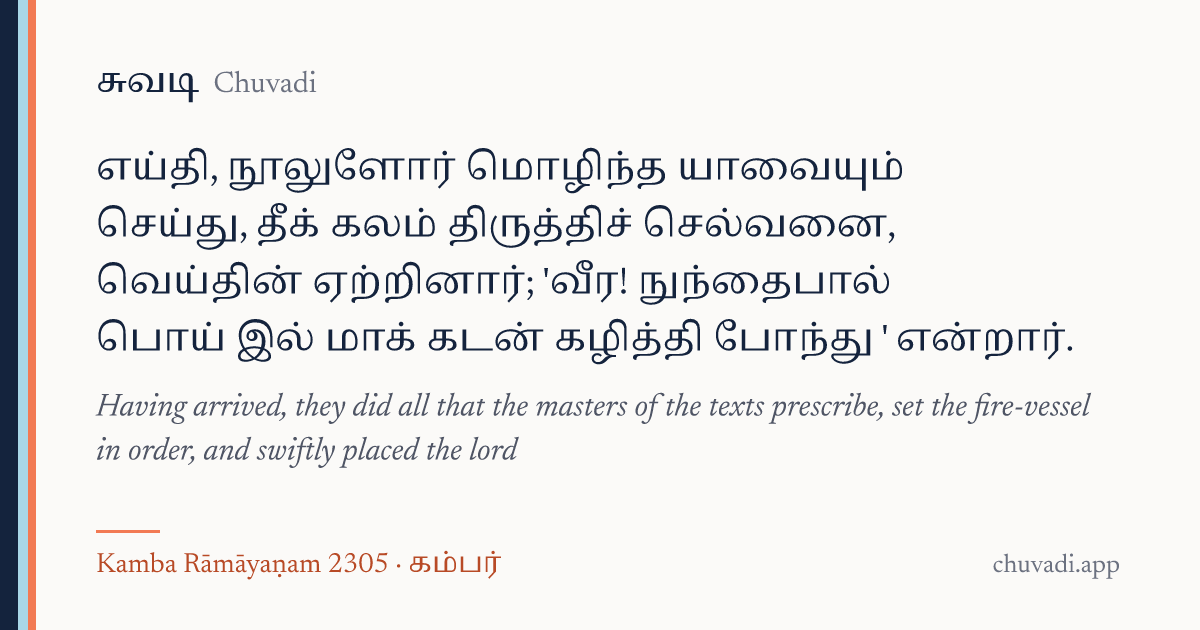
கம்பராமாயணம் 2305 · அயோத்தியா 9.128
பாடல் · The poem
Tap a word to see its gloss in the commentary and where else it occurs.
பொருள் · Meaning in Tamil
(நான்மறைக் கேள்வியார்) எய்தி - (சரயு நதியை) அடைந்து; நூல் உளோர் மொழிந்த யாவையும் செய்து - (ஸ்மிருதி) நூல்களை உடையோர் சொல்லிய விதிகள் எல்லாம் செய்து முடித்து; தீக்கலம் திருத்தி - தீச்சட்டியை ஒழுங்குபடுத்தி; செல்வனை - தயரதனை; வெய்தின் - விரைவாக; ஏற்றினார் - (ஈமப்பள்ளியில்) ஏற்றிவைத்து; (பரதனை நோக்கி) “வீர! - வீரனே!; நுந்தைபால் - உன் தந்தையிடத்து; பொய் இல் மாக்கடன் - (நீ செய்ய வேண்டிய) வேதவழி பிறழாத பெருங்கடமையை; போந்து கழித்தி - வந்து செய்வாயாக;” என்றார்.
பிறப்பு, இறப்புச் சடங்குகள் பற்றிக் கூறுவன ‘ஸ்மிருதி நூல்கள்’ எனப்படுதலின், அவற்றை அறிந்தவரையே இங்கு ‘நூலுளோர்’ என்றார் என்க.
ஆங்கிலம் · English translationAI
Translation
- Having arrived, they did all that the masters of the texts prescribe,
- set the fire-vessel in order, and swiftly placed the lord
- upon the pyre; 'O hero! for your father,
- come and discharge the great, unfailing duty,' they said.
What the poem says
At the river the Brahmins carry out every rite laid down in the law books, prepare the vessel of sacred fire, and lay the king on the funeral pyre.
Then they call Paratan: 'Hero, come and perform for your father the great duty that must not fail.' As the son, he is expected to light the pyre. The 'masters of the texts' are those versed in the smṛti works that regulate rites of birth and death.