



கம்பராமாயணம் 2306 · அயோத்தியா 9.129
பாடல் · The poem
Tap a word to see its gloss in the commentary and where else it occurs.
பொருள் · Meaning in Tamil
என்னும் வேலையில் - என்று (அவர்கள்) கேட்டுக்கொண்ட சமயத்தில்; எழுந்த வீரனை - கடன் செய்ய எழுந்த பரதனை; முனிவன் - வசிட்ட முனிவன்; (தடுத்து) “அரசன் - தயரதன்; அன்னை தீமையால் - நின் அன்னை செய்த தீமையால்; துன்னு துன்பத்தால் - நெருங்கிய துன்பத்தால்; நின்னையும் - (மகனாகிய) நின்னையும்; முன்னரே - உயிரோடிருந்த அப்போதே; துறந்து - மகன் அல்லன் எனக் கைவிட்டு; போயினான் - இறந்தான்;” என - என்று (அதனால் நீ உரிமைக்கு ஆகாய் என்று); கூறினான்.
“மன்னே ஆவான் வரும் அப்பரதன் தனையும் மகன் என்று உன்னேன்; முனிவா அவனும் ஆகான் உரிமைக்கு” (1654) எனத் தயரதன் கூறலின் வசிட்டன் இங்குத் தடுத்தான் என்க; அது அவன் மட்டுமே அறிந்த செய்தி.
ஆங்கிலம் · English translationAI
Translation
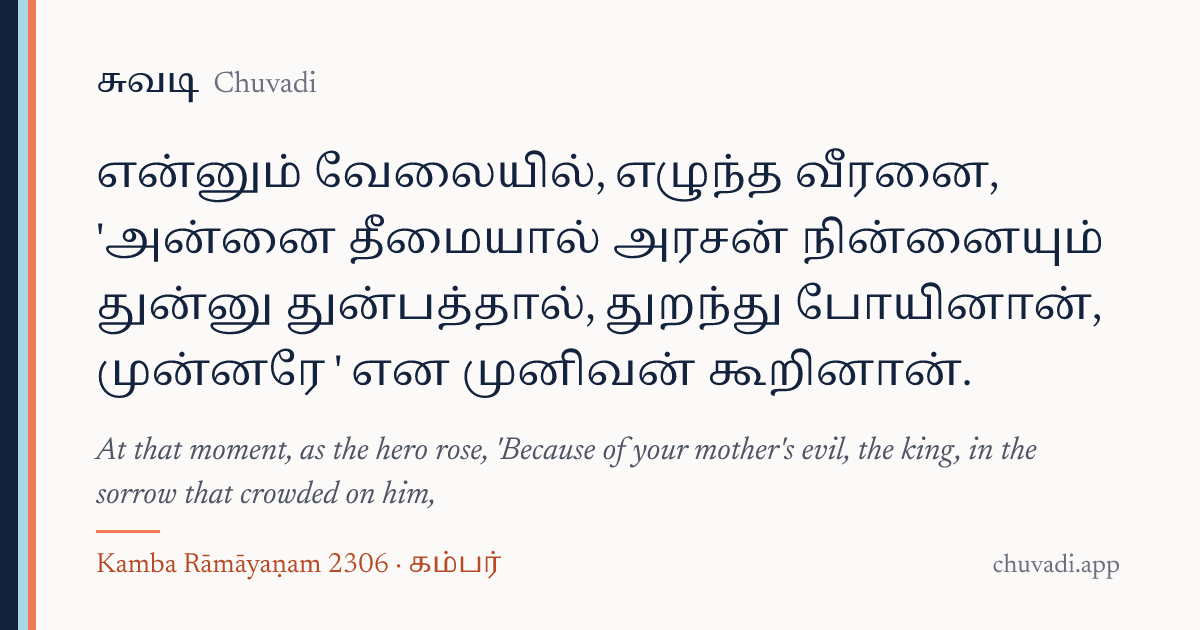
- At that moment, as the hero rose,
- 'Because of your mother's evil, the king, in the sorrow that crowded on him,
- renounced you too and departed,
- even before this,' the sage told him.
What the poem says
As Paratan rises to perform the rites, Vacittaṉ stops him. Overwhelmed by the grief that Kaikēyi's evil brought on him, the sage explains, the king disowned Paratan before he died.
Earlier in the epic Tacarataṉ had told Vacittaṉ that he would not regard Paratan, who was to become king, as his son, and that Paratan would have no right to perform his last rites. Only the sage knew this.