



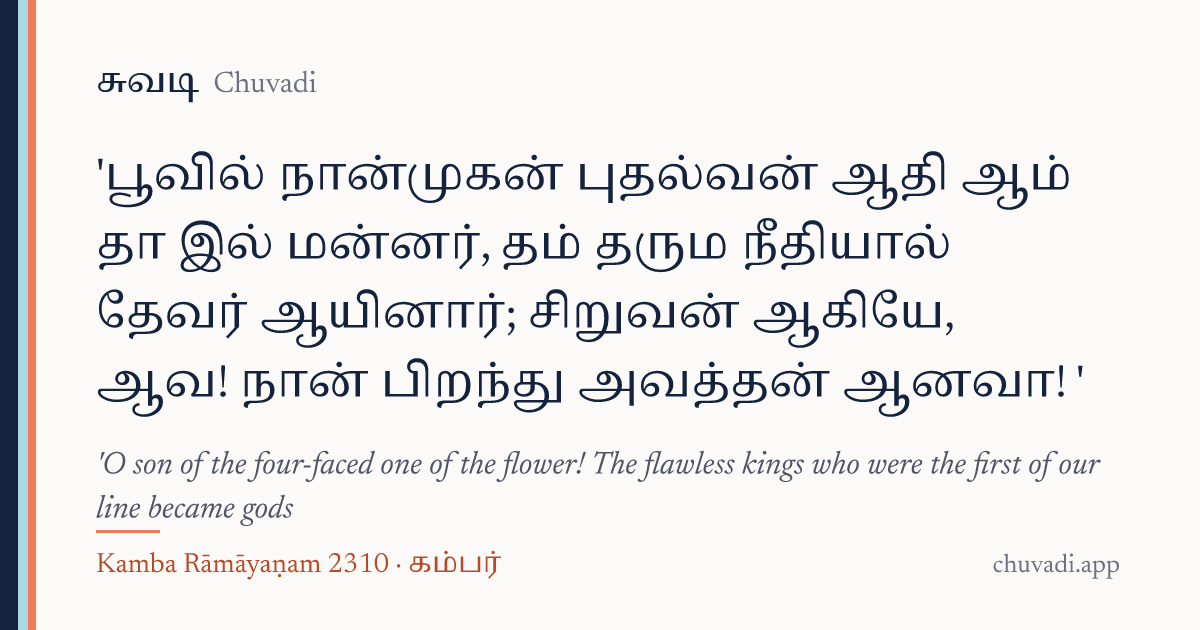
கம்பராமாயணம் 2310 · அயோத்தியா 9.133
பாடல் · The poem
Tap a word to see its gloss in the commentary and where else it occurs.
பொருள் · Meaning in Tamil
“பூவில் நான்முகன் புதல்வன்! - (திருமாலின் திருவுந்தித்) தாமரையில் தோன்றிய பிரமதேவனது புதல்வனாகிய வசிட்டனே!; ஆதி ஆம் தா இல் மன்னர் - சூரிய குலத்து முன்னோர்களாகிய குற்றமற்ற அரசர்கள்; தம் தரும நீதியால் - தாம் செய்த அறத்தின் முறைமையால்; தேவர் ஆயினார் - (அனைவராலும் தொழப்படுகின்ற) தேவர்களாக ஆயினார்; நான் -; பிறந்து சிறுவன் ஆகியே - பிறந்து சிறுவனாக இருக்கும் பொழுதே; அவத்தன் ஆனவா! - வீணாகப் போய்விட்ட படி என்னே!; ஆவ - ஐயோ!”
நான்முகன் புதல்வன் - பிரமபுத்திரனாகிய வசிட்டன் என்று அண்மைவிளியாகக் கொள்க. ‘வரசரோருகன் மகன்’ (184) என்பது ஒப்புநோக்குக. இனி, காசிபன் எனின் காசிபன் முனிவன் ஆதல் அன்றி அரசன் ஆதல் இல்லை; அன்றியும் அவன் பரதன் குலத்து முன்னோன் எனப்படுதற்கும் இயைபின்மை உணர்க. ‘ஆவ’ என்பது இரக்கக் குறிப்புச் சொல். “சாவ முன்னாள் தக்கன் வேள்வித் தகர் தின்று நஞ்சம் அஞ்சி, ‘ஆவ’ என்று அவிதா இடும் நம்மவர் அவரே” என்னும் திருவாசகப் பாடலையும் இங்குக் (திருவா. திருச் 4) கருதுக.
ஆங்கிலம் · English translationAI
Translation
- 'O son of the four-faced one of the flower! The flawless kings
- who were the first of our line became gods
- through their righteous justice; while still a boy,
- alas, I was born and have come to nothing!'
What the poem says
Paratan addresses Vacittaṉ as the son of four-faced Brahmā, who was born on the lotus. The blameless kings who founded the Solar line, he says, became gods through their righteous rule.
He, by contrast, has been born only to become worthless while still a youth. 'Āva', 'alas', is a cry of pity; the commentary points to the same word in a hymn of the Tiruvācakam.