



கம்பராமாயணம் 2315 · அயோத்தியா 9.138
பாடல் · The poem
Tap a word to see its gloss in the commentary and where else it occurs.
பாட வேறுபாடு · Project Madurai reads
பொருள் · Meaning in Tamil
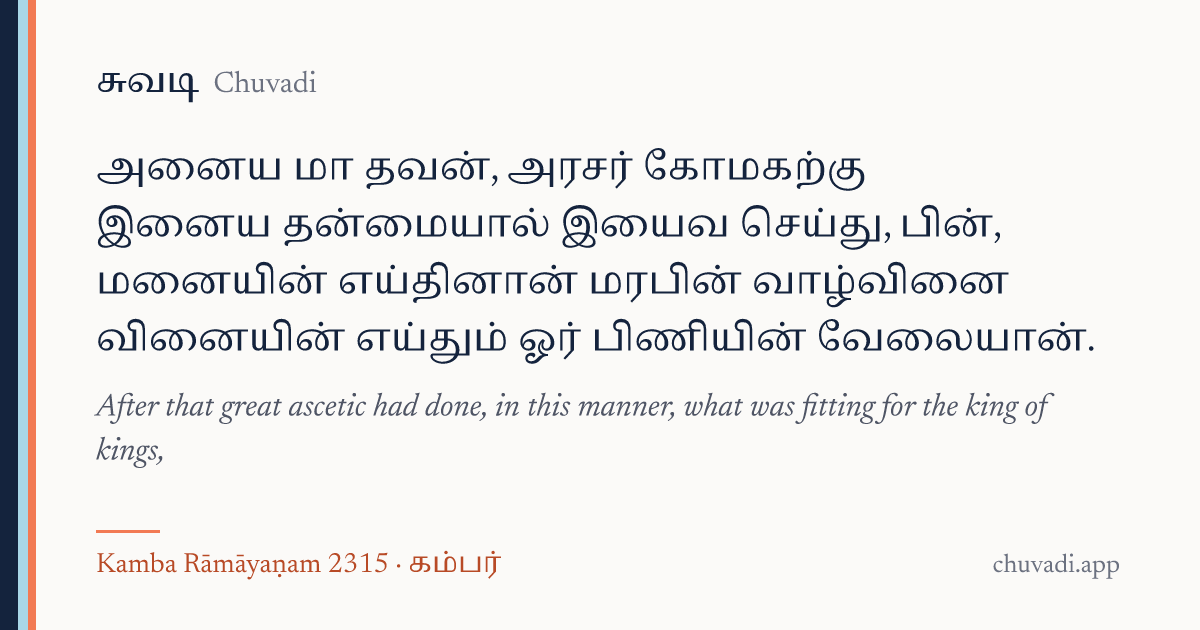
அனைய மா தவன் - அப்படிப்பட்ட பெரிய தவத்திற் சிறந்தவனாகிய வசிட்டன்; அரசர் கோமகற்கு - சக்கரவர்த்தியாகிய தயரதனுக்கு; இனைய தன்மையால் - (நான்மறை வழியில் சத்துருக்கனன் மூலமாக) இப்படி; இயைவ செய்தபின் - செய்ய வேண்டிய ஈமச் சடங்குகளைச் செய்து முடித்த பிறகு; மரபின் வாழ்வினை - அரசகுலத்துக் குரிய அரசச் செல்வத்தை; வினையின் எய்தும் - (தாய் செய்த) தீய செயலால் பெற்ற (தனால் உண்டாகிய); ஓர் பிணியின் வேலையான் - ஒரு நோய்க் கடலில் கிடக்கின்ற பரதன்; மனையின் எய்தினான் - அரண்மனைக்கண் வந்து சேர்ந்தான்.
வசிட்டன் செய்து முடித்தபிறகு, பரதன் அரண்மனை அடைந்தான் என முடிக்க. மரபு - பரம்பரை; இங்கே அரச பரம்பரை - அதற்குரிய வாழ்வு அரசுச் செல்வம். ‘வினை’ என்பது நன்மை தீமை இரண்டையும் குறிக்கும். ஆயினும், தீமையையே பெரும்பாலும் குறித்துநிற்றல் வழக்கு நோக்கி உணர்க. “ஈன்ற தாய் வினை செய்ய அன்றோ கொன்றனன் தவத்தின் மிக்கான்” என்று (7415) பின்னும் இப்பொருளில் பயின்றுள்ளது காண்க.
ஆங்கிலம் · English translationAI
Translation
- After that great ascetic had done, in this manner,
- what was fitting for the king of kings,
- he who lay in a sea of sickness because he had gained, through an evil deed,
- the fortune of his line, went back to the palace.
What the poem says
Once Vacittaṉ has completed the funeral rites for the emperor, Paratan returns to the palace.
He is described as lying in an ocean of anguish, a sickness caused by the fact that the royal fortune of his line has come to him through his mother's wicked deed. The word 'deed' can mean good or bad action, but usually implies evil, as it does here.