



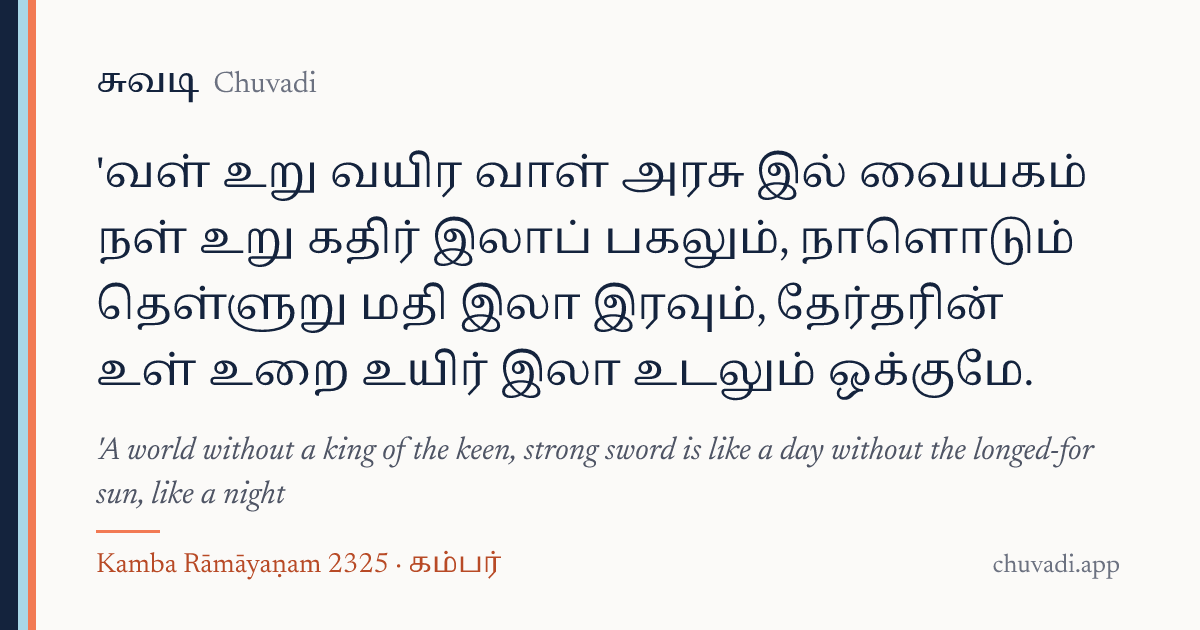
கம்பராமாயணம் 2325 · அயோத்தியா 10.7
பாடல் · The poem
Tap a word to see its gloss in the commentary and where else it occurs.
பொருள் · Meaning in Tamil
“தேர்தரின் - ஆராயும்பொழுது; வள் உறு வயிரவாள் அரசு - வளமை பொருந்திய வன்மையான வாளையுடைய அரசனை; இல் வையகம் - பெறாத உலகம்; நள் உறு கதிர் இலாப் பகலும் - (எல்லோராலும்) விரும்பப்படுகின்ற சூரியன் இல்லாத பகலையும்; நாளொடும் - விண்மீன்களோடும்; தெள்ளுறு மதி இலா இரவும் - தெளிந்த வெண்மையான சந்திரன் இல்லாத இரவையும்; உள் உறை உயிர் இலா உடலும் - உள்ளே பொருந்திய உயிர் இல்லாத உடலையும்; ஒக்கும் - போலும்.”
வள் - கூர்மை என்றுமாம். சூரியன் அழிக்கும் ஆற்றல், சந்திரன் தண்மையால் காக்கும் ஆற்றல், உயிர் உடலை இயக்கும் ஆற்றல், உயிர் உடலை இயக்கும் ஆற்றல் இம்மூன்றையும் அரசன் உடையனாதலின் அவற்றை இவ்வுவமைகளால் விளக்கினார். பகைவரை அழித்து, நல்லோரைக் காத்து, மக்களை இயங்கச்செய்ய மன்னவன் தேவை. தெறலும், தண்ணளியும் உடையனாய் உலகை நல்வழியில் இயங்கச் செய்பவன் மன்னன் என்பது இதனால் உணரப்பெறும். மன்னர், மக்கள் - உயிர் உடல் - இக்கருத்தை 177, 1423 ஆம் பாடல்களோடு ஒப்பிடுக.
ஆங்கிலம் · English translationAI
Translation
- 'A world without a king of the keen, strong sword
- is like a day without the longed-for sun, like a night
- with stars but without the clear moon, and, if you consider,
- like a body without the life that dwells within.'
What the poem says
Vacittaṉ uses three comparisons. A land without a king is like daytime without the sun, like a starry night without the moon, and like a body without the life inside it.
Each image stands for one of a king's powers: the sun's power to destroy enemies, the moon's cool power to protect the good, and the life-breath's power to keep the body moving. A king must be both fierce and gracious to keep the world on its proper course.