



கம்பராமாயணம் 2329 · அயோத்தியா 10.11
பாடல் · The poem
Tap a word to see its gloss in the commentary and where else it occurs.
பொருள் · Meaning in Tamil
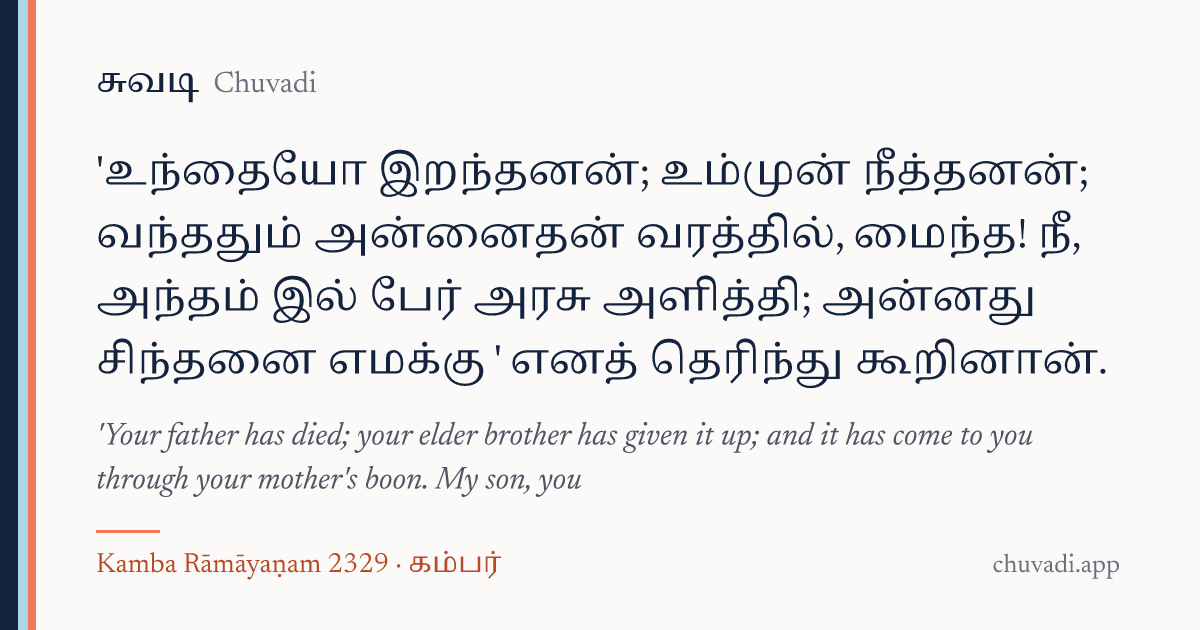
“மைந்த! - பரதனே!; உந்தையோ இறந்தனன் - உன் தந்தையாகிய தயரதனோ இறந்துபட்டான்; உம் முன் - உன் தமயனாகிய இராமனோ (தந்தை சொற்கேட்டு); நீத்தனன் - (அரசைக்) கைவிட்டுக் கானகம் புகுந்தான்; வந்ததும் - (இந்த அரசு உனக்குக்) கிடைத்திருப்பதும்; அன்னை தன் வரத்தில் - உன் தாயாகிய கைகேயியின் வரத்தால் ஆகும்; நீ அந்தம் இல் பேரரசு அளித்தி - நீ அழிவற்றதாகிய இந்தக் கோசலத் தரசை ஏற்று நடத்துக; அன்னது - (அவ்வாறு) நீ அரசு ஏற்பது; எமக்குச் சிந்தனை - எங்களுக்கு எண்ணம்;” என - என்று; தெரிந்து கூறினான் - ஆராய்ந்து சொன்னான்.
மரபு வழித் தொன்றுதொட்டு வந்த அரசு என்பான், ‘அந்தம் இல் பேரரசு’ என்றான் எனினும் அமையும்.
ஆங்கிலம் · English translationAI
Translation
- 'Your father has died; your elder brother has given it up;
- and it has come to you through your mother's boon. My son, you
- should protect this great, endless kingdom; that
- is our thought,' he said, having weighed it well.
What the poem says
Vacittaṉ sets out the situation plainly. Paratan's father is dead, his elder brother has renounced the throne, and the kingdom has come to Paratan through his mother's boon.
The council's considered view is that he should rule this great and enduring kingdom. 'Endless' may also refer to the unbroken line through which the kingdom has descended.