



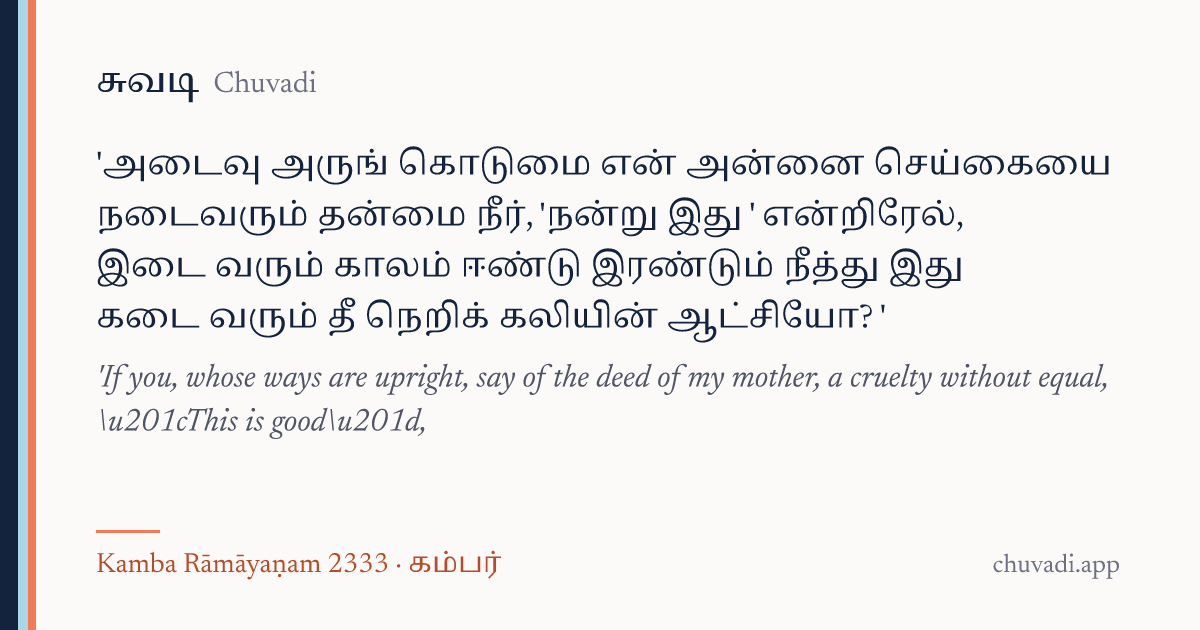
கம்பராமாயணம் 2333 · அயோத்தியா 10.15
பாடல் · The poem
Tap a word to see its gloss in the commentary and where else it occurs.
பொருள் · Meaning in Tamil
“நடை வரும் தன்மை நீர் - உயரிய ஒழுக்கத்திற் செல்லும் தன்மை உடைய சான்றோர்களாய நீவிர்; அடைவு அருங்கொடுமை என் அன்னை செய்கையை - ஓரிடத்திலும் சென்று அடைதற்கு அரிய பெருங்கொடுமை உடைய என் தாய் கைகேயியின் செயலை; “இது நன்று” -; என்றிரேல் - என்று சொல்வீராயின்; இது - இக்காலம்; ஈண்டு - இவ்விடத்தில்; இடைவரும் காலம் இரண்டும் நீத்து - திரேதாயுகம், துவாபரயுகம் என்னும் இரண்டு காலமும் கடந்து சென்று; கடைவரும் - நான்கு யுகங்களில் இறுதியில் உள்ள; தீ நெறி - தீயவழியில் (மக்களைச்) செலுத்துகின்ற; கலியின் ஆட்சியோ! - கலிபுருடனின் ஆட்சிக்காலமாகிய கலியுகமோ?”
இராமாயண காலம் கிரேதாயுகம் என்ற முதல்யுகம் ஆதலின் அது அறம் மேல் ஓங்கியிருந்த காலமாம். அடுத்த இரண்டு யுகங்களும் ‘இடைவரும் காலம் இரண்டும்’ என்பதனால் கொள்ளப்பட்டன. கலியுகத்தில் அறத்தின் மூன்று கால்கள் சிதைந்து ஒரு கால்மட்டும் இருப்பதாகச் சொல்வது வழக்கு. “ஒலி கடல் உலகம் தன்னில் ஊர்தரு குரங்கின் மாடே, கலியது காலம் வந்து பரந்ததோ” எனப் (4022) பின்வருவதை ஈண்டுக் கருதுக. அறத்தின் ஆட்சி மங்கிக் கொடுமை மலிந்திருப்பது கலியின் இயல்பு என்பதனைப் “பொலிக, கலியும் கெடும் கண்டு கொண்டீர்” (திவ்யப். 3352.) “கலியிருள் பரந்த காலை” (கலிங்கத். அவதாரம். 30) “தருமம் தவிர்ந்து பொறைகெட்டுச் சத்தியஞ் சாய்ந்து தயை, தெருமந்து தண்பூசனை முழுதுஞ் சிதையக், கலியே பொருமந்தக் காலம்” (திரு அரங்கத்துமாலை. 75.) என வருவன கொண்டு அறியலாம்.
ஆங்கிலம் · English translationAI
Translation
- 'If you, whose ways are upright, say of the deed of my mother,
- a cruelty without equal, \u201cThis is good\u201d,
- then has time here skipped the two middle ages
- and is this the rule of Kali, the last, the age of the evil path?'
What the poem says
Paratan presses his point. If the wise and virtuous men of the council call his mother's unspeakable cruelty good, then time must have leapt over the two middle ages and arrived at the Kali age, the last and worst of the four, when evil governs the world.
Traditional cosmology holds that in each successive age dharma loses one of its four legs, so that in Kali only one remains. The Rāmāyaṇa is set in an earlier, more righteous age, which makes the council's advice seem all the more out of place.