



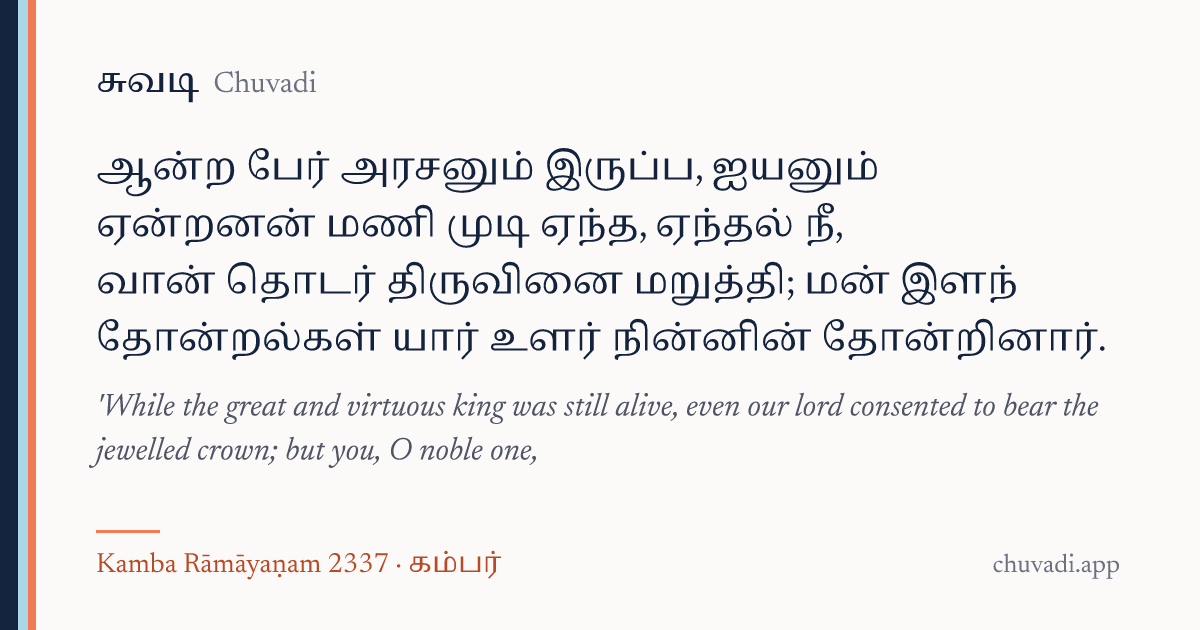
கம்பராமாயணம் 2337 · அயோத்தியா 10.19
பாடல் · The poem
Tap a word to see its gloss in the commentary and where else it occurs.
பொருள் · Meaning in Tamil
ஆன்ற - குணங்களான் அமைந்த; பேர் அரசனும் - பெருமை மிக்க தயரதனும்; இருப்ப - உயிரோடு இருக்கின்றபோதே; ஐயனும் - இராமனும்; மணிமுடி ஏந்த - மணிகள் அழுத்திச் செய்யப்பெற்ற மகுடத்தைத் (தலையில்) தாங்க; ஏன்றனன் - உடன்பட்டான்; ஏந்தல் நீ - பெருமையின் உயர்ந்த பரதனே! நீ; வான் தொடர் திருவினை - மிக உயர்ந்த பாரம்பரியமாக வருகின்ற அரசச்செல்வத்தை; மறுத்தி - வேண்டாம் என்கிறாய்; மன் இளந்தோன்றல்கள் - அரசகுலத்தில் தோன்றிய இளைய குமாரர்களில்; நின்னின் தோன்றினார்? - உன்னைப் போலப் புகழுடன் தோன்றியோர்; யார் உளர் - யார் இருக்கின்றார்கள்? (எவரும் இல்லை என்றபடி)
“யாது கொற்றவன் ஏவியது அதுசெயல் அன்றே, நீதி எற்கு” (1382.) “மனத்து மன்னன் ஏவலின் திறம்ப அஞ்சி, இருளுடை உலகம் தாங்கும் இன்னலுக்கு இயைந்து நின்றான்” (1603.) என்ற சொற்களால் இராமன் மனநிலை போதரும். மன்னவன் இருக்கின்றபோது அவன் ஆணை மேற் கொண்டு அரசேற்க உடன்பட்ட இராமனையும், மன்னவன் இல்லாத போதும் அவன் ஆணையாலும் (வரத்தாலும்) அரசேற்க உடன்படாத பரதனையும் ஒப்பிட்டுப் போற்றினர் என்க.
ஆங்கிலம் · English translationAI
Translation
- 'While the great and virtuous king was still alive, even our lord
- consented to bear the jewelled crown; but you, O noble one,
- refuse the high fortune handed down to you; among young princes of kings,
- who is there born to equal you?'
What the poem says
The council marvels. Even Irāmaṉ agreed to wear the crown while his father, the great king, was still alive, because the king commanded it. Paratan, by contrast, refuses a kingdom handed down through his line even though the king's word and the boon both give it to him.
No young prince of any royal house, they say, has ever been born to compare with him.