



கம்பராமாயணம் 2351 · அயோத்தியா 10.33
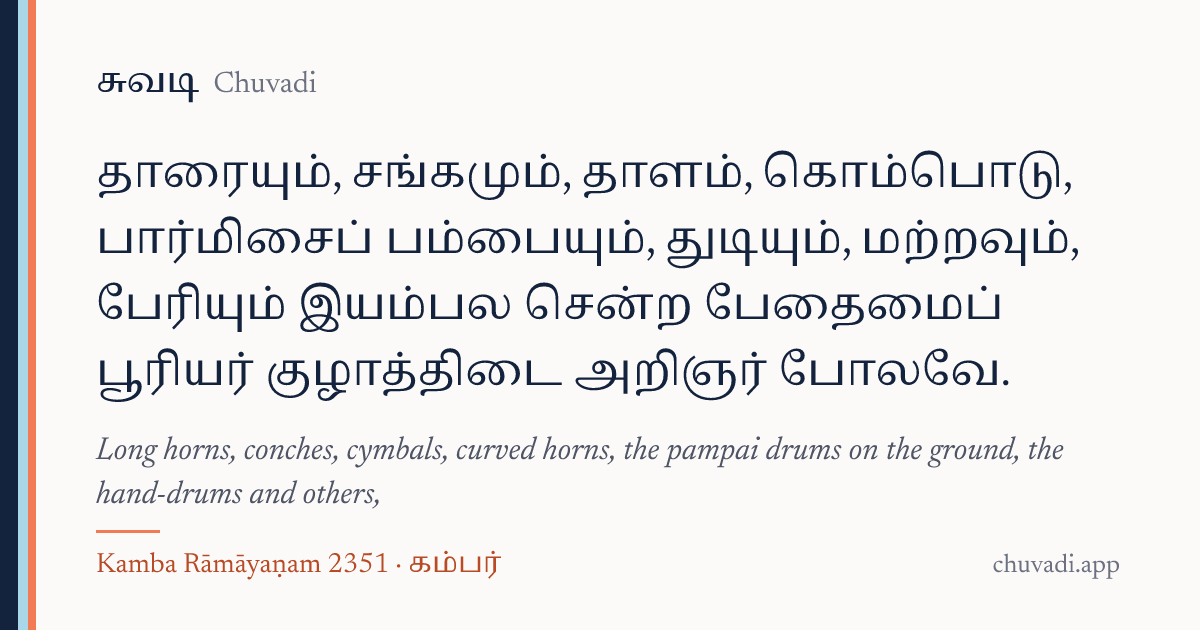
பாடல் · The poem
Tap a word to see its gloss in the commentary and where else it occurs.
பாட வேறுபாடு · Project Madurai reads
பொருள் · Meaning in Tamil
தாரையும் - தாரை என்ற நீண்ட ஊது கொம்பும்; சங்கமும் -; தாளம் -; கொம்பு - வளைந்த ஊது கருவியும்; பம்பையும் - பம்பை என்னும் பறையும்; துடியும் -; பேரியும் - பெருமுரசும்; மற்றவும் - ஏனைய வாத்தியங்களும்; பார்மிசை - மண்ணின் மேல்; பேதைமைப் பூரியர் குழாத்திடை - அறியாமையுடைய புல்லர்கள் கூட்டத்தின்கண்; அறிஞர் போல - (கற்றுத் துறைபோகிய) நல்லறிவாளர் ஒன்றும் பேசாமல் மௌனமாக இருத்தல் போல; இயம்பல சென்ற - ஒலிக்காமல் சென்றன.
தயரதன் இறந்த நிலையிலும், இராமன் வனம் புகுந்துள்ள நிலையிலும் செல்கின்றன வாதலின் மகிழ்ச்சியும் மங்கலமும் உடைய காலங்களில் இயக்கப்படும் இசைக்கருவிகள் இப்போது ஒலியாமல் சென்றன. “புல்லவையுள் பொச்சாந்தும் சொல்லற்க நல்லவையுள் நன்கு செலச் சொல்லுவார்” என்றபடி (குறள். 7/9.) கற்றோர் மற்றோர் அவைக்கண் வாய்திறவார் ஆதலின் அதனையே ‘பூரியர் குழாத்திடை அறிஞர் போல’ என ஒலியாமற் சென்ற வாத்தியங்களின் நிலைக்கு உவமை ஆக்கினார். இனி, முன்னர் (2270) ‘ஓசையின் நிமிர்த்தது ஒல்லென் பேர் ஒலி’ என்பது போல வந்தன பெருங் கூட்டத்தின் புறப்பாட்டால் எழும்பிய ஒலியே அன்றி, இயக்கப்படும் வாத்திய ஒலி அன்மையான் முரண் ஆகாமை உணர்க. ‘ஏ’ ஈற்றசை.
ஆங்கிலம் · English translationAI
Translation
- Long horns, conches, cymbals, curved horns,
- the pampai drums on the ground, the hand-drums and others,
- and the great drums went along without sounding,
- like wise men among a crowd of foolish boors.
What the poem says
All the instruments that normally accompany a royal march, horns, conches, cymbals and drums of many kinds, are carried along in silence, because the king has died and Irāmaṉ is in exile, and such music belongs to festive occasions.
The poet compares them to learned men who keep quiet in a gathering of fools, as the Tirukkuṟaḷ advises. The great roar mentioned earlier was the noise of the moving crowd, not of the instruments.