



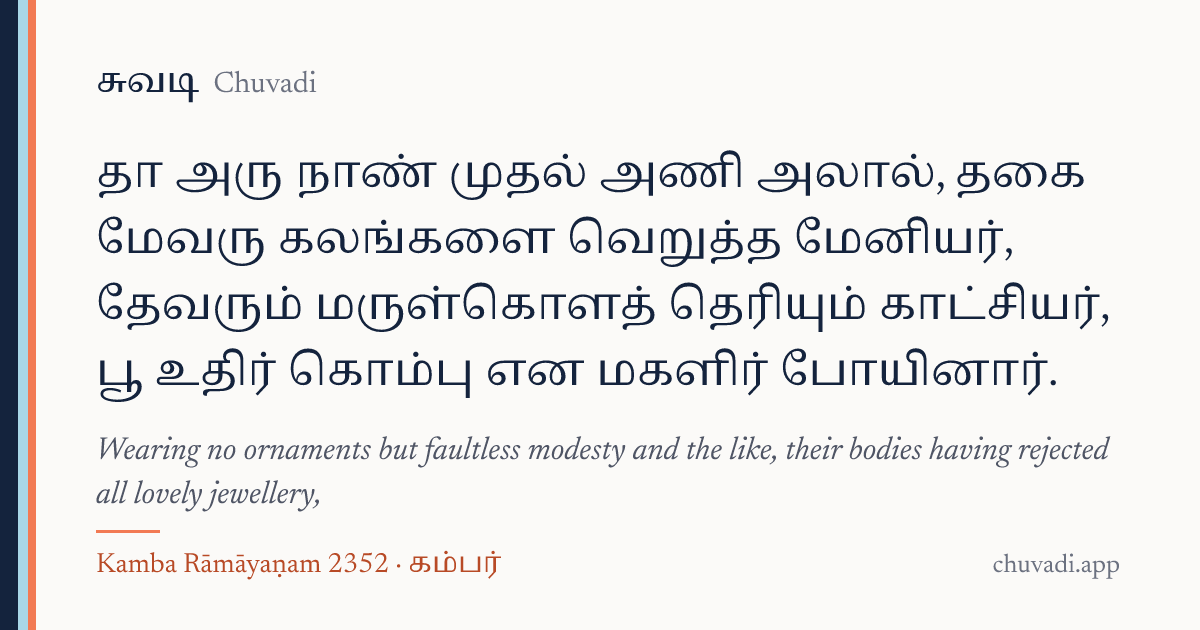
கம்பராமாயணம் 2352 · அயோத்தியா 10.34
பாடல் · The poem
Tap a word to see its gloss in the commentary and where else it occurs.
பொருள் · Meaning in Tamil
தேவரும் மருள்கொளத் தெரியும் காட்சியர் - தேவர்களும் திகைக்கும் ஒளிர்கின்ற தோற்றமுடைய; மகளிர் - பெண்கள்; தா அரு - குற்றம் அற்ற; நாண் முதல் - நாணம், அச்சம், மடம், பயிர்ப்பு எனப்பெறும்; அணி அலால் - அணிகலன்கள் அல்லாமல்; தகை மேவரு - அழகு பொருந்திய (பொன்னாலும் மணியாலும் புனைந்த); கலன்களை - அணிகளை; வெறுத்த மேனியர் - வேண்டாம் என்று நீக்கிய உடம்போடு; பூ உதிர் கொம்பு என - பூக்களை உதிர்த்துவிட்ட பூங்கொம்பு போல; போயினார் - (அக்கூட்டத்தில்) சென்றார்கள்.
அரசர்க்கு வந்த துன்பம் தமக்கென நினையும் மக்கள் ஆதலின் அணி அணியாமல் சென்றனர் என்க. “நவை அறு குணங்கள் என்னும் பூண்” எனப் பின்னும் (7653) அணிகலன் என்பார் குணங்களை. “ஏண்பால் ஓவா நாண் மடம் அச்சம் இவையே தம், பூண் பாலாகக் காண்பவர் நல்லோர்” (1533) என முன்னும் கூறியது காண்க. ‘பூ உதிர் கொம்பு’ உவமையணி. அணிகலன் நீத்த கைகேயியை, “நபம் ஓர் கொம்பு எனப் புவிமிசைப் புரண்டாள்” (1493.) என்றார் முன்னும்.
ஆங்கிலம் · English translationAI
Translation
- Wearing no ornaments but faultless modesty and the like,
- their bodies having rejected all lovely jewellery,
- with a beauty that dazzled even the gods,
- the women went along like branches that have shed their flowers.
What the poem says
The women in the procession have put away all their jewellery out of grief for the king. Their only ornaments are the classical feminine virtues, modesty first among them, and yet their beauty is such that even the gods are bewildered.
Without their jewels they look like flowering branches that have dropped their blossoms. The poet earlier described Kaikēyi, after she cast off her ornaments, with a similar image of a fallen branch.