



கம்பராமாயணம் 2369 · அயோத்தியா 10.51
பாடல் · The poem
Tap a word to see its gloss in the commentary and where else it occurs.
பாட வேறுபாடு · Project Madurai reads
பொருள் · Meaning in Tamil
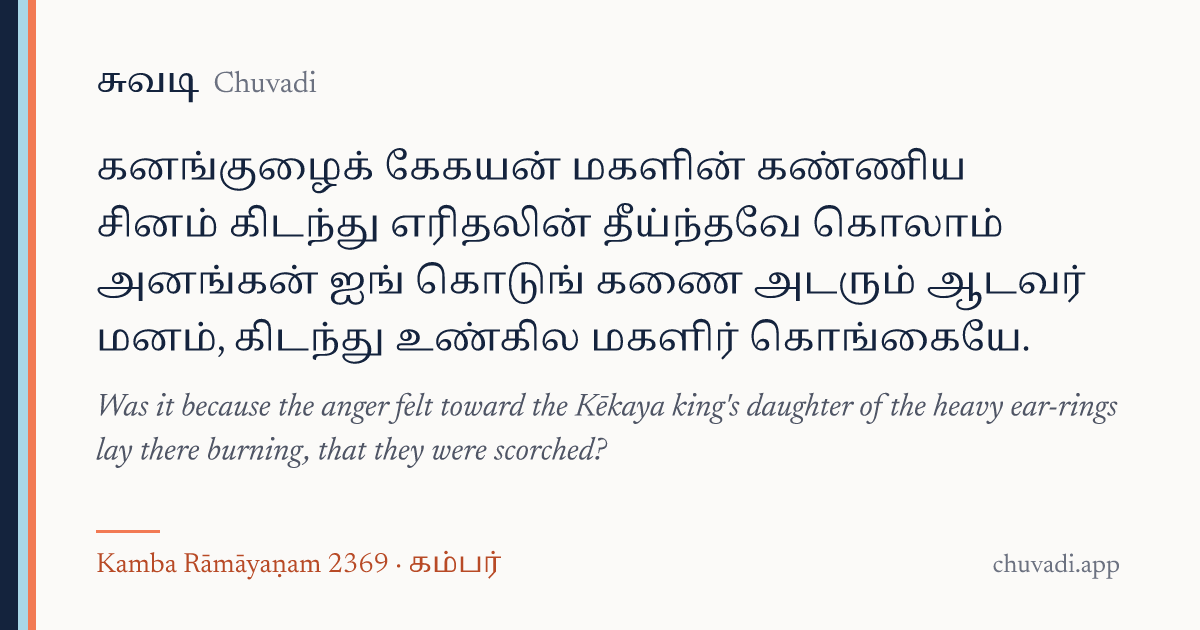
அனங்கன் ஐங்கொடுங்கணை அடரும் ஆடவர் மனம் - மன்மதனது (பிறரை வருத்தும் ஐந்து கொடிய கணையால் நெருக்கப்படும் ஆண்களது மனம்; மகளிர் கொங்கை - பெண்களது முலைகளில், கிடந்து உண்கில - இருந்து தங்கி அநுபவியாமல் போயின; கனம் குழை கேகய மகளின் கண்ணிய சினம் - கனமான காதணி அணிந்த கைகேயியின்மேல் (மகளிற் கருதிய சினம்; கிடந்து - பெண்கள் இடத்தே தங்க; எரிதலின் - எரிகின்ற காரணத்தால்; தீய்ந்தவே கொல் - (கொங்கைகள் சுடும் என்று கருதித் தவிர்ந்தனவோ?
கைகேயி ஒருத்தியால் எல்லா மகளிரையும் தயரதன் வெறுத்தான் என்பதனை முன்னர்க் (/5/6) கூறினார். கைகேயிமேல் உண்டாகிய நெருப்பு அனைத்து மகளிரிடத்திலும் தங்கியிருப்பதாகக் கருதி ஐங்கணை அடரவும் ஆடவர் கொங்கையை அநுபவியாது விட்டனர். ஐங்கணை - மலர் அம்பு ஐந்து, தாமரை, முல்லை, மா, அசோகு, நீலோற்பலம் ஆகிய ஐந்து மலர்களும் மன்மதன் அம்புகளாகும். “கொல்” ஐயம். 'ஏ' காரம் ஈற்றசை.
ஆங்கிலம் · English translationAI
Translation
- Was it because the anger felt toward the Kēkaya king's daughter of the heavy ear-rings
- lay there burning, that they were scorched?
- The minds of men, though pressed by the bodiless god's five cruel arrows,
- would not stay to linger on women's breasts.
What the poem says
Even though the god of love, the bodiless Aṉaṅkaṉ, keeps shooting his five flower-arrows at them, the men of the marching army do not let their thoughts settle on the women.
The poet offers a fanciful reason. The anger everyone feels towards Kaikēyi seems to have spread to all women, so that their breasts burn like fire and the men's minds pull back, as if scorched.