



கம்பராமாயணம் 2372 · அயோத்தியா 10.54
பாடல் · The poem
Tap a word to see its gloss in the commentary and where else it occurs.
பொருள் · Meaning in Tamil
இளவல் - நால்வரினும் இளையவனாகிய சத்துருக்கனன்; வழிச் செல்வாரொடும் - (இராமனைக் கண்டு அழைக்கக் காடு நோக்க) வழிச்செல்லும் அவர்களோடு; மந்தரைக் கூற்றமும் - மந்தரையாகிய யமனும்; உந்தியே போதல் கண்டு - மற்றவர்களைத் தள்ளிக்கொண்டு முந்திச் செல்லுதல் கண்டு; ஓடி - விரைந்து சென்று; ஆர்த்து - பேரொலிசெய்து; அழன்று - கோபித்து; அந்தரத்து எற்றுவான் - ஆகாயத்தில் மேலே வீசுமாறு; பற்றலும் - (கையாற்) பற்றிக் கொள்ளுதலும்; சுந்தரத் தோளவன் - அழகிய திருத் தோள்களை உடைய பரதன்; விலக்கி - (அவ்விடத்திலிருந்த மந்தரையை); விடுவித்துச் சொல்லுவான் - (தம்பிக்குச் சொல்லலானான். தயரதன் உயிர் போதற்கு மூலகாரணம் மந்தரை ஆதலின், 'மந்தரைக் கூற்றம்' என்றார். நம்செயல் தடைபட்டுவிடுமோ; இனி நடப்பன காண்போம் என்னும் ஆசையால் மந்தரை உடன் செல்லவிரைந்தாள் என்க. கண்டு, ஓடி, ஆர்த்து, எற்றுவான் பற்றலும் என முடிக்க.
ஆங்கிலம் · English translationAI
Translation
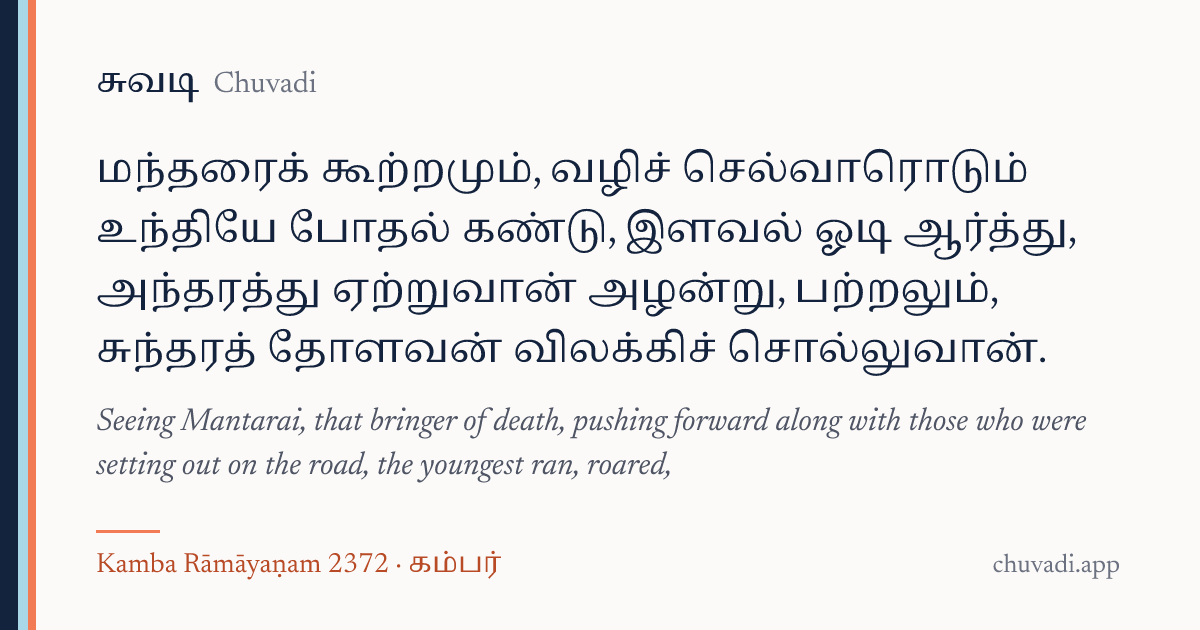
- Seeing Mantarai, that bringer of death, pushing forward
- along with those who were setting out on the road, the youngest ran, roared,
- and, blazing with anger, seized her to hurl her into the sky;
- at that, the one with beautiful shoulders stopped him and spoke.
What the poem says
Mantarai, the hunchbacked maid who put the idea of the two boons into Kaikēyi's head, is called "death itself" because her scheme cost King Tacarataṉ his life. Here she is pushing to the front of the crowd, eager to see what will happen next and whether her plan will fall apart.
Catturukkaṉaṉ, the youngest of the four brothers, sees her, runs at her shouting, and grabs her to fling her into the air. Paratan steps in, frees her, and speaks to his brother.