



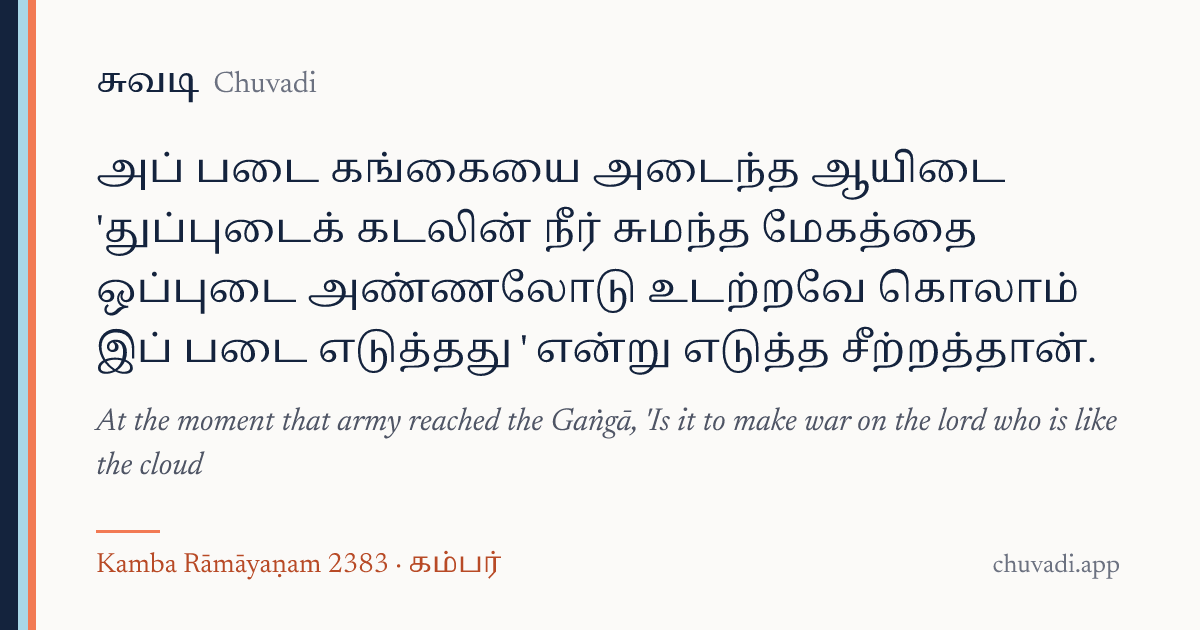
கம்பராமாயணம் 2383 · அயோத்தியா 11.6
பாடல் · The poem
Tap a word to see its gloss in the commentary and where else it occurs.
பொருள் · Meaning in Tamil
அப்படை - அந்தச் சேனை; கங்கையை அடைந்த ஆயிடை - கங்கைக் கரையை நெருங்கிய அச்சமயத்தில் (அது கண்டு) 'குகன் எனப் பெயரிய கூற்றின் ஆற்றலான்' (2309); இப்படை எடுத்தது - இந்தச் சேனை புறப்பட்டது; துப்பு உடைக் கடலின் நீர் சுமந்த மேகத்தை - பவளம் உடைய கடலிலிருந்து நீரை முகந்து சூல் கொண்ட கரு மேகத்தை; ஒப்பு உடை அண்ணலோடு - உவமையாகப் பெற்ற கரிய திருமேனியுடைய இராமபிரானோடு; உடற்றவே கொல் - போர் செய்வதற்காகவேயோ; என்று - எனக் கருதி; எடுத்த சீற்றத்தான் - மேல் எழுந்த கோபம் உடையவனாய் தென்கரை வந்து தோன்றினான் (2313.)
பரதன் சேனையோடு வடகரை அடைந்தான். குகன் தென்கரையில் தோன்றினான். பரதனையும் சேனையையும் கண்டு ஐயப்பட்டுச் சீறுகிறான். அடுத்த செய்யுளின் முதற்கண் 'குகன் எனப் பெயரிய கூற்றின் ஆற்றலான்' என்பதனை இங்குக் கொண்டு பொருள் முடிக்க. இதுமுதல் ஆறு பாடல்கள் தொடர்ந்து (2313) “தென்கரை வந்து தோன்றினான்” என்கின்ற இப்படலத்துப் பதினொராம் பாடலில் முடியும். 'ஏ' வினா? 'கொல்' - ஐயம். ஆம் அசை.
ஆங்கிலம் · English translationAI
Translation
- At the moment that army reached the Gaṅgā,
- 'Is it to make war on the lord who is like the cloud
- laden with the waters of the coral-bearing sea
- that this army has marched?' — so thinking, he was seized with rising rage.
What the poem says
Kukaṉ, chief of the hunters and boatmen, who befriended Irāmaṉ and ferried him across the Gaṅgā, sees Paratan's huge army arrive on the north bank. He jumps to the worst conclusion: Paratan has come to attack Irāmaṉ, whose dark body is like a rain cloud heavy with sea water, and finish him off.
This sentence runs on through the next several verses. Its subject, "Kukaṉ, with the strength of Death", appears in the next verse, and its main verb, "he appeared on the south bank", comes in the eleventh verse of the section.