



கம்பராமாயணம் 240 · பால 5.72
பாடல் · The poem
Tap a word to see its gloss in the commentary and where else it occurs.
பாட வேறுபாடு · Project Madurai reads
பொருள் · Meaning in Tamil
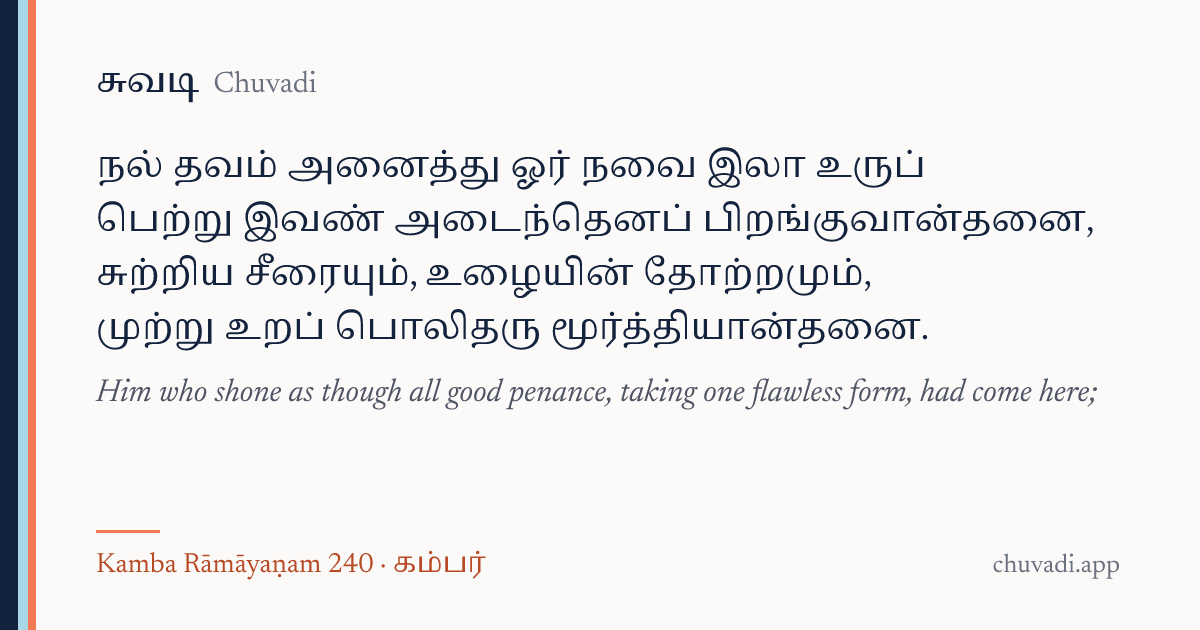
நல் தவம் அனைத்தும் ஓர் - நல்ல தவங்கள் அத்தனையும் சேர்ந்து ஒரு; நவை இலா உருப்பெற்று - குற்றமற்ற வடிவத்தைத் தாங்கி; இவண் அடைந்த என - இங்கே அடைந்துள்ளது என்று கூறும்படி; பிறங்கு வான் தனை - விளங்குகின்ற தொரு பெருமையுடையவனை; சுற்றிய சீரையும் - இடுப்பைச் சுற்றி அணிந்துள்ள மரவுரியையும்; உழையின் தோற்றமும் - மானைப் போன்றதொரு தோற்றமும்; முற்றுறப் பொலிதரு மூர்த்தியான் தனை - முழுதும் பொருத்தமுற விளங்குகின்ற வடிவம் கொண்டவனை.
அடுத்த பாட்டுடன் பொருள் முடிவு பெறுவதாதலின் இது குளகம். பிறப்பு, உறுப்பு, தொழில், தோற்றம் இவைகளால் பெருமை மிக்க தவ முனிவன் என்பது இப்பாடல்கள் கூறும் சிறந்த பொருளாகும். நன்மை-தவம்: நற்றவம். பண்புத்தொகை. உழை: மான். பிறங்குதல்: பொலிதல். முற்றுறப் பொலிதரல்: அகமும், புறமும் ஒத்துப் பொலிதல். மூர்த்தம்: வடிவம் (உருவம்). எனவே வடிவத்தை உடையவன் என்பது பொருளாகும்.
இந்தப் பாடலும், அடுத்த பாடலும் கலைக்கோட்டு முனிவரின் அரிய தோற்றத்தை விவரிப்பதாகும்
ஆங்கிலம் · English translationAI
Translation
- Him who shone as though all good penance, taking
- one flawless form, had come here;
- him of the bodily form that shone complete,
- with bark cloth wrapped round him and the look of a deer.
What the poem says
This verse and the next form a single sentence (kuḷakam), completed by the verb 'beheld' in the previous verse. They describe the sage Tacarataṉ sees: like all austerity given a body, dressed in bark cloth.
'The look of a deer' recalls the sage's birth from a deer, which gave him the small horn on his head from which his name, Kalaikkōṭṭu, 'deer-horn', comes. His inner and outer selves are in perfect harmony.