



கம்பராமாயணம் 243 · பால 5.75
பாடல் · The poem
Tap a word to see its gloss in the commentary and where else it occurs.
பொருள் · Meaning in Tamil
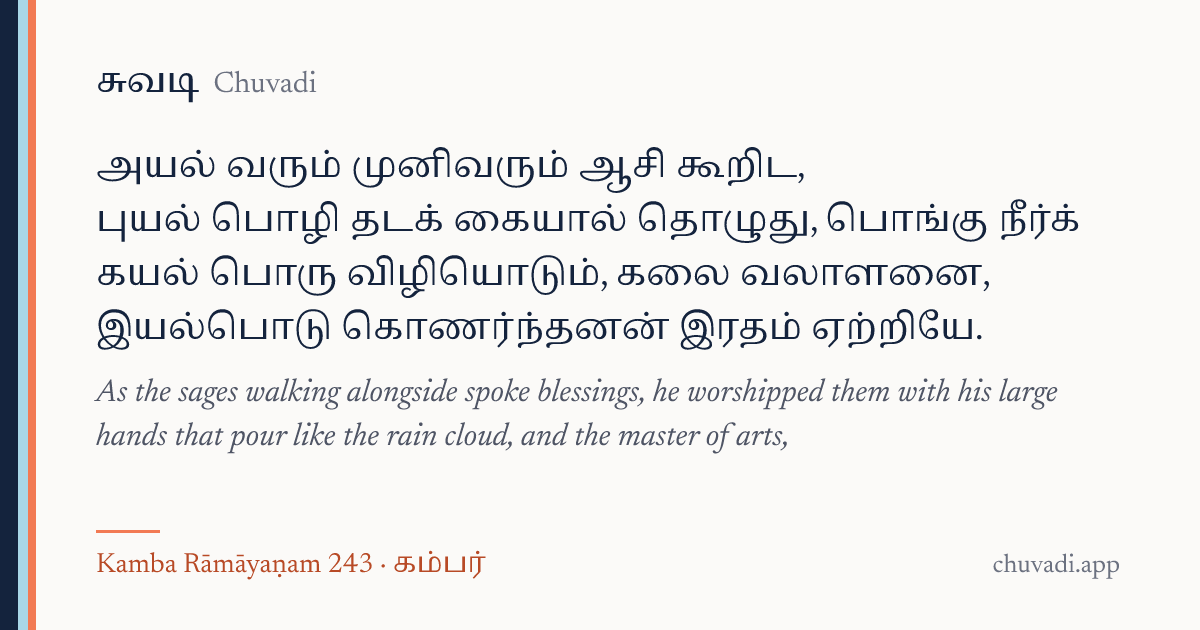
அயல்வரு முனிவரும் ஆசி கூறிட - (அந்த முனிவனைத் தொடர்ந்து) அயலே வரும் பிற முனிவர்களும் ஆசி கூற; புயல் பொழி தடக்கையால் தொழுது - தயரதன் புயல் போலப் பொழியும் தனது கைகளால் முனிவர்களைத் தொழுது; பொங்கு நீர் கயல்பொரு விழியொடு - பொங்கும் நீரிலே வாழும் கயல்மீன் போன்ற கண்களை உடைய அவர் மனைவியான சாந்தையோடும்; கலைவலாளனை - கலைகளில் தேர்ச்சி பெற்ற கலைக் கோட்டு முனிவனை; இரதம் ஏற்றியே - (தான் கொண்டு சென்ற) தேரில் ஏறச் செய்து; இயல்பொடு கொணர்ந்தனன் - உரிய மரியாதைகளுடன் நகருக்கு அழைத்து வந்தான்.
“புயல் பொழி தடக்கை”: வரையாது வழங்கும் மேகத்தைப் போல பயனை எதிர்பாராது வாரி வழங்கும் கைகளை உடையவன் தயரதன் என்பது கருதி, “தருகை நீண்ட தயரதன்” என்றார் முன்னும். நீர்க் கயல்பொரு விழி: அன்மொழித் தொகை. விழியை உடையவர் என்பது பொருளாகும். பார்வையால் குஞ்சுகளைக் காக்கும் மீன்போல, கருணை நோக்கத்தால் உலகத்து மாந்தரைக் காக்க வல்லவள் என்பது குறிப்பு. ஆணுக்குக் கலையறிவும், பெண்ணுக்குக் கருணையும் அணிகலன்கள் என்பது தோன்ற முனிவனை “கலைவலாளன்” என்றார்; அவன் தேவியைக் “கருணைக் கண்ணினள்” என்றாரென்க.
ஆசி கூறிட - தொழுது - கலைவலாளனை - விழியொடு இரதமேற்றி - கொணர்ந்தனன் என்பது பொருள் முடிவாம்.
ஆங்கிலம் · English translationAI
Translation
- As the sages walking alongside spoke blessings,
- he worshipped them with his large hands that pour like the rain cloud, and the master of arts,
- with her whose eyes vie with the carp in brimming water,
- he seated in his chariot and brought back with due honour.
What the poem says
Tacarataṉ salutes the other sages too, then seats Kalaikkōṭṭu Muṉivaṉ and his wife Cāntai in his chariot and drives them home.
His hands 'pour like rain' because he gives without limit, as clouds do. Cāntai's eyes are compared to the kayal, the carp, believed to nurture its young by its gaze alone; so her compassionate glance protects the world. Learning adorns the man, compassion the woman.