



கம்பராமாயணம் 2442 · அயோத்தியா 11.65
பாடல் · The poem
Tap a word to see its gloss in the commentary and where else it occurs.
பொருள் · Meaning in Tamil
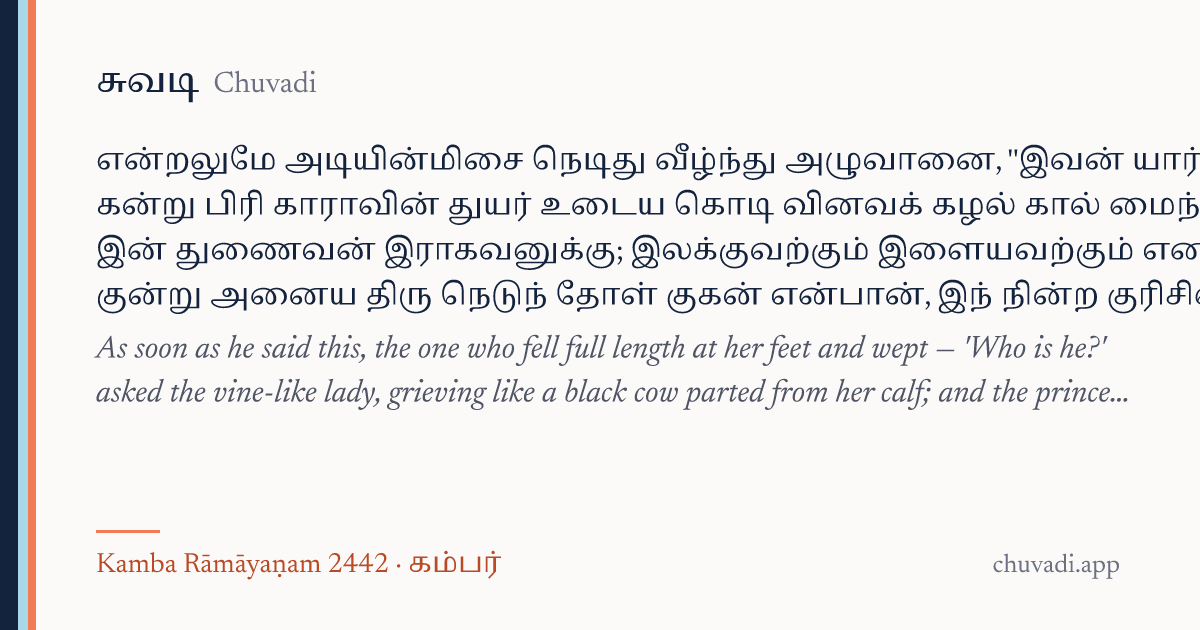
என்றலுமே - என்று பரதன் கூறிய அளவிலேயே; அடியின் மிசை - கோசலையின் திருவடிமேல்; நெடிது - நெடுநேரம்; வீழ்ந்து - நிலம்தொட்டு வீழ்ந்து; அழுவானை - அழுகின்ற குகனை; கன்று பிரி காராவின் துயர் உடைய கொடி - கன்றைப் பிரிந்த காராம் பசுவின் (துன்பம் போன்று மகனைப் பிரிந்த) துன்பத்தை உடைய கொடி போல்பவளாகிய கோசலை; “இவன் யார்?” என்று வினவ - (இதோ காலில் விழுந்துகிடக்கிற) இவன் யார்? என்று கேட்க; கழல் கால் மைந்தன் - வீரக் கழலணிந்த கால் உடைய பரதன்; “இந் நின்ற குரிசில் - இதோ தொழுது நிற்கின்ற ஆண்மகன்; இராகவனுக்கு இன்துணைவன் - இராமனுக்கு இனிய சகோதரன்; இலக்குவற்கும் இளையவற்கும் எனக்கும் மூத்தான் - இலக்குவனுக்கும் சத்துருக்கனனுக்கும், எனக்கும் அண்ணன்; குன்று அனைய திருநெடுந் தோள் குகன் என்பான்” - மலையொத்த திரண்ட அழகிய நெடிய தோள்களை உடைய குகன் என்ற பெயரை உடையவன்; என்றான் -
“கன்று பிரிந்துழிக் கறவை ஒப்பக் கரைந்து கலங்கினாள்” (1618) என்று முன்பும் இராமன் காடு சேறல் கேட்ட அளவில் துயருற்ற கோசலைக்கு இவ்வுவமை கூறினார் ஆதலின், காடு போன பிறகு இங்கே அதனையே வாங்கிக் கூறினார். காரா - காராம் பசு. தூய்மையும் சிறப்பும் நோக்கிக் காராவைக் கூறினார். இனி, பிற பசுக்களின் பால் மனிதர் உண்ணுதற்காதலின் அவை மனிதர்க்கும் கன்றுக்கும் பால் தருவன; ஆனால், காராவின் பால் மனிதர் உண்ணுதற்காகாது ஆதலின், கன்றுக்கே முழுதும் பயன்படுதலின் அன்பின் செறிவு ஆண்டு மிகுதியாம் என்பது கருதிக் கூறினார் எனலாம். இராமனுக்கு அடுத்த தம்பி குகன் என்று கூற, பின்னர்த் தங்கள் மூவரையும் பரதன் வரிசைப் படுத்தினான். கோசலாதேவி கேட்கும்போது வீழ்ந்து அழுவானாயிருந்தான் என்றும், பரதன் பதில் உரைக்கத் தொடங்கும்போது அருகில் எழுந்துநின்றான் என்றும் குகனைக் கருதலாம். அதுபற்றி 'இந்நின்ற குரிசில்' என்றானாம்.
ஆங்கிலம் · English translationAI
Translation
- As soon as he said this, the one who fell full length at her feet and wept — 'Who is he?'
- asked the vine-like lady, grieving like a black cow parted from her calf; and the prince with the warrior's anklets
- said: 'He is the dear companion of Irākavaṉ, elder brother to Ilakkuvaṉ, to the youngest and to me;
- he is called Kukaṉ, with shoulders tall and fair like hills — this lord who stands here.'
What the poem says
When Kukaṉ hears who Kōcalai is, he falls full length at her feet and weeps. Kōcalai, who grieves for her son like a black cow separated from her calf, asks who he is.
Paratan's introduction gives Kukaṉ the highest family rank possible. He is Irāmaṉ's dear brother-companion, and elder brother to Ilakkuvaṉ, to Catturukkaṉaṉ and to Paratan himself. By now Kukaṉ has risen and stands beside them.