



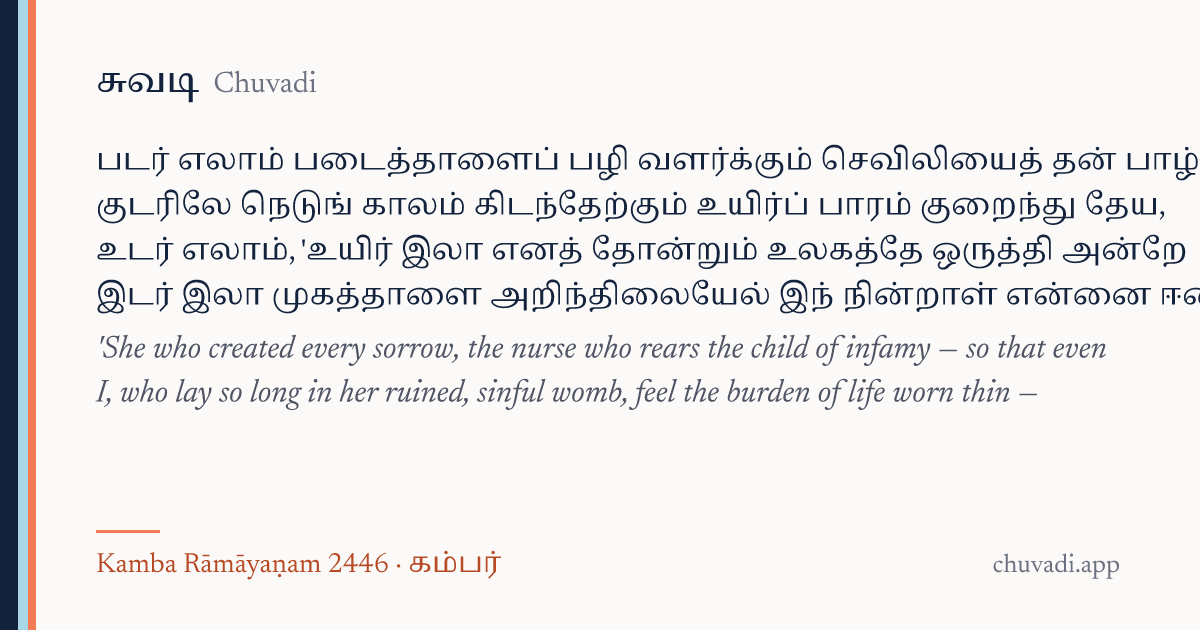
கம்பராமாயணம் 2446 · அயோத்தியா 11.69
பாடல் · The poem
Tap a word to see its gloss in the commentary and where else it occurs.
பொருள் · Meaning in Tamil
“படர் எலாம் படைத்தாளை - துன்பங்களை எல்லாம் உண்டாக்கினவளை; பழி வளர்க்கும் செவிலியை - உலக நிந்தை என்கின்ற பழியாகிய குழந்தைக்கு வளர்ப்புத் தாயை; தன் பாழ்த்த பாவிக் குடரிலே - தனது பாழான தீவினையுடைய வயிற்றில்; நெடுங்காலம் கிடந்தேற்கும் - நீண்டநாள் (பத்துத் திங்கள்) தங்கியிருந்த எனக்கும்; உயிர்ப்பாரம் குறைந்து தேய - உயிர் என்கின்ற சுமை குறைந்து தேயும்படி; உடர் எலாம் உயிரிலா எனத் தோன்றும் உலகத்தே - உடல்கள் எல்லாம் உயிரில்லாதன என்று தோன்றும்படி உள்ள உலகத்தின்கண்; ஒருத்தி அன்றே இடரிலா முகத்தாளை - இவ் ஒருத்தி மட்டும் அல்லவா துன்பமே இல்லாத முகம் உடையவள்; இவளை, அறிந்திலையேல் - (இவ்வளவு நேரம் முகத்தைக் கண்டே அறிந்து கொண்டிருக்கவேண்டும், அப்படி) அறியவில்லையானால்; இந் நின்றாள் - இதோ இருக்கின்றவள்; என்னை ஈன்றாள் - என்னைப் பெற்ற கைகேயி யாவாள்.
பரதன் தன் மனத்துள்ளே தன் தாயைப் பற்றிக் கொண்டிருந்த துக்கம் அனைத்தையும் தன் மனத்திற்கு இனிய சகோதரனாகிய குகன்பால் கொட்டித் தீர்த்த அற்புதமான பாடல் இது. உயிர் அன்பை வளர்க்கும்; உடலோடு சேர்ந்து அன்பை அறுத்தபடியால் பிரிவுத் துயர்க்கொடுமையால் உடல் உயிரில்லாதவையாய் ஆயின. தான் செய்த கொடுமையை நினைத்து இரக்கப்படாதபடியால் பழிக்குப் பெற்ற தாயாக ஆனதோடு அன்றிச் செவிலியும் ஆனாள் கைகேயி. 'நெடுங் காலம்' என்பதனை வான்மீகத்தை ஒட்டிப் பன்னிரண்டு திங்கள் எனலும் ஆம்.
ஆங்கிலம் · English translationAI
Translation
- 'She who created every sorrow, the nurse who rears the child of infamy —
- so that even I, who lay so long in her ruined, sinful womb, feel the burden of life worn thin —
- in a world where every body seems to have no life left in it, is she not the one woman
- whose face shows no grief? If you have not recognised her, this woman standing here is the one who bore me.'
What the poem says
Paratan pours out all his bitterness about his mother. She is the source of every sorrow and the nurse who raises the child called Disgrace. Even he, who spent so long in her womb, feels his own life wearing away.
The whole world looks like bodies without life, numb with grief. Kaikēyi alone has a face without a trace of sorrow; Kukaṉ should have been able to pick her out by that. "This woman standing here," Paratan says, "is the one who gave birth to me."