



கம்பராமாயணம் 2450 · அயோத்தியா 12.1
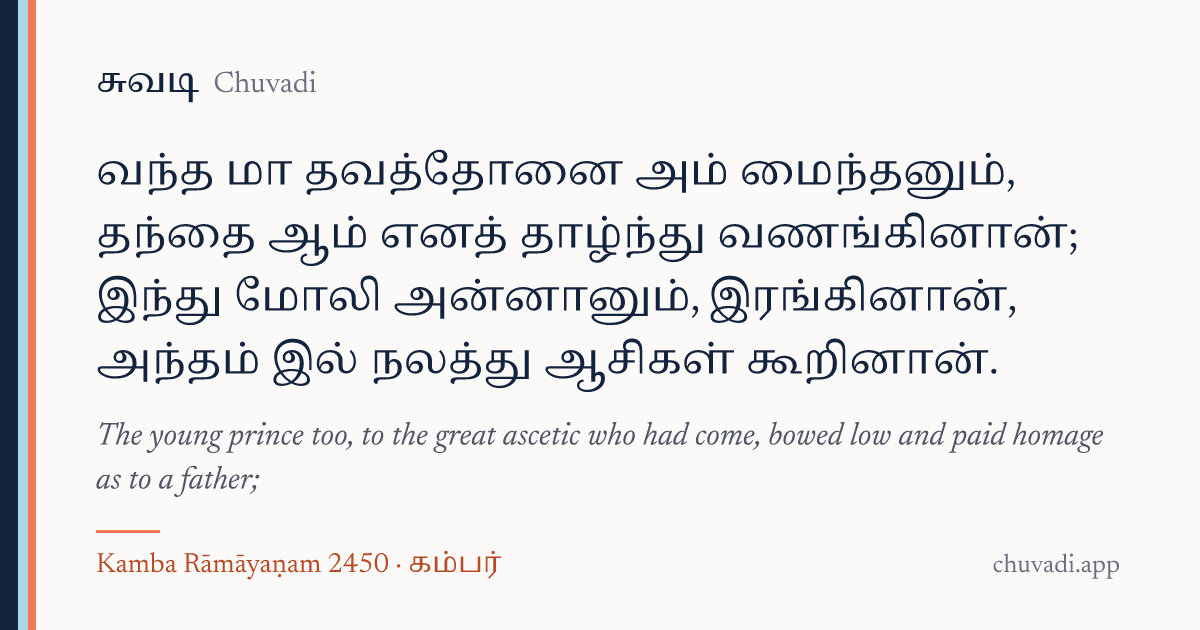
பாடல் · The poem
Tap a word to see its gloss in the commentary and where else it occurs.
பொருள் · Meaning in Tamil
அம் மைந்தனும் - அந்தப் பரதனாகிய மகனும்; வந்த மா தவத்தோனை - (தன்னை எதிர்கொள) வந்த பெரிய தவசியாகிய பரத்துவாச முனிவனை; தந்தை ஆம் என - (தன்) தந்தையைப் போலக் கருதி; தாழ்ந்து - (பணிவுடன்) விழுந்து; வணங்கினான் - வணக்கம் செய்தான்; இந்துமோலி அன்னானும் - சந்திரனைச் சடாமுடியில் தரித்த சிவபிரானை ஒத்த அம் முனிவனும்; இரங்கினான் - (பரதனிடம்) பரிவு கொண்டவனாய்; அந்தம் இல் நலத்து ஆசிகள் - முடிவில்லாத நன்மைகளைத் தரவல்ல ஆசிமொழிகளை; கூறினான் - மொழிந்தான்.
இந்து - சந்திரன், மோலி - சடாமுடி. மெளலி என்பது மோலி என வந்தது. தவசீலமும், சடாமுடியும், காமனைக் காய்தலும் உடைமையால் பரத்துவாச முனிவனுக்குச் சிவபிரான் உவமை ஆயினார்.
ஆங்கிலம் · English translationAI
Translation
- The young prince too, to the great ascetic who had come,
- bowed low and paid homage as to a father;
- and he who was like the one who wears the moon in his hair was moved with pity,
- and spoke blessings of endless good.
What the poem says
A new section begins: "The Crowning with the Sandals". Paratan bows low to Parattuvāca as he would to his own father.
The sage, with his matted locks, his austerity and his mastery of desire, is like Śiva, who wears the crescent moon in his hair and burned up the god of love. He is moved by the young man's state and blesses him with boundless good fortune.