



கம்பராமாயணம் 2458 · அயோத்தியா 12.9
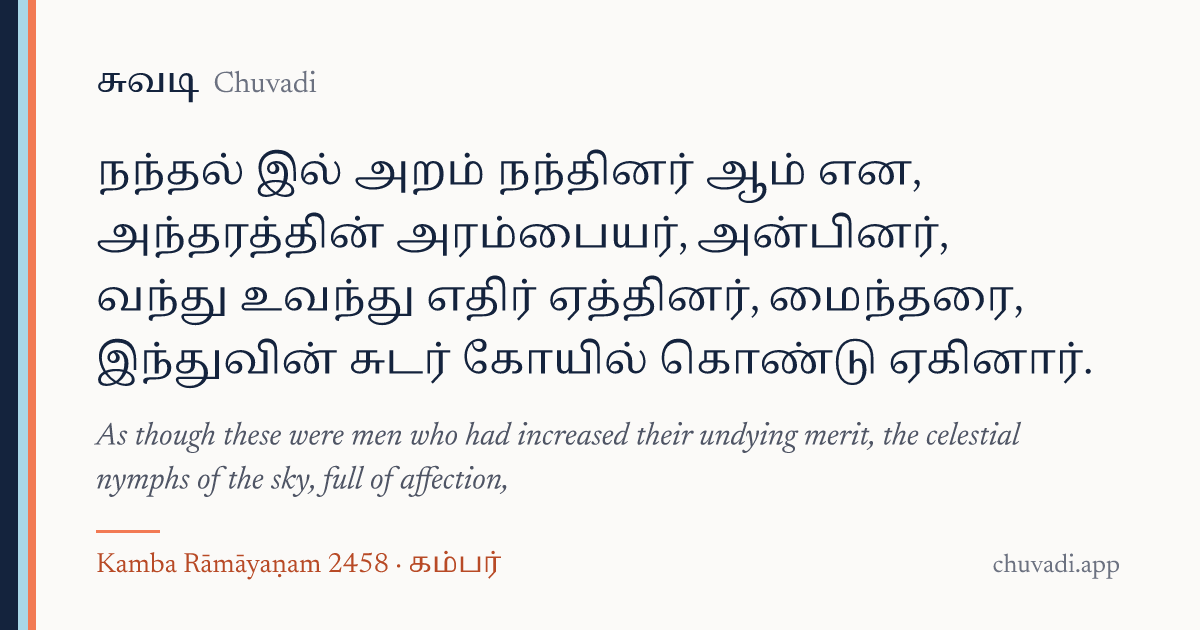
பாடல் · The poem
Tap a word to see its gloss in the commentary and where else it occurs.
பாட வேறுபாடு · Project Madurai reads
பொருள் · Meaning in Tamil
நந்தல் இல் அறம் - எஞ்ஞான்றும் கெடுதல் இல்லாத அறத்தை, நந்தினர் ஆம் என - பெருகச் செய்து அதன் பயனாய சுவர்க்காதி இன்பங்களைத் துய்ப்பார் இவர் ஆம் என்று கருதி; அந்தரத்தின் அரம்பையர் - தேவருலகத்தில் உள்ள அரம்பை மாதர்; அன்பினர் - அன்புடையராம்; உவந்து வந்து - மகிழ்ச்சியுடன் வந்து; மைந்தரை - ஆடவர்களை; எதிர் ஏத்தினர் - வரவேற்றுக் கொண்டாடி; இந்துவின் சுடர் கோயில் - நிலாவைப்போல ஒளி விளங்கும் அரண்மனைக்குள்; கொண்டு ஏகினார் - அழைத்துக்கொண்டு சென்றார்கள்.
நந்து என்னும் சொல் வளர்ச்சி, கேடு என்னும் இருபொருள் உடையது. நந்தல் - கெடுதல் - நந்தினர் - வளர்ச்சிபெற்றார் எனப் பொருள் காண்க. “அறம் செய்து சுவர்க்கம் புக்கான்” (தொல், சொல். சேனா. கிளவி. 58.) என்பவாதலின் இங்ஙனம் கூறினார். 'ஆம்' என்பதை அசை எனலும் ஆம்.
ஆங்கிலம் · English translationAI
Translation
- As though these were men who had increased their undying merit,
- the celestial nymphs of the sky, full of affection,
- came gladly, welcomed the young men with praise,
- and led them into palaces bright as the moon.
What the poem says
Heaven's nymphs, the Arampaiyar, treat the soldiers as if they were virtuous souls who had earned paradise by good deeds. They come down gladly to welcome them and lead them into palaces shining like moonlight.
The poet plays on the word nantu, which can mean both "to perish" and "to grow". The merit "that never perishes" is the merit these men seem to have "grown".