



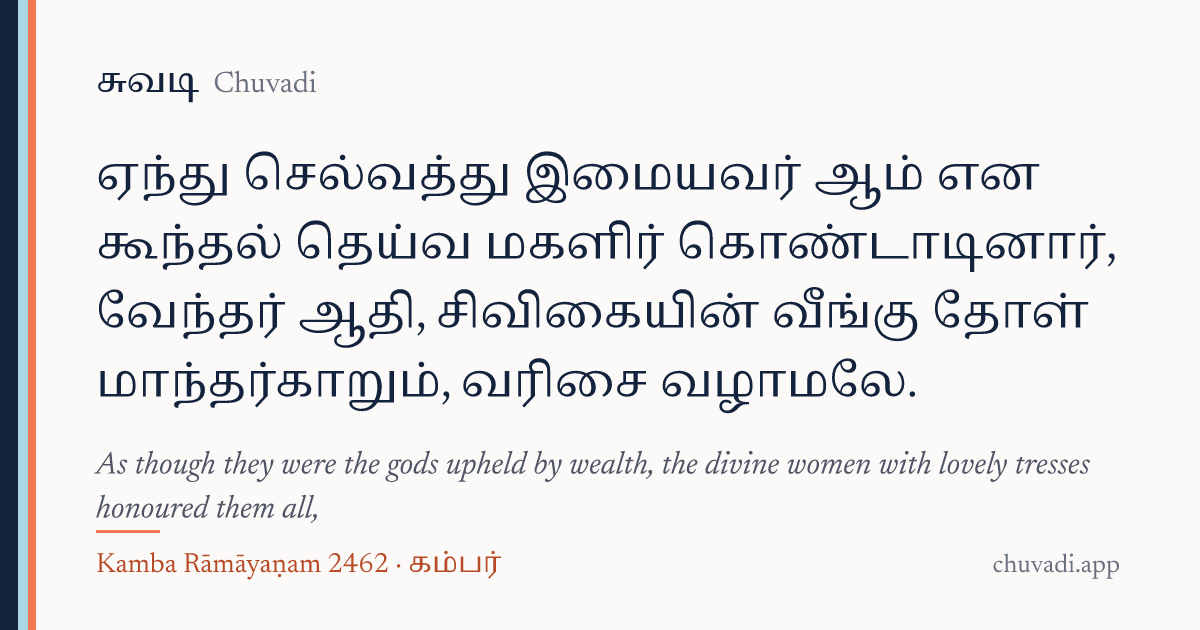
கம்பராமாயணம் 2462 · அயோத்தியா 12.13
பாடல் · The poem
Tap a word to see its gloss in the commentary and where else it occurs.
பொருள் · Meaning in Tamil
வேந்தர் ஆதி - (பரதன் சேனையில் உள்ள) அரசர் முதலாக; சிவிகையின் வீங்கு தோள் மாந்தர்காறும் - பல்லக்குத் தூக்குதலால் பருத்த தோளை உடைய மனிதர்கள்வரை; வரிசை வழாமல் - அவரவர்க்குரிய முறைமையில் சிறிதும் குறைவுபடாமல்; கூந்தல் தெய்வ மகளிர் - கூந்தலழகையுடைய தெய்வப் பெண்கள்; ஏந்து செல்வத்து இமையவர் ஆம் என - மிக்க செல்வத்தை உடைய தேவர்களைக் கொண்டாடுவதுபோல; கொண்டாடினார் - பாராட்டி உபசரித்தார்கள்.
மேலோர் முதல் கீழோர்காறும் ஒரு நிகராக இமையர் போல இன்பம் நுகர்ந்தபடியைக் கூறினார். “வேந்தர் சிவிகையின் வீங்குதோள் மாந்தர்” என்பது மேல், கீழ் நிலைகளைச் சுட்டி நின்றது - “சிவிகை பொறுத்தானோடு ஊர்ந்தானிடை” (குறள் 37.) என்பது காண்க. கூந்தல் அழகு பிற அழகுகளுக்கும் உபலக்கணையாம். “குஞ்சி அழகும்” “மயிர் வனப்பும்” என்பன (நாலடி. 131. சிறுபஞ்ச. 35) காண்க. “ஏந்துசெல்வத் திமையவர்” என்றது உலகில் மனிதர் செல்வத்தை ஏந்துவர்; ட து இமையவரைச் செல்வம் ஏந்துறைது என்ற நயம் பற்றி. “ஏ” ஈற்றசை.
ஆங்கிலம் · English translationAI
Translation
- As though they were the gods upheld by wealth,
- the divine women with lovely tresses honoured them all,
- from the kings down to the men whose shoulders
- were swollen from bearing palanquins, never failing in due order.
What the poem says
The celestial women entertain everyone in Paratan's army alike, from the kings at the top down to the palanquin-bearers whose shoulders are thick from carrying loads. Each is treated as if he were one of the gods.
The pairing of king and palanquin-bearer marks the two ends of society, as in a well-known Tirukkuṟaḷ couplet that contrasts the one who rides with the one who carries. The phrase about the gods carries a small conceit: men carry wealth, but here wealth carries the gods.