



கம்பராமாயணம் 2463 · அயோத்தியா 12.14
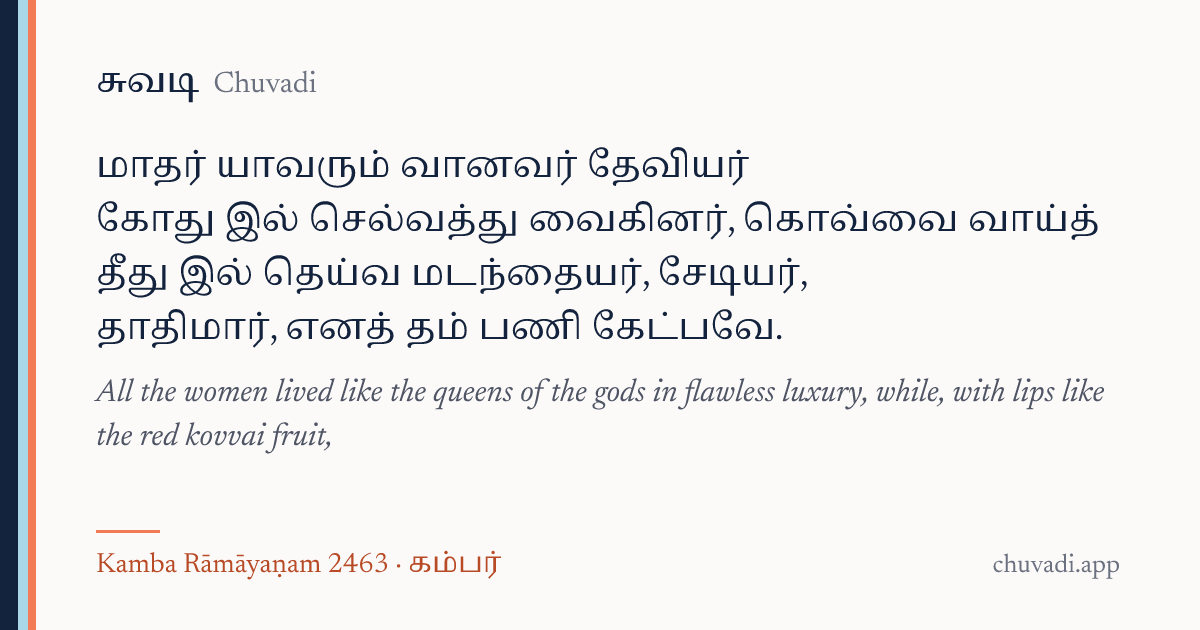
பாடல் · The poem
Tap a word to see its gloss in the commentary and where else it occurs.
பொருள் · Meaning in Tamil
மாதர் யாவரும் - (பரதனுடன் வந்த) மகளிர் எல்லாரும்; கொவ்வை வாய்த் தீது இல் தெய்வ மடந்தையர் - கொவ்வைக் கனி போலச் சிவந்த வாயினை உடைய தீமையற்ற தேவ மகளிர்; சேடியர் தாதிமார் என - தோழிப் பெண்களும், குற்றேவல் மகளிரும்போல்; தம் பணி கேட்ப - தாம் இட்ட வேலைகளை நிறைவேற்ற; வானவர் தேவியர் கோது இல் செல்வத்து - வானுலகத்துத் தேவர் மகளிரது குற்றமற்ற செல்வத்தில்; வைகினர் - இன்புற்றிருந்தனர்.
ஆடவர் அரம்பை மகளிர் இன்பம் துய்த்தலால் மகிழ்ந்தனர். மகளிரோ மற்றுத் தேவப்பெண்களைப் பணிகோடலால் மகிழ்ந்தனர் என்றவாறாம். தெய்வ மடந்தையர் வானவர் தேவியரின் வேறுபட்டவர் ஆவர். “ஏ” ஈற்றசை.
ஆங்கிலம் · English translationAI
Translation
- All the women lived like the queens of the gods
- in flawless luxury, while, with lips like the red kovvai fruit,
- the faultless divine maidens, as companions
- and serving-women, carried out their bidding.
What the poem says
Now the women who came with Paratan's army are entertained. They live for the night in the luxury enjoyed by the wives of the gods, and heavenly maidens with lips red as the kovvai fruit wait on them as companions and maids.
The men took their pleasure in the company of the celestial women; the women took theirs in being served by goddesses. The serving maidens are a lower order of divine women, distinct from the queens of the gods.