



கம்பராமாயணம் 2464 · அயோத்தியா 12.15
பாடல் · The poem
Tap a word to see its gloss in the commentary and where else it occurs.
பாட வேறுபாடு · Project Madurai reads
பொருள் · Meaning in Tamil
நந்து அம் நந்த வனங்களில் - (அங்குள்ள) வளர்ச்சி பெற்ற அழகிய பூந்தோட்டங்களில்; நாள் மலர்க் கந்தம் உந்திய கற்பகக் காவின் நின்று - அன்றலர்ந்த மலர்களின் நறுமணம் பெருக வரும் கற்பகச் சோலைகளிலிருந்து; அந்தி தன் கை தர - மாலைப்பொழுது கை கொடுத்துவ; அந்தர் வந்து என - குருடர் நடந்ததுபோல; வாடை - வாடைக் காற்று; மந்த மந்த நடந்தது - மெல்ல மெல்ல மணம் வீசி வந்தது.
கற்பகச் சோலைகளிலிருந்து வந்த வாடைக் காற்று அங்குள்ள பூந்தோட்டங்களின் நறுமணம் பெருக வருதலால் மெல்ல மெல்லக் குருடர் போல நடந்தது என்றார். அதிரக் குளிர் செய்து வரும் வாடையும் மந்த மாருதமாக ஆயினது மலர்களின் நறுமணம் கலத்தலான் என்க. வாடை - வடக்கிருந்து வரும் குளிர் காற்று. அது தென்றல் ஆகாமை உணர்க, திசைப்பெயராதலின். தென்றல் - மந்தமாருதம். இங்கு வாடையும் மந்த மாருதமாயிற்று என்றது நயம். மந்த மந்த - அடுக்கு. “ஏ” ஈற்றசை.
ஆங்கிலம் · English translationAI
Translation
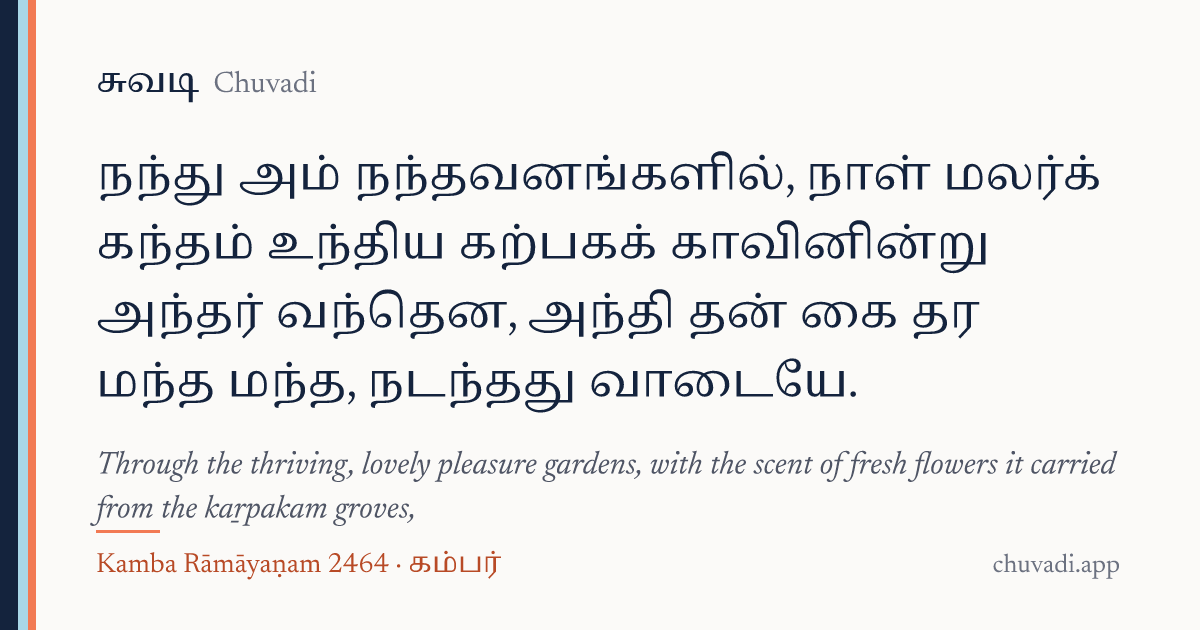
- Through the thriving, lovely pleasure gardens, with the scent
- of fresh flowers it carried from the kaṟpakam groves,
- like the blind who walk when someone gives them a hand, led by evening's hand,
- slowly, slowly the north wind walked.
What the poem says
Evening falls over the enchanted camp. The north wind, normally sharp and cold, comes from the heavenly kaṟpakam groves through the flower gardens, so laden with fragrance that it can only move slowly.
The poet compares it to a blind man who walks only when someone takes his hand; here evening leads the wind along. The point of the image is that even the harsh north wind has become a gentle breeze like the south wind, softened by the scent of flowers.