



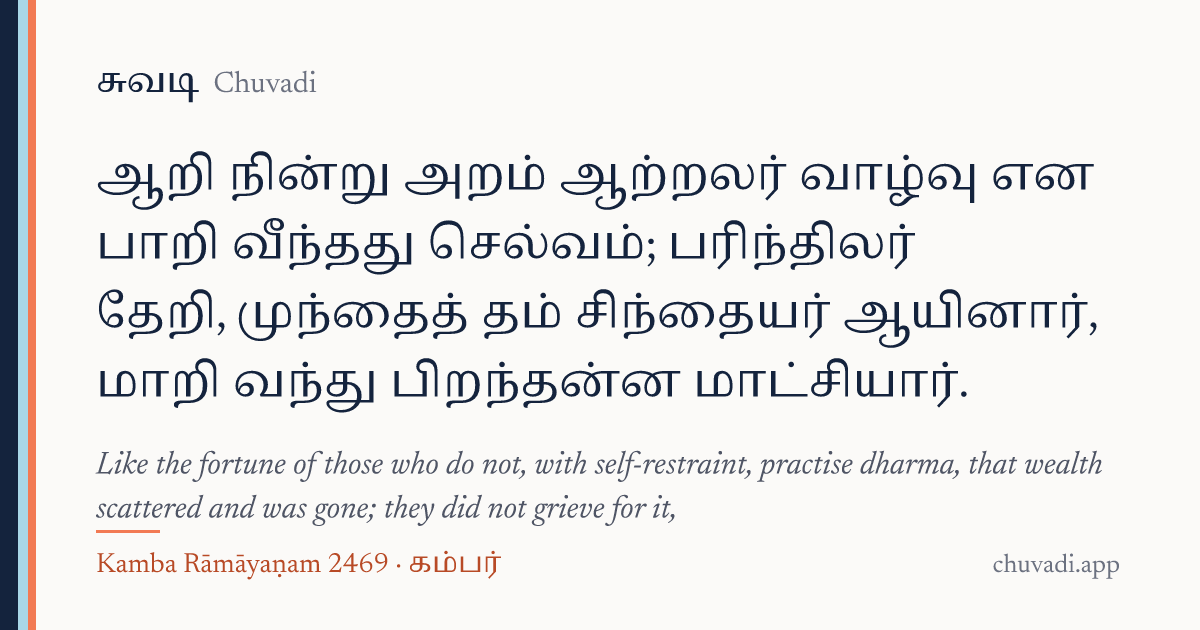
கம்பராமாயணம் 2469 · அயோத்தியா 12.20
பாடல் · The poem
Tap a word to see its gloss in the commentary and where else it occurs.
பொருள் · Meaning in Tamil
ஆறி நின்று - (மனம், மொழி, மெய்களால்) அடங்கி; அறம் ஆற்றலர் - அறத்தைச் செய்யாதவர்களது; வாழ்வு என - செல்வபோகம் (இடையில் அழிதல்) போல; செல்வம் - (பரதனுடன் வந்தார் அனுபவித்த) செல்வம்; பாறி வீந்தது - சிதறிக் கெட்டது; மாறி வந்து பிறந்தன்ன மாட்சியார் - விண்ணுலகத்திலிருந்து மண்ணுலகிற்கு வந்து பிறந்தது போன்ற தன்மை அடைந்தவராய அவர்கள்; பரிந்திலர் - தாம் இழந்துவிட்ட ஒருநாள் போகத்துக்காக இரங்க வில்லை; தேறி - தெளிந்து; முந்தைத் தம் சிந்தையர் ஆயினார் - முன்பு தமக்குள்ள நினைவுகளை உடையவர்களாக ஆனார்கள்.
அறம் உள்ளதுணையும் செல்வம் இருந்து அறம் நீங்கியதுபோது செல்வமும் நீங்கும் ஆதலின், அறம் ஆற்றலர் வாழ்வு எனச் செல்வம் பாறி வீந்தது. வீந்தது என்னாது “பாறி” என்றது பிறர்க்குக் கொடுத்தலால் செல்வம் வீதலும் உண்டு ஆதலின், அவ்வாறின்றிச் சிதறிக் கெட்டது என்றதாம். அறம் ஆற்றலர் வாழ்வு நல்வழியில் கெடாது தீவழியில் கெடும்.
ஆங்கிலம் · English translationAI
Translation
- Like the fortune of those who do not, with self-restraint, practise dharma,
- that wealth scattered and was gone; they did not grieve for it,
- but, grown clear, came back to the minds they had before,
- like men who have passed between worlds and been born anew.
What the poem says
The heavenly riches vanish as suddenly as the wealth of people who do no good: such wealth is not given away but simply scatters and is lost. Wealth lasts only as long as the merit behind it.
The soldiers do not mourn the one night of pleasure they have lost. Like souls reborn on earth after a spell in heaven, they wake with clear heads and return to their earlier purpose of following Paratan to Irāmaṉ.