



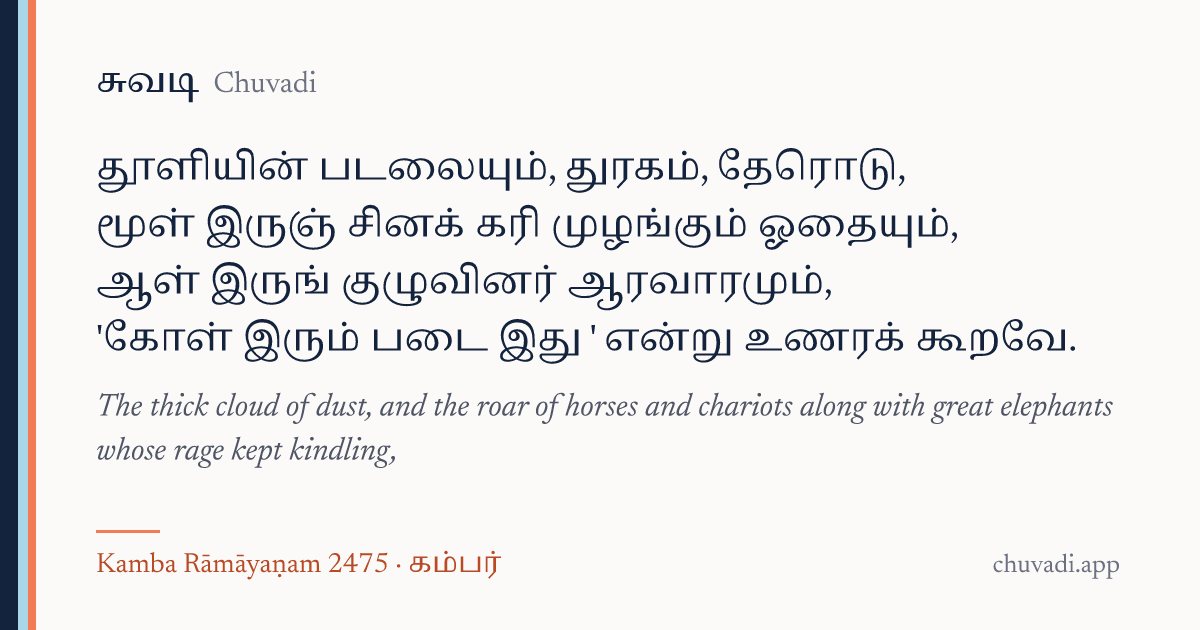
கம்பராமாயணம் 2475 · அயோத்தியா 12.26
பாடல் · The poem
Tap a word to see its gloss in the commentary and where else it occurs.
பொருள் · Meaning in Tamil
(சேனை செல்கிறபோது எழுந்த) தூளியின் படலையும் - சேனாபராகம் எனப்பெறும் புழுதித் திரளும்; துரகம், தேரொடு, மூள் இருஞ் சினக்கரி முழங்கும் ஓதையும் - குதிரை தேர் மேலும் மேலும் உண்டாகிற பெரிய கோபத்தையுடைய யானை ஆகியவை ஆர்ப்பரிக்கும் சப்தமும்; ஆள் இருங் குழுவினர் - காலாட் படையாகிய பெரிய கூட்டத்தினரின்; ஆரவாரமும் - பேரொலியும்; “கோள் இரும்படை இது” என்று - பிறரைக் கொல்ல வரும் பெரும்படை இது என்று; உணரக் கூற - பலரும் அறிய எடுத்துச்சொல்ல .... (மேல் முடியும்.)
புழுதியும், ஒலியும் படையின் பெருமை, வலி ஆகியவற்றை முன்னுணர்த்தின; அது கண்டு கேட்டுச் சீறி எழுந்தான் இலக்குவன் என்று அடுத்த பாட்டில் முடிகிறது. கோள் - கொலை சூழ்தல் ஆகும். வலிய என்றும் ஆகும். ‘ஏ’ ஈற்றசை.
ஆங்கிலம் · English translationAI
Translation
- The thick cloud of dust, and the roar of horses and chariots
- along with great elephants whose rage kept kindling,
- and the clamour of the vast companies of foot soldiers
- declared, for all to know: 'This is a great army bent on killing.'
What the poem says
Near Cittirakūṭam, the army announces itself before it can be seen. The rising dust, the noise of horses, chariots and angry elephants, and the shouting of the infantry all say plainly that a huge host is coming, and one that means to fight.
The sentence is completed in the next verse, where Ilakkuvaṉ sees and hears these signs and leaps up in anger.