



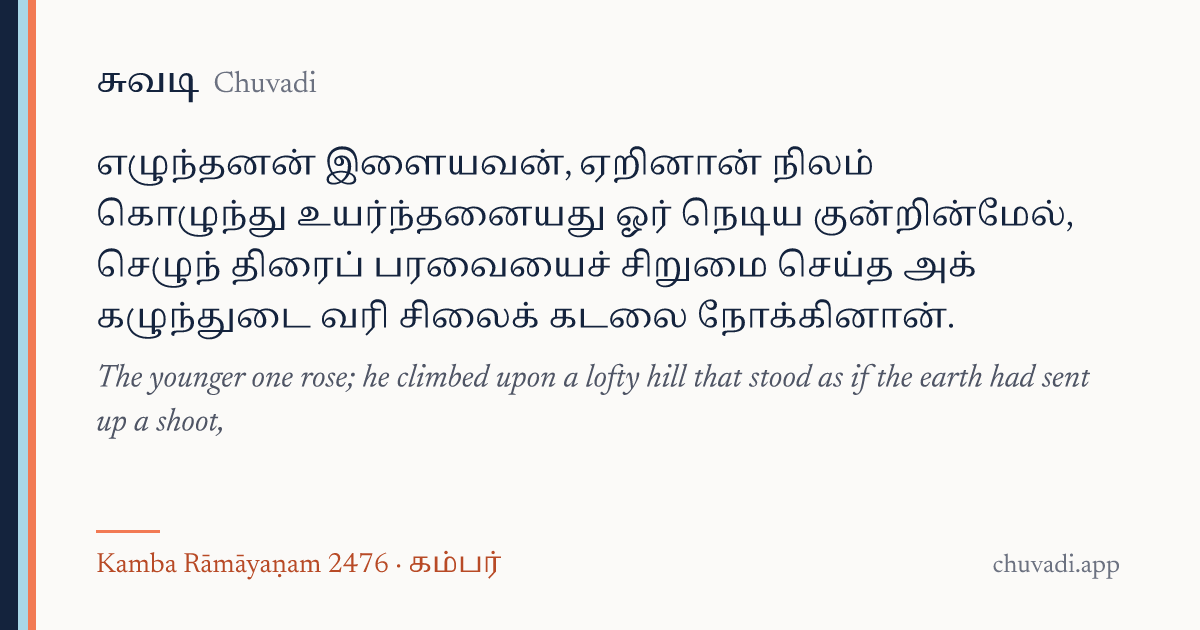
கம்பராமாயணம் 2476 · அயோத்தியா 12.27
பாடல் · The poem
Tap a word to see its gloss in the commentary and where else it occurs.
பொருள் · Meaning in Tamil
(பரதன் சேனைகள் வரும் நிலையைத் தன் குறிப்பால் உணர்ந்து) இளையவன் - இலக்குவன்; எழுந்தனன் - எழுந்து; நிலம் கொழுந்து உயர்ந்தனையது ஓர் நெடிய குன்றின்மேல் ஏறினான் - நிலவுலகம் கொழுந்துவிட்டு உயர்ந்தாற் போன்றதான ஒரு நீண்டுயர்ந்த மலையின் மேல் ஏறி; செழுந்திரைப் பரவையை - வளவிய அலைகளையுடைய கடலை, சிறுமை செய்த - சிறியது எனக் கருதும்படி செய்த; அக் கழுந்து உடை வரிசிலைக் கடலை - அந்த வலிமை மிக்க கட்டமைந்த வில்லை ஏந்திய சேனைக் கடலை; நோக்கினான் - பார்த்தான்.
நிலத்தின் மேல் உள்ள நெடிய மலை, நிலம் கொழுந்துவிட்டு உயர்ந்தது போல் உள்ளது என்றார். தற்குறிப்பேற்றம். சேனைக் கடலின் பெருமை நோக்கியவழி கடல் சிறியதாக உள்ளது. கழுந்து - வலிமை. “கழுந்தோடும் வரிசிலைக்கைக் கடற்றானை” (237.) எனப் பாலகாண்டத்து வருதல் காண்க. கழுந்து - வில்லின் கழிப் பகுதியாகும் என்பதும் ஒன்று. வில்லை இடையறாது கையிற்பிடித்தலால் தேய்ந்து வழுவழுப்பாதலைக் ‘கழுந்து’ எனக் கூறுவதாகவும் பொருள் உரைப்பர். இளையவன் எழுந்து, ஏறி, நோக்கினான் என முடிக்க.
ஆங்கிலம் · English translationAI
Translation
- The younger one rose; he climbed upon a lofty hill
- that stood as if the earth had sent up a shoot,
- and that host which made the ocean of rich waves look small,
- that sea of strong, banded bows, he surveyed.
What the poem says
At Cittirakūṭam, Ilakkuvaṉ senses the approaching army. He jumps up and climbs a tall hill, which looks as though the earth itself had put out a shoot and grown upward; the poet imagines a cause for the hill's height.
From there he looks out over Paratan's host, a sea of bowmen so vast that the real ocean seems small beside it. The word for the bows' strength may also mean the grip of the bow, worn smooth by constant handling.