



கம்பராமாயணம் 2479 · அயோத்தியா 12.30
பாடல் · The poem
Tap a word to see its gloss in the commentary and where else it occurs.
பொருள் · Meaning in Tamil
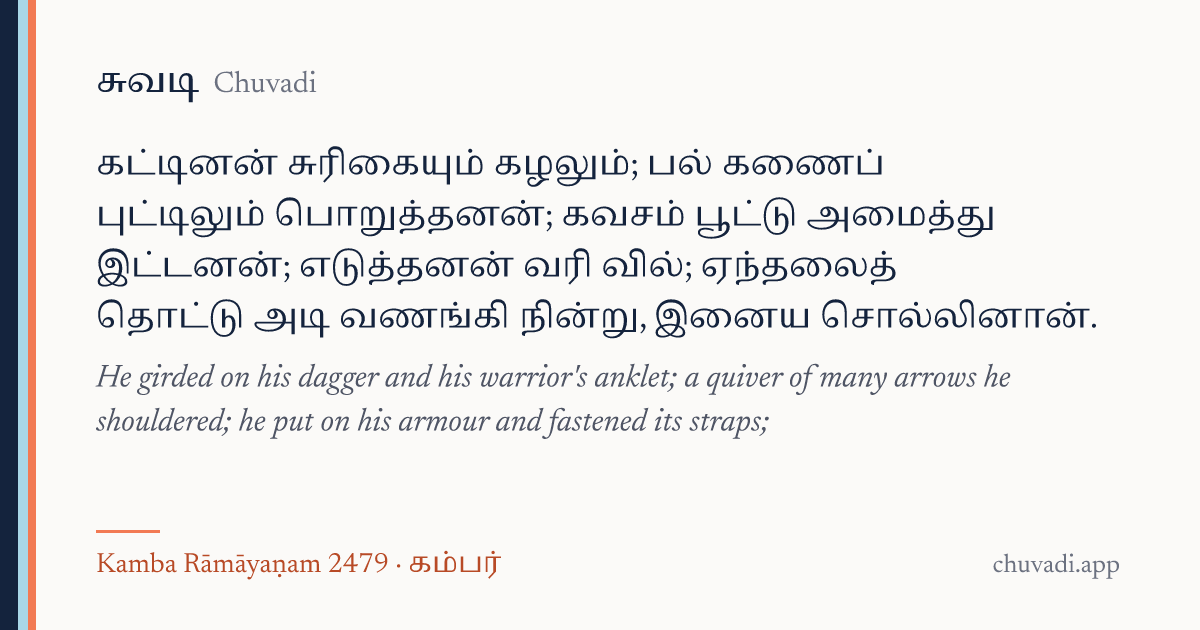
சுரிகையும் கழலும் கட்டினன் - (இடையில்) உடைவாளையும், (காலில்) வீரக்கழலையும் கட்டிக்கொண்டு; பல்கணைப் புட்டிலும் பொறுத்தனன் - பல்வகை அம்புகளையுடைய தூணியைத் (தோளில்) சுமந்து; கவசம் பூட்டு அமைத்து இட்டனன் - போர்க் கவசத்தை (உடம்பிற்) பூட்டிக்கொண்டு; வரிவில் எடுத்தனன் - கட்டமைந்த வில்லைக் (கையில்) எடுத்துக்கொண்டு; ஏந்தலை அடிதொட்டு வணங்கி நின்று - இராமனைத் திருவடி தொட்டு வணக்கம் செய்து எழுந்து நின்று; இனைய சொல்லினான் - இவ்வார்த்தைகளைச் சொன்னான்.
போர்க்குச் சன்னத்தனானான் என்றார். ஏந்தல் - இராமன்; உயர்ந்தோன் என்னும் பொருளில் வந்தது. திருவடி தொட்டு வணங்குதல் என்பது ஒரு மரபு.
ஆங்கிலம் · English translationAI
Translation
- He girded on his dagger and his warrior's anklet; a quiver of many arrows
- he shouldered; he put on his armour and fastened its straps;
- he took up his banded bow; and touching the feet
- of the noble one, bowing, he stood and spoke these words.
What the poem says
Ilakkuvaṉ arms himself for battle: dagger at his waist, the warrior's anklet on his leg, a quiver on his shoulder, armour strapped on, bow in hand.
Then, as custom required of a younger brother, he touches Irāmaṉ's feet in reverence before he speaks. The next verses give his boastful war speech.