



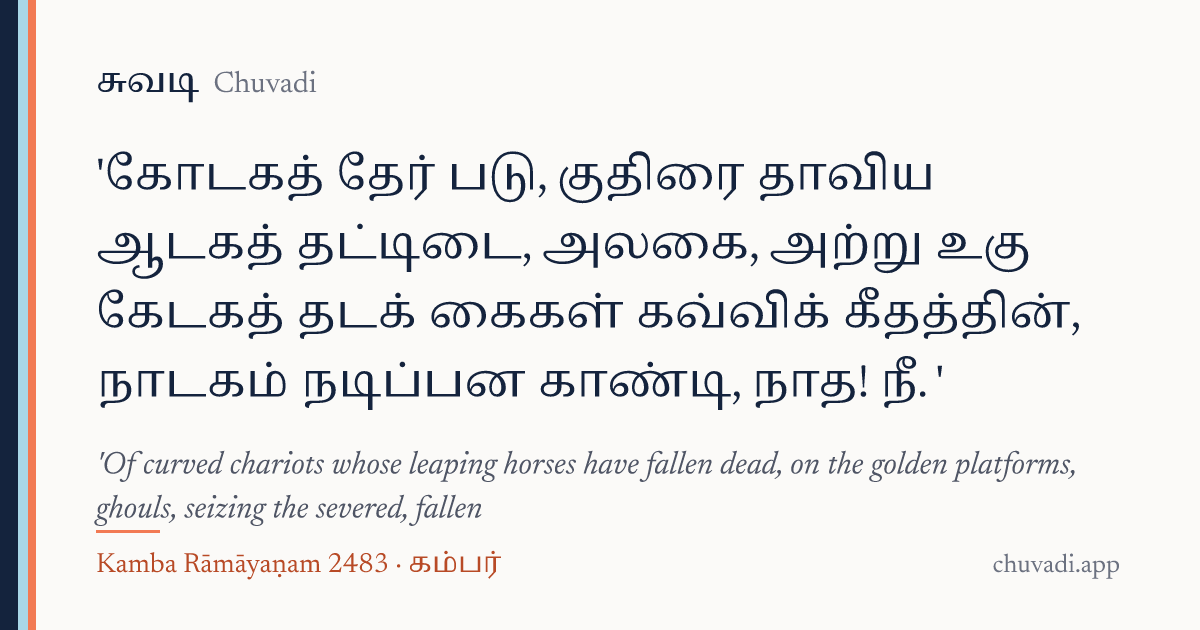
கம்பராமாயணம் 2483 · அயோத்தியா 12.34
பாடல் · The poem
Tap a word to see its gloss in the commentary and where else it occurs.
பாட வேறுபாடு · Project Madurai reads
பொருள் · Meaning in Tamil
“நாத! நீ -; தாவிய குதிரை படு கோடகத் தேர் - தாவிச் செல்லும் குதிரைகள் இறந்து போன வளைந்து அழகிதாய தேரினது; ஆடகத் தட்டிடை - பொன்மயமான நடுப்பீடத்தின்கண்; அலகை - பேய்கள்; அற்று உகு கேடகத் தடக் கைகள் கவ்வி - போர்க்களத்துத் துண்டாகி விழுந்த கேடகத்தோடு கூடிய நீண்ட கைகளைத் தம் கையாற் பற்றி (தாளமிட்டுக்கொண்டு); கீதத்தின் - இசை பாடிக்கொண்டு; நாடகம் நடிப்பன - கூத்தாடுவனவற்றை; காண்டி - பார்ப்பாயாக..
பலகை எனப்படும் கேடயத்தோடு அற்று விழுந்த கைகளைப் பேய்கள் தாம் எடுத்துக்கொண்டன கானம் இட்டு ஆடுதல் போலும். கோடகம் என்பது தேர் உறுப்பு.
ஆங்கிலம் · English translationAI
Translation
- 'Of curved chariots whose leaping horses have fallen dead,
- on the golden platforms, ghouls, seizing the severed, fallen
- great arms still gripping their shields, to the sound of song
- acting out a dance-drama: this you shall see, my lord!'
What the poem says
The battlefield Ilakkuvaṉ imagines is the grim scene of Tamil war poetry, where demons feast and dance among the dead.
Here ghouls climb onto the golden floors of wrecked chariots whose horses lie dead. They pick up severed arms still holding shields, beat time with them, and sing and dance as if putting on a play.