



கம்பராமாயணம் 2489 · அயோத்தியா 12.40
பாடல் · The poem
Tap a word to see its gloss in the commentary and where else it occurs.
பொருள் · Meaning in Tamil
“ஆழியாய்! - இராமனே!; ஒருமகள் காதலின் - கைகேயி என்னும் ஒரு பெண்ணின்மேற் கொண்ட அன்பினால்; உலகை நோய் செய்த - உலகம் முழுவதையும் துன்பத்தில் துடிக்கச் செய்த; பெருமகன் - சக்கரவர்த்தியாகிய தயரதன்; ஏவலின் - ஆணையால்; பரதன் தான் பெறும் இருநிலம் - பரதன் தான் பெற்ற கோசல அரசை; ஆள்கை விட்டு - ஆட்சி செய்தலைக் கைவிட்டு; இன்று - இந்நாள்; என் ஏ வலால் - என் அம்பின் வலிமையால்; அரு நரகு ஆள்வது - கொடிய நரகத்தை அனுபவிப்பதை; காண்டி - பார்ப்பாயாக...
பரதன் அண்ணனுக்குத் துரோகம் செய்தவன் என்று இலக்குவன் கருதுவதனால், போர்க்களத்தில் இறப்பினும் அவனுக்கு வீர சுவர்க்கம் இல்லை; அருநரகமே வாய்க்கும் என்று கூறினான். “ஒரு மகள் காதலின் உலகை நோய் செய்த” என்பது நயமான தொடர். சினத்திலும் தயரதனைப் “பெருமகன்” என்றது காண்க. “என் ஏவலால்” என்பதனை “ஏ வலால்” என்று பிரியாது “ஏவலால்” என்று ஒன்றாகவே கொண்டு கட்டளையால் என்று பொருள் உரைத்தல் சிறக்குமேல் கொள்க.
ஆங்கிலம் · English translationAI
Translation
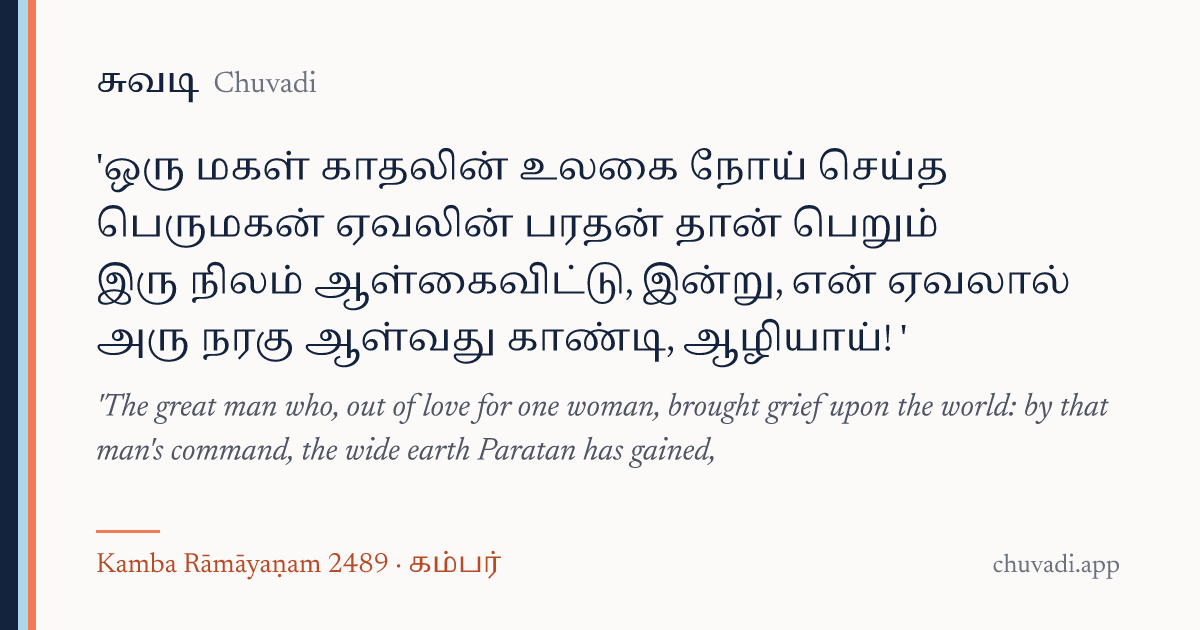
- 'The great man who, out of love for one woman, brought grief upon the world:
- by that man's command, the wide earth Paratan has gained,
- he will give up ruling it, and today, at my command,
- rule cruel hell instead: this you shall see, lord of the discus!'
What the poem says
Ilakkuvaṉ plays on the word 'rule'. By his father Tacarataṉ's command Paratan now rules the earth; by Ilakkuvaṉ's command he will rule hell. Because he has betrayed his elder brother, Paratan will not earn the heaven of warriors who die in battle.
Even in anger Ilakkuvaṉ calls his father 'the great man', though he blames him for bringing misery on the world through his love for one woman, Kaikēyi. The phrase 'my command' can also be divided to mean 'the strength of my arrow'.