



கம்பராமாயணம் 2490 · அயோத்தியா 12.41
பாடல் · The poem
Tap a word to see its gloss in the commentary and where else it occurs.
பொருள் · Meaning in Tamil
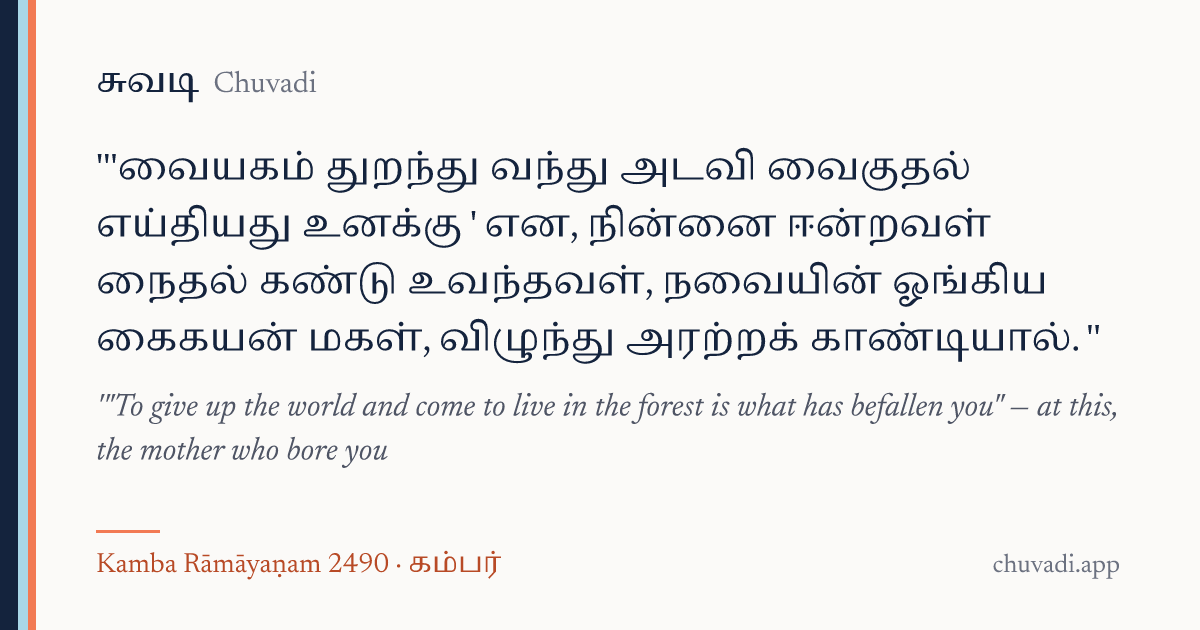
“வையகம் துறந்து - நிலவுலக அரசாட்சியைக் கைவிட்டு; வந்து -; அடவி வைகுதல் - காட்டில் தங்கியிருத்தல்; உனக்கு எய்தியது” - உனக்கு வந்து சேர்ந்தது; என - என்று; நின்னை ஈன்றவள் - உன்னைப் பெற்றவளாய கோசலை; நைதல் கண்டு - வருந்துதலைப் பார்த்து; உவந்தவள் - மகிழ்ச்சி அடைந்தவளாகிய; நவையின் ஓங்கிய - (பிறர்க்குத்) துன்பம் செய்வதில் உயர்ந்து விளங்கும்; கைகயன் மகள் - கைகேயி; விழுந்து அரற்ற - (பரதனை இழந்து) தரையில் விழுந்து புலம்ப; காண்டி - பார்ப்பாயாக...
கூனியின் போதனை அவ்வாறு னு ‘நைதல் கண்டு உவந்தவள்’ என்று இங்கே கூறினான். ‘ஆல்’ ஈற்றசை.
ஆங்கிலம் · English translationAI
Translation
- '"To give up the world and come to live in the forest
- is what has befallen you" — at this, the mother who bore you
- she saw wasting away, and rejoiced; that one towering in wickedness,
- the Kēkaya king's daughter, falling to the ground and wailing: this you shall see.'
What the poem says
Ilakkuvaṉ turns on Kaikēyi. When Irāmaṉ was sent to the forest, she was glad to see his mother Kōcalai wasting with grief. Now, he says, Kaikēyi herself will lose her son Paratan and fall to the ground wailing.
Ilakkuvaṉ assumes that Kaikēyi rejoiced at Kōcalai's sorrow because of the hunchbacked maid Mantarai's scheming, which is why he speaks of her this way.