



கம்பராமாயணம் 2491 · அயோத்தியா 12.42
பாடல் · The poem
Tap a word to see its gloss in the commentary and where else it occurs.
பொருள் · Meaning in Tamil
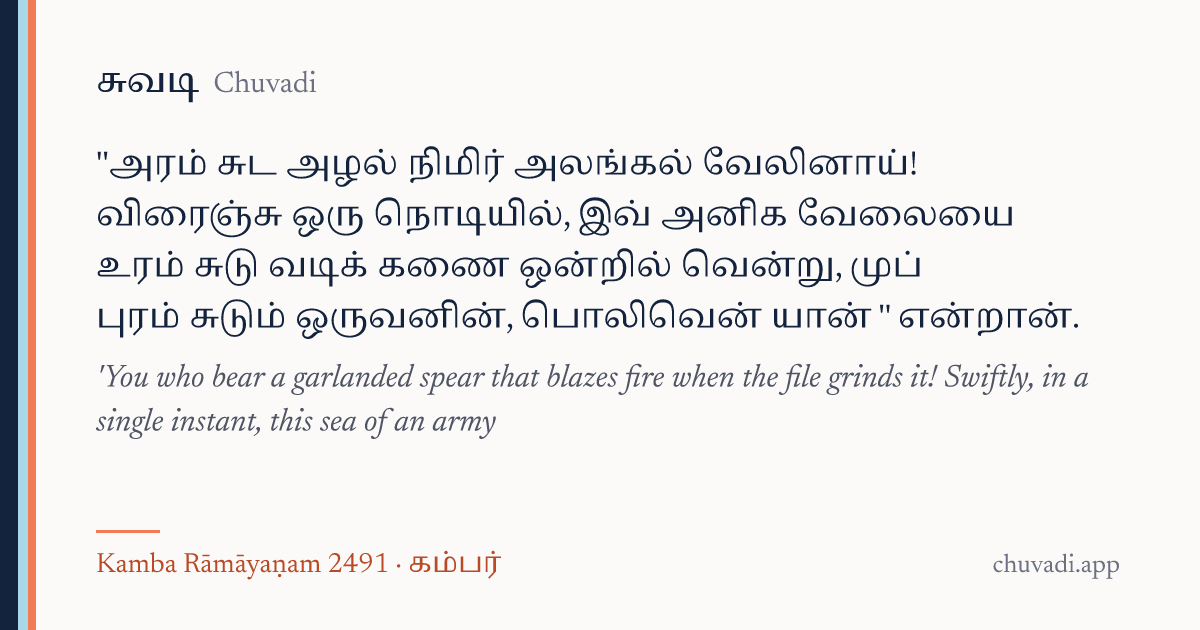
“அரம் சுட - அரம் என்னும் கருவியால் தேய்க்க; அழல் நிமிர் - தீயைக் கக்கும்; அலங்கல் - மாலை அணிந்த; வேலினாய்! - வேற் படையை உடையவனே!; யான் -; இவ் அனிக வேலையை - இந்த சேனைக் கடலை; உரம் சுடு - வலிமையை அழித்துச் சுடுகிற; வடிக்கணை ஒன்றில் - கூரிய ஓர் அம்பினாலே; ஒரு நொடியில் விரைஞ்சு - ஒரு நொடிப் பொழுதில் விரைவாக; வென்று - (அழித்து) வெற்றிகொண்டு; முப்புரம் சுடும் ஒருவனின் - திரிபுரங்களை அழித்த சிவபிரானைப் போல; பொலிவென் - விளங்குவேன்;” என்றான் - என்று கூறினான்.
ஓரம்பால் ஒருநொடியில் அழித்தல் பற்றித் திரிபுரத்தை அழித்த சிவன் போல என்று உவமை கூறினான் இலக்குவன். ‘விரைந்து’ என்பது செய்யுள் எதுகை நோக்கி ‘விரைஞ்சு’ என நின்றது. “போலி” எனினும் ஆம். திரிபுரம் எரித்த கதை; தாரகாசுரனது மக்களாகிய தாரகாட்சன், கமலாட்சன், வித்யுன்மாலி என்னும் மூவரும் தவம் செய்து வரம் பெற்றுப் பொன், வெள்ளி, இரும்பால் ஆகிய கோட்டைகளைப் பெற்றுக் கோட்டையுடனே பறந்து சென்று தங்கி அழித்து அனைவரையும் வருந்தினர். சிவபூசையில் தவறாது இருத்தலின் அழிக்கப்படாதவர் ஆயினர். இந்திரனும் திருமாலும், உலோகாயதனும், புத்தனும் ஆகி அவர்பால் சென்று அம்மார்க்கங்களைப் பேசி அவரைத் திரித்துச் சிவபூசை இல்லாதவர் ஆக்கினர். பின்னர்ச் சிவபெருமான் மலை வில்லாக, வாசுகி நாணாக, பூமி தேராக, சூரிய சந்திரர்கள் சக்கரங்களாக, வேதம் குதிரையாக, பிரமன் சாரதியாக, திருமால் அம்பாக, அக்கினி அம்பின் முனையாக, தேவர்கள் தேர் உறுப்புகளாகக் கொண்டு அவர் முன் சென்ற அளவில் தேவர்கள் முதலியோர்தம்மால்தான் சிவபிரான் அவர்களை வெல்லமுடிகிறது என்று நினைத்து அகங்கரித்தாராக, அதனை உணர்ந்த சிவபிரான் சிரித்தாராக, அக்கணமே அசுரரும் கோட்டையும் சாம்பராயினர் என்பது சிவபுராண சரித்திரமாம்.
ஆங்கிலம் · English translationAI
Translation
- 'You who bear a garlanded spear that blazes fire when the file grinds it!
- Swiftly, in a single instant, this sea of an army
- I will conquer with one keen arrow that burns away its strength, and
- shine like the One who burned the Three Cities,' he said.
What the poem says
Ilakkuvaṉ ends his war speech by comparing himself to Civaṉ, who destroyed the Three Cities with a single arrow in a moment.
In the story, three demon brothers won by penance cities of gold, silver and iron that could fly, and used them to ravage the worlds. They could not be harmed while they kept up their worship of Civaṉ, so the gods disguised themselves as teachers of false doctrines and led them away from it. Civaṉ then rode out on a chariot made of the earth, sun and moon, with a mountain for his bow and Viṣṇu for his arrow. When the gods grew proud, thinking they had made his victory possible, Civaṉ simply laughed, and the cities burned to ash.