



கம்பராமாயணம் 2494 · அயோத்தியா 12.45
பாடல் · The poem
Tap a word to see its gloss in the commentary and where else it occurs.
பொருள் · Meaning in Tamil
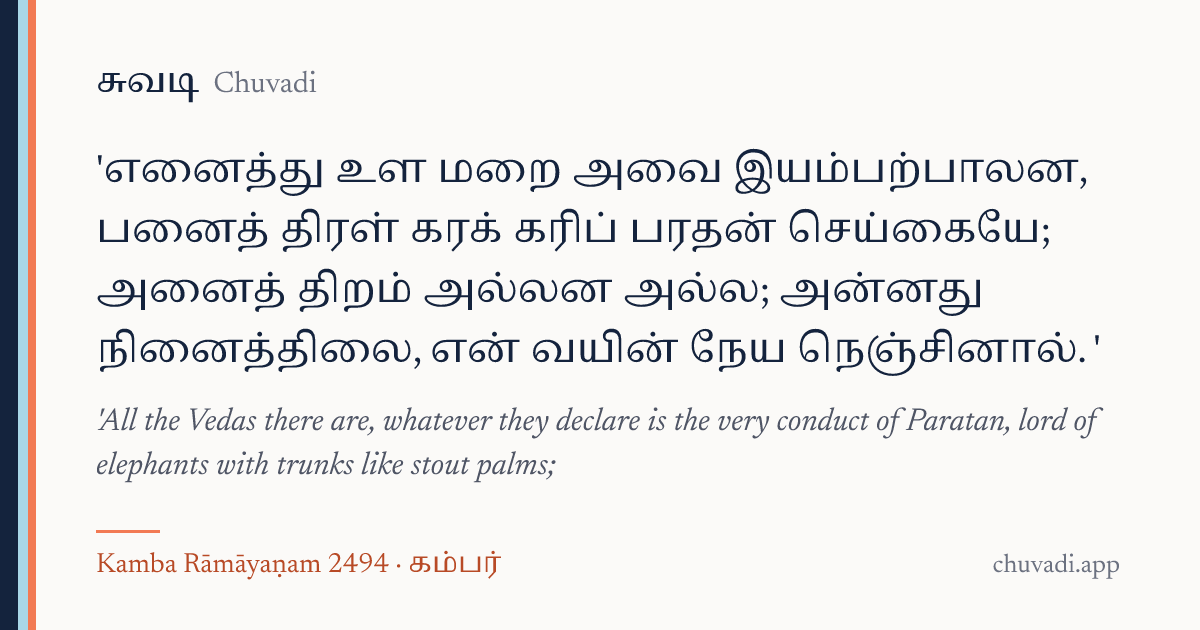
“பனைத் திரள் கரக் கரிப் பரதன் - பனைமரம் போலத் திரண்ட கையை உடைய யானையை யுடைய பரதனது; செய்கையே - ஒழுக்கங்களே; மறை எனைத்து உள அவை - வேதங்கள் எத்தனை உள்ளன அத்தனை வேதங்களும், இயம்பற்பாலன - சொல்லுந்தன்மைய ஆவன; அனை அல்லன திறம் அல்ல - அத்தன்மையவாக நீ கூறும் அறமல்லாதன அல்ல (அவன் செய்கை); அன்னது - அவ்வுண்மையை (பரதனது சீரிய ஒழுக்க உயர்வினை); என் வயின் - என்னிடத்துண்டாகிய, நேய நெஞ்சினால் - அன்பு மிக்கூர்ந்த மனத்தால்; நினைத்திலை - நீ அறிந்து நினைத்தாயில்லை...
வேதங்களால் சொல்லப்படும் ஒழுக்கம் அனைத்தும் பரதன் ஒழுக்கமே என்றானாம். பரதனது சிறப்பின் உண்மைத்தன்மையை இலக்குவன் அறிந்துணராமைக்குக் காரணம் அவன் இராமன்பாற் கொண்ட மிக்க அன்பேயன்றிப் பரதனிடம் எந்த மாறுபாடும் இல்லை என்ற இராமன் கூற்று இலக்குவனையும் குறைகாணாது சாந்தப்படுத்தியதாயிற்று. ‘அனை’ என்றது ‘அ’ என்ற சுட்டின் பொருளது. “அனைநிலைவகை” (தொல். பொருள். நக்) என்றவிடத்து ‘அனை கூட்டுநிலை’ என்றார் நச்சினார்க்கினியரும். ‘செய்கையே’ என்ற ‘ஏ’ காரம் தேற்றப் பொருளில் வந்தது.
ஆங்கிலம் · English translationAI
Translation
- 'All the Vedas there are, whatever they declare
- is the very conduct of Paratan, lord of elephants with trunks like stout palms;
- it is not some other kind, unrighteous; that
- you have not grasped, because of the love your heart bears me.'
What the poem says
Irāmaṉ tells Ilakkuvaṉ that Paratan's conduct is exactly what all the Vedas teach; there is nothing unrighteous in it, as Ilakkuvaṉ has claimed.
He also excuses Ilakkuvaṉ gently. His brother failed to see Paratan's goodness not out of any ill will toward Paratan but because of his great love for Irāmaṉ. This soothes Ilakkuvaṉ without blaming him.