



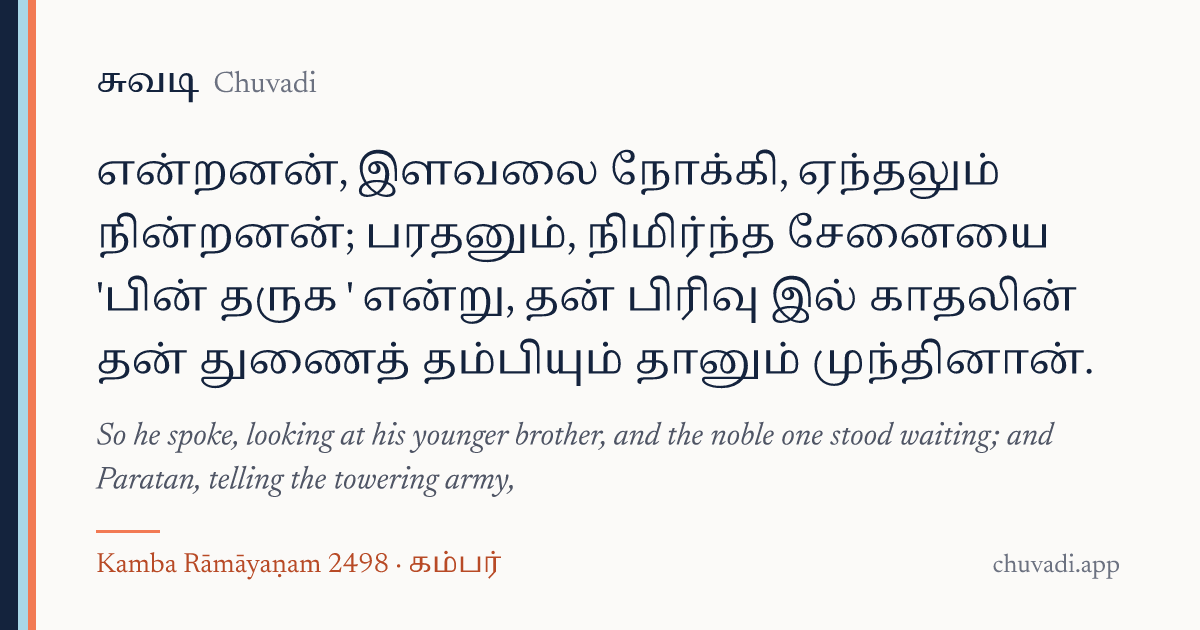
கம்பராமாயணம் 2498 · அயோத்தியா 12.49
பாடல் · The poem
Tap a word to see its gloss in the commentary and where else it occurs.
பொருள் · Meaning in Tamil
ஏந்தலும் - இராமனும்; இளவலை நோக்கி - இலக்குவனைப் பார்த்து; என்றனன் - என்று (இவ்வாறு) சொல்லி; நின்றனன் -; பரதனும் -; நிமிர்ந்த சேனையை - மிகுந்த (தன்) படைகளை; “பின் தருக” என்று - பிறகு அழைத்து வருக என்று (சுமந்திரன்பால்) சொல்லி; தன் பிரிவு இல் காதலின் தன் துணைத்தம்பியும் - தன்னைப் பிரிதல் இல்லாத அன்புடைய தன் துணைவனான தம்பியாகிய சத்துருக்கனனும், தானும் - தானுமாக; முந்தினான் - முற்பட்டு (இராமன் பால்) வந்தான்.
உடன் வந்தான் அமைச்சன் சுமந்திரன் ஆதலின் படைப் பொறுப்பை அவன்பால் சார்த்தினான் எனலாம். “தம்பியும் தானும் முந்தினான்” என்பது தலைமைப்பொருட்கு வினைகொடுப்பவே தலைமையில் பொருளும் முடிந்தன வாவதோர் முறைபற்றி வந்தது. இனி பால் விரவாது எண்ணிச் சிறப்பினால் ஒருமை முடிபு பெற்றது எனலும் ஆம். தம்பியாதல் அன்றி எப்பொழுதும் தன்னைப் பிரியாது தனக்குத் துணையாக இருத்தல் பற்றிச் சத்துருக்கனனைத் ‘தன் துணைத் தம்பி’ என்று பரதன் கூறினான்.
ஆங்கிலம் · English translationAI
Translation
- So he spoke, looking at his younger brother, and the noble one
- stood waiting; and Paratan, telling the towering army,
- 'Follow behind,' with his inseparable, loving
- younger brother and companion, went on ahead himself.
What the poem says
Irāmaṉ finishes speaking and waits. Paratan, meanwhile, leaves his army behind, probably in the care of the minister Cumantiraṉ who came with him, and goes ahead on foot with only his younger brother Catturukkaṉaṉ.
Catturukkaṉaṉ is called his 'companion brother' because he never leaves Paratan's side. The verb is singular, agreeing with Paratan as the chief person of the pair.